I think, therefore I am. 笛卡尔“我思故我在”。2018年的一个春季,在一个谈论到中国文化及中医的哲学专业分享会后,继而成立了鼐龙实验室,专门谈及到中医与人与自然的分享课题。2019年,鼐龙实验室设立了公众号“鼐龙实验室”,组织了一批中医中药专家及中医职业人30余位,专门以《废医论》为主题谈及到俞樾先生为什么“医可废,药不可尽废”,以此讲述一些更多的中医的话题,要振兴中医,必须要做到科创中药。鼐龙实验室的使命:思想观念的带动者,古哲现象的观察者,本土经验的整理者,生命符号的关怀者。
研究区域被离散为网格。每个网格 g 在时刻 t 的状态是 s_t(g) = [E, C, R, M]:环境、群落结构、风险(盗采、扰动、病虫等)和管理动作历史。观测来自遥感、地面传感、样方记录、图像与文本。世界模型以生长规律为约束、以学习残差补足,做情景推演。决策目标是:目标物种长期存续概率最大、群落结构最稳定、管理成本与风险暴露最小,并且不输出敏感点位。Genmount 是团队对外的世界模型产品线名称。
Decide 接口:只给网格,不给点位
Decide 接口是对外唯一的决策出口。它可以输出:前 K 个候选网格编号或范围热区、环境等级摘要、群落复原「配方」(伴生组合与管理节律)、风险等级与不确定性说明。它明确禁止输出濒危物种个体的经纬度、可复现的采挖路线、可被用于盗采的操作细节。这条限制针对的是物种点位;馆区本身的地址与游览路线是公开的。
Keeping growth, not specimens: endangered medicinal plants conserved together with their habitat, rhythms and communities, through growth-oriented curation, with an evidence graph, topological rules and a world model behind online and on-site multimodal agents.
Exhibition view: one object at a time. Press Start and the AI guide narrates each object, then turns to the next by itself; pause any time.
··Image tour
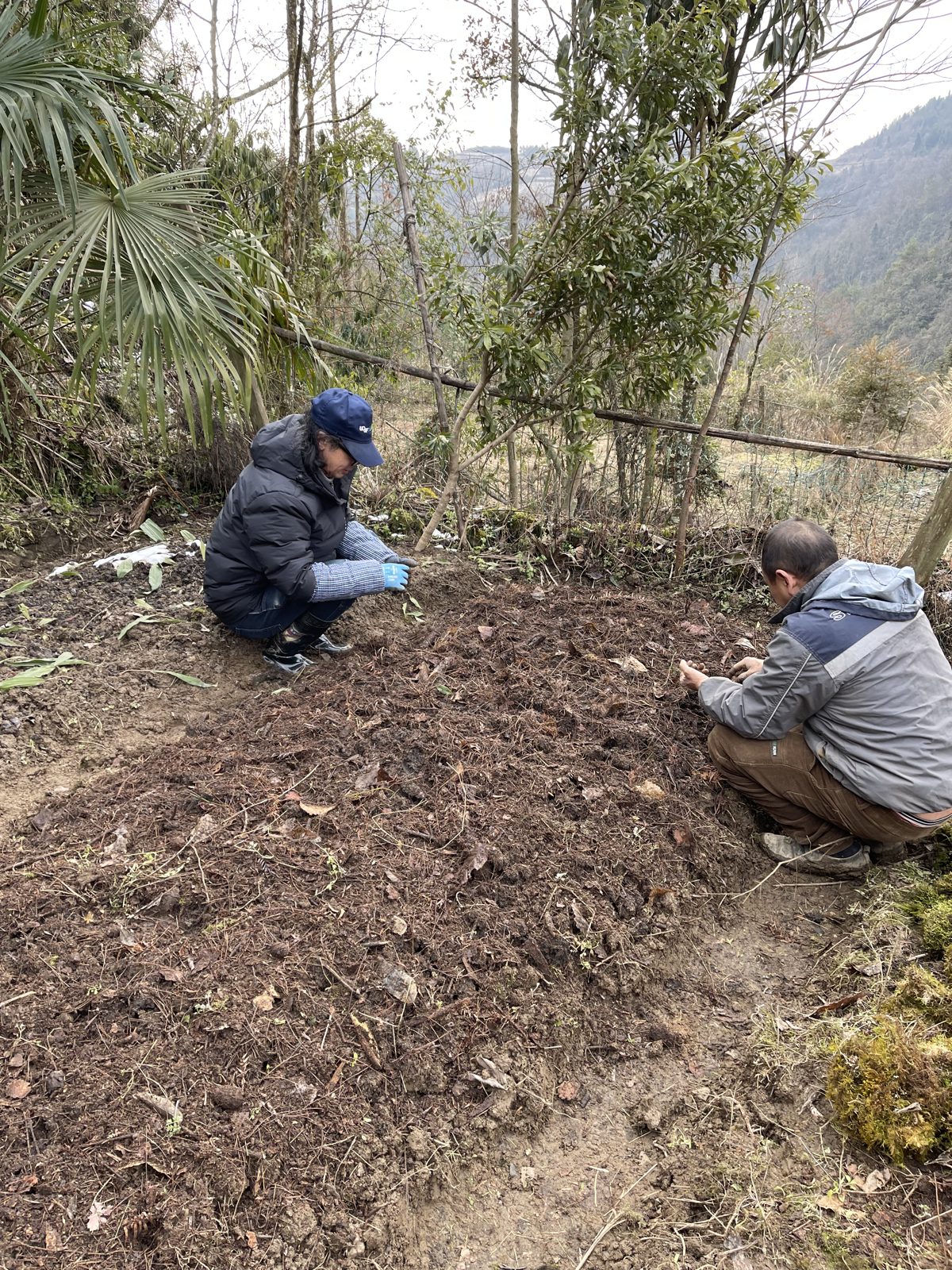
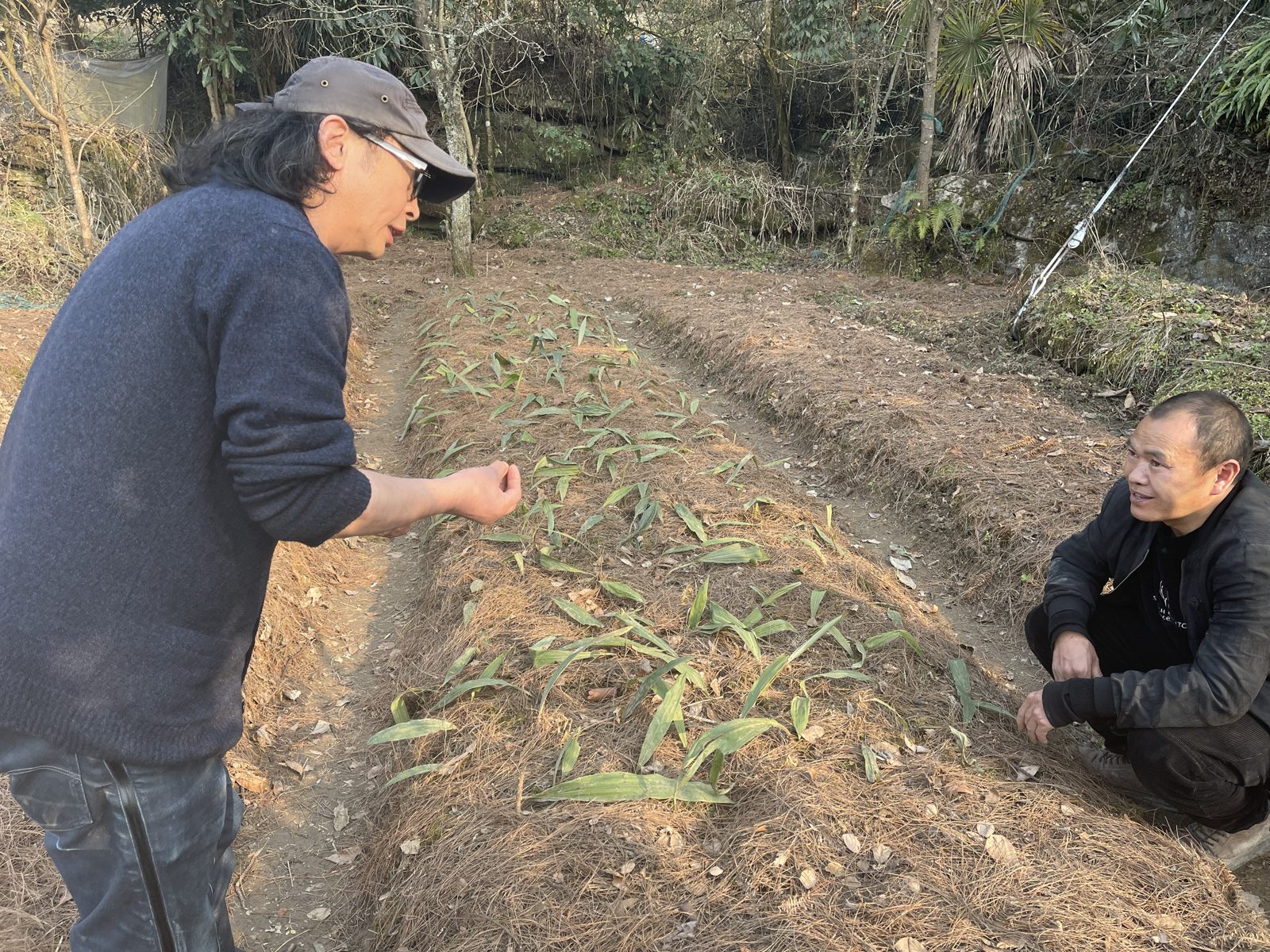
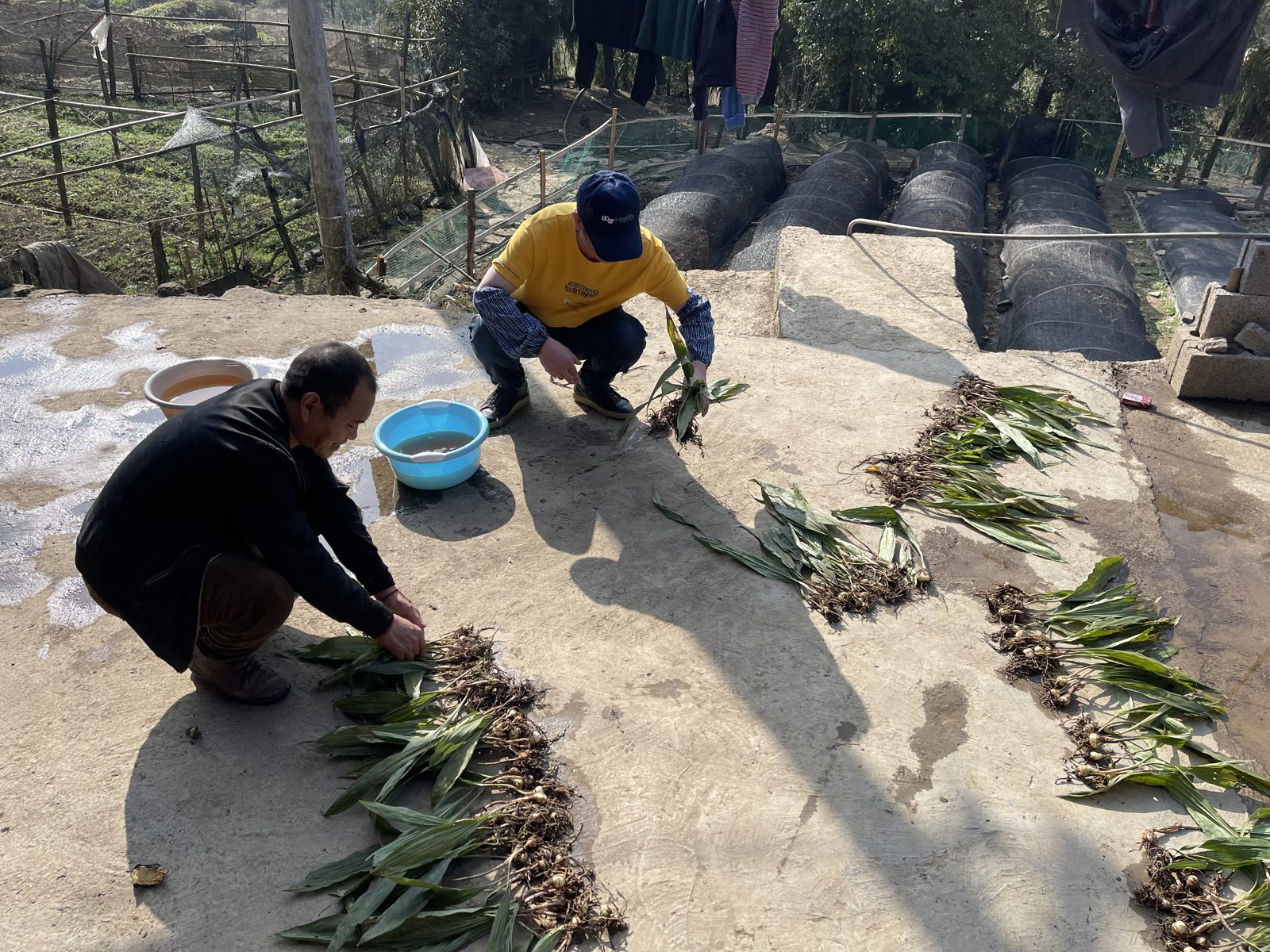
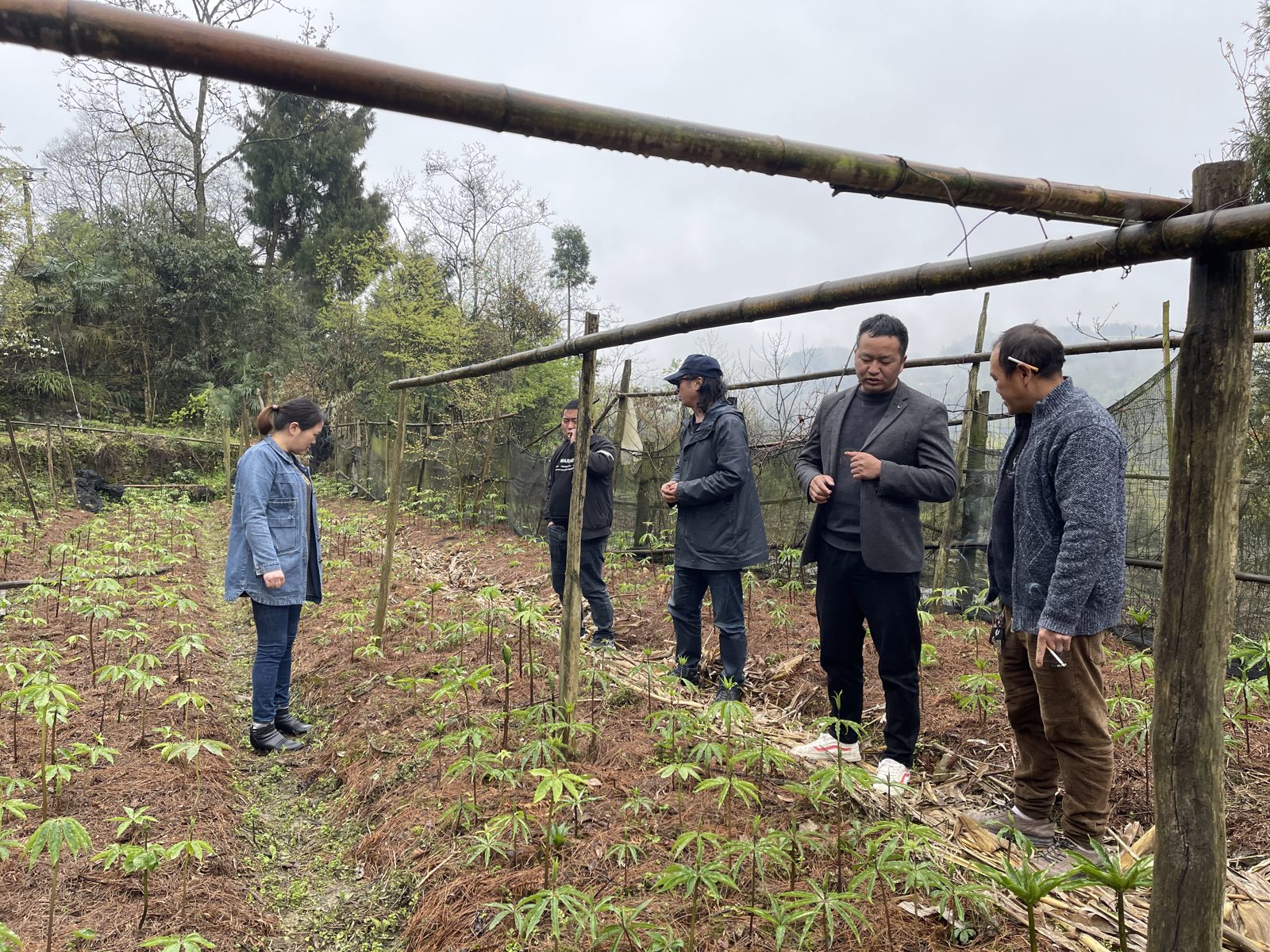
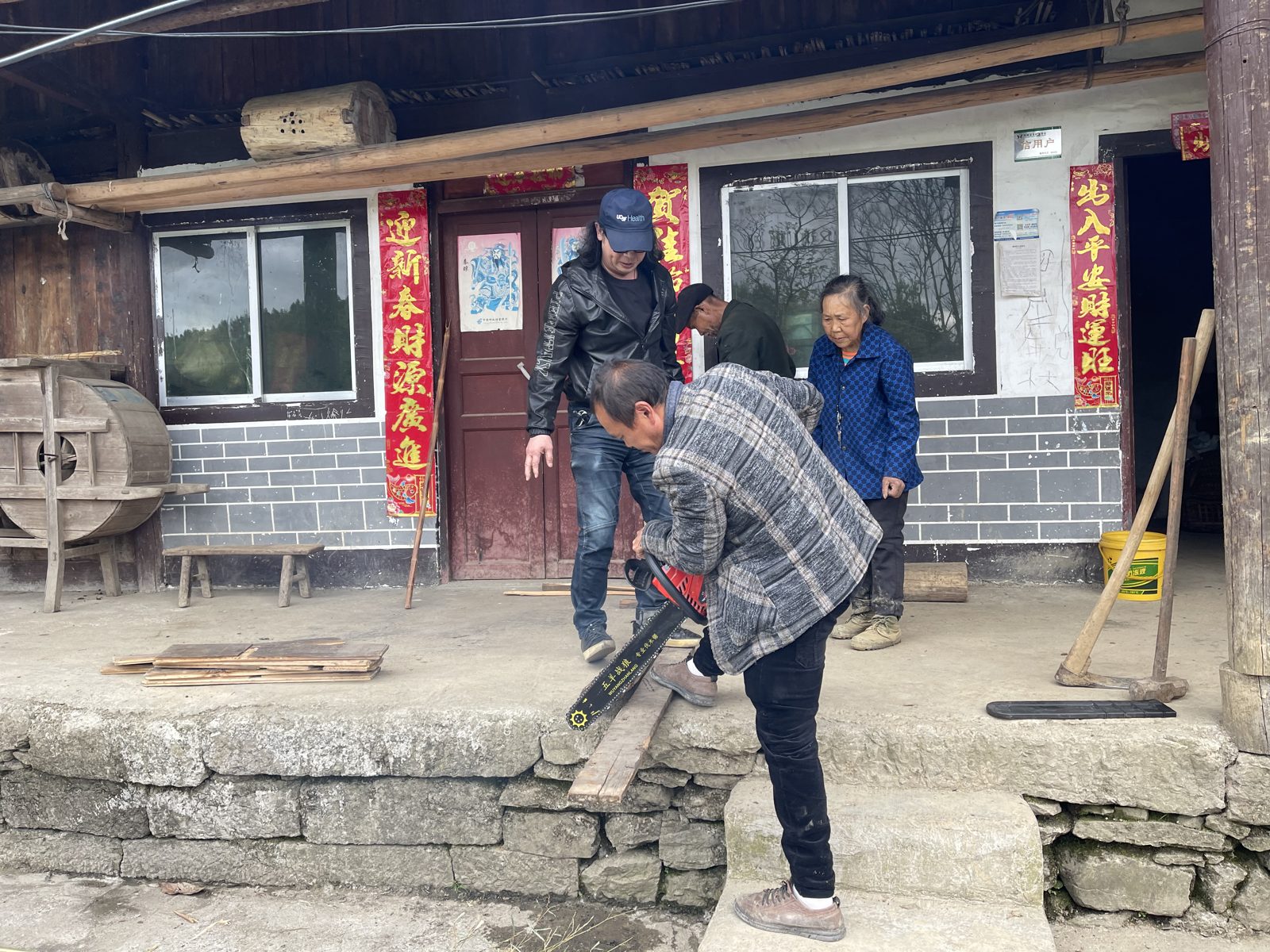
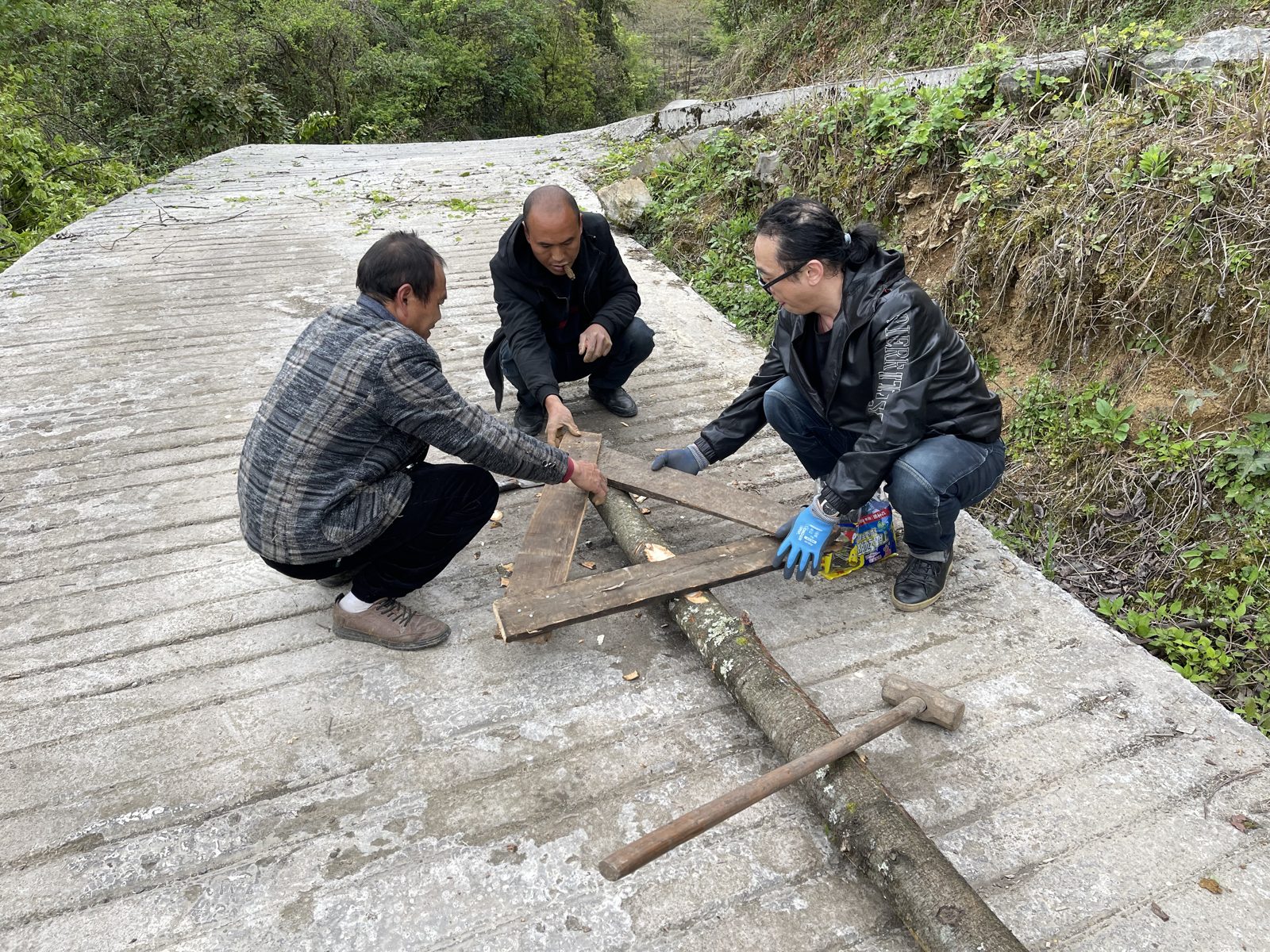
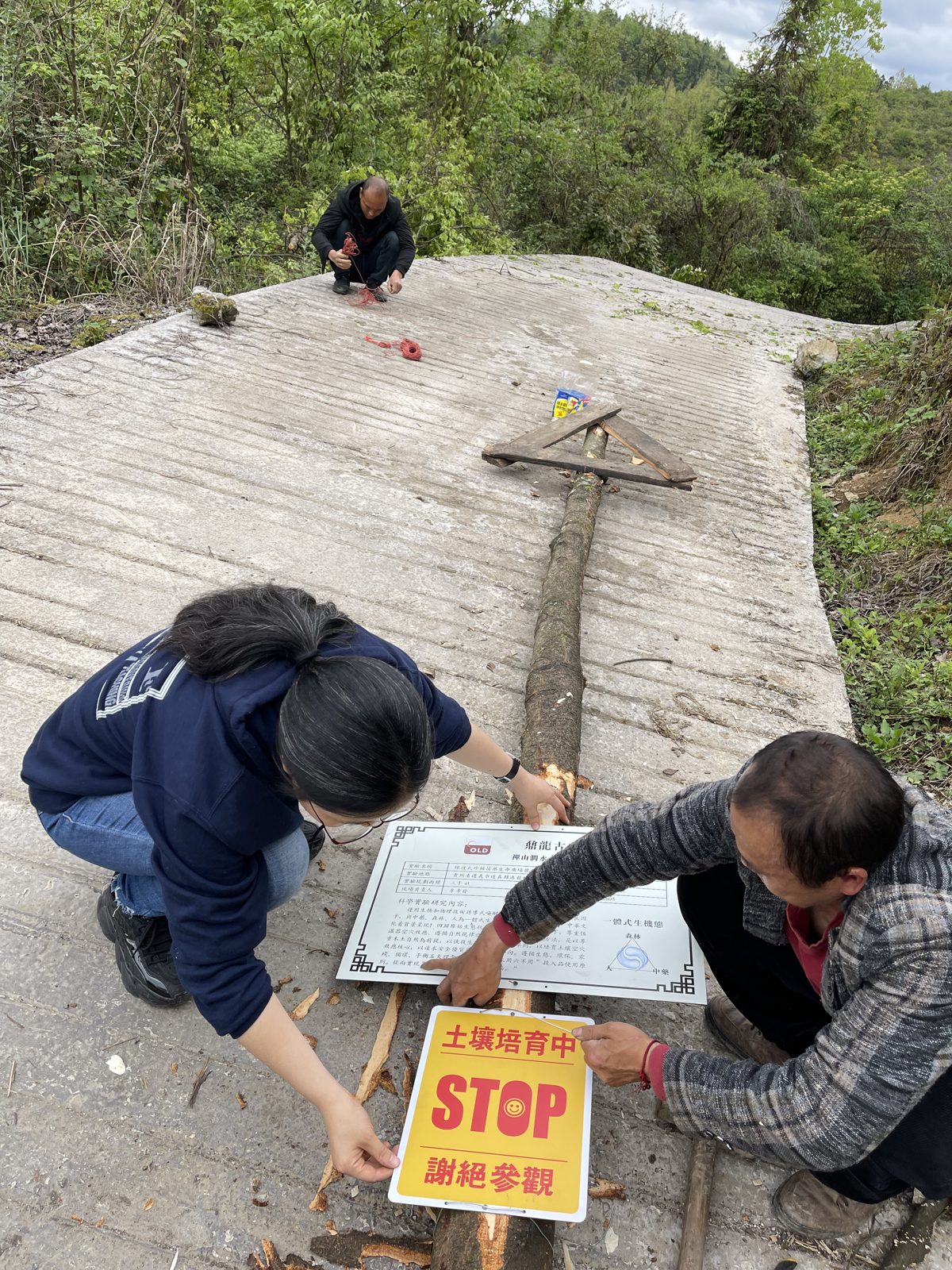
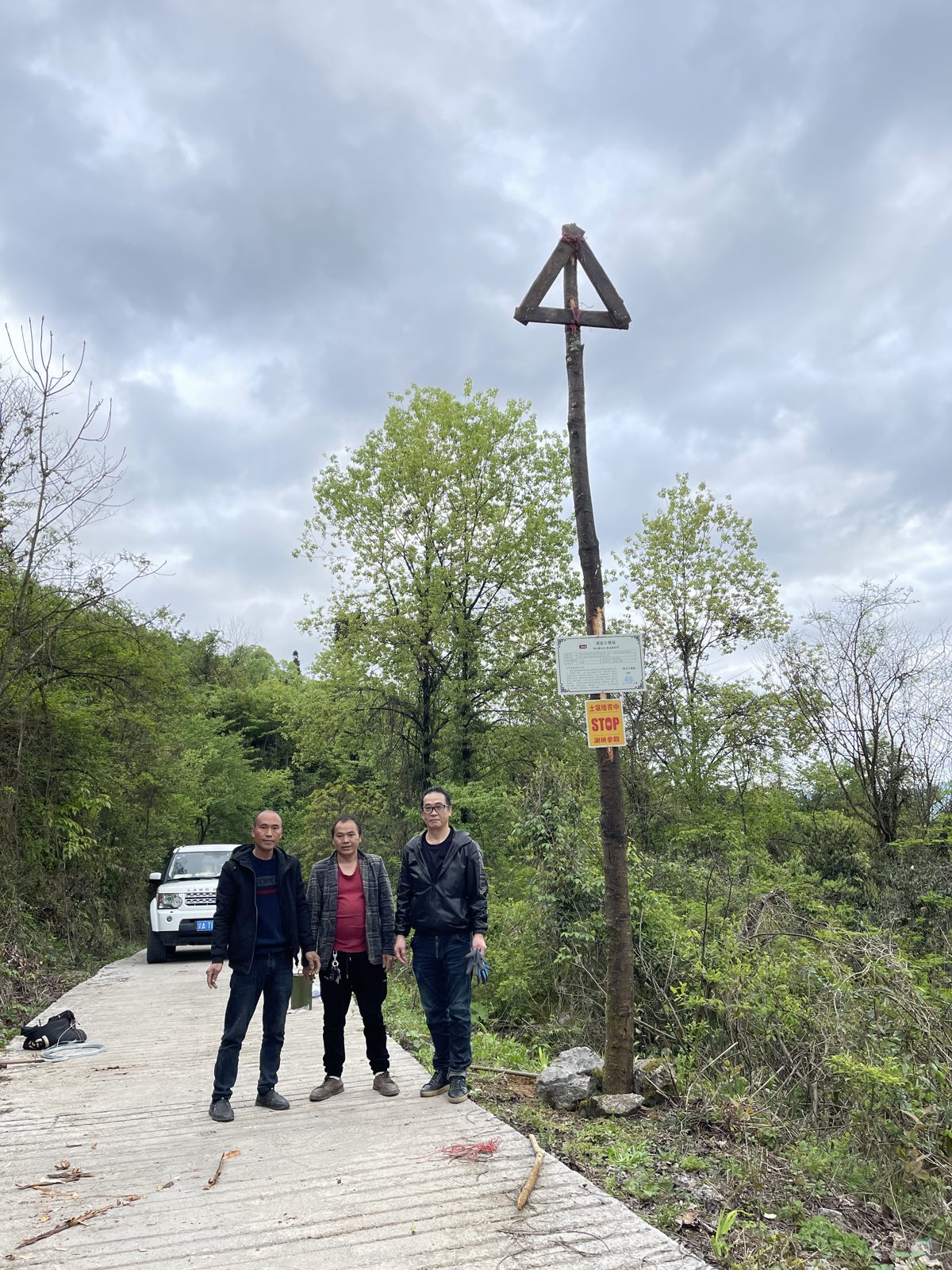
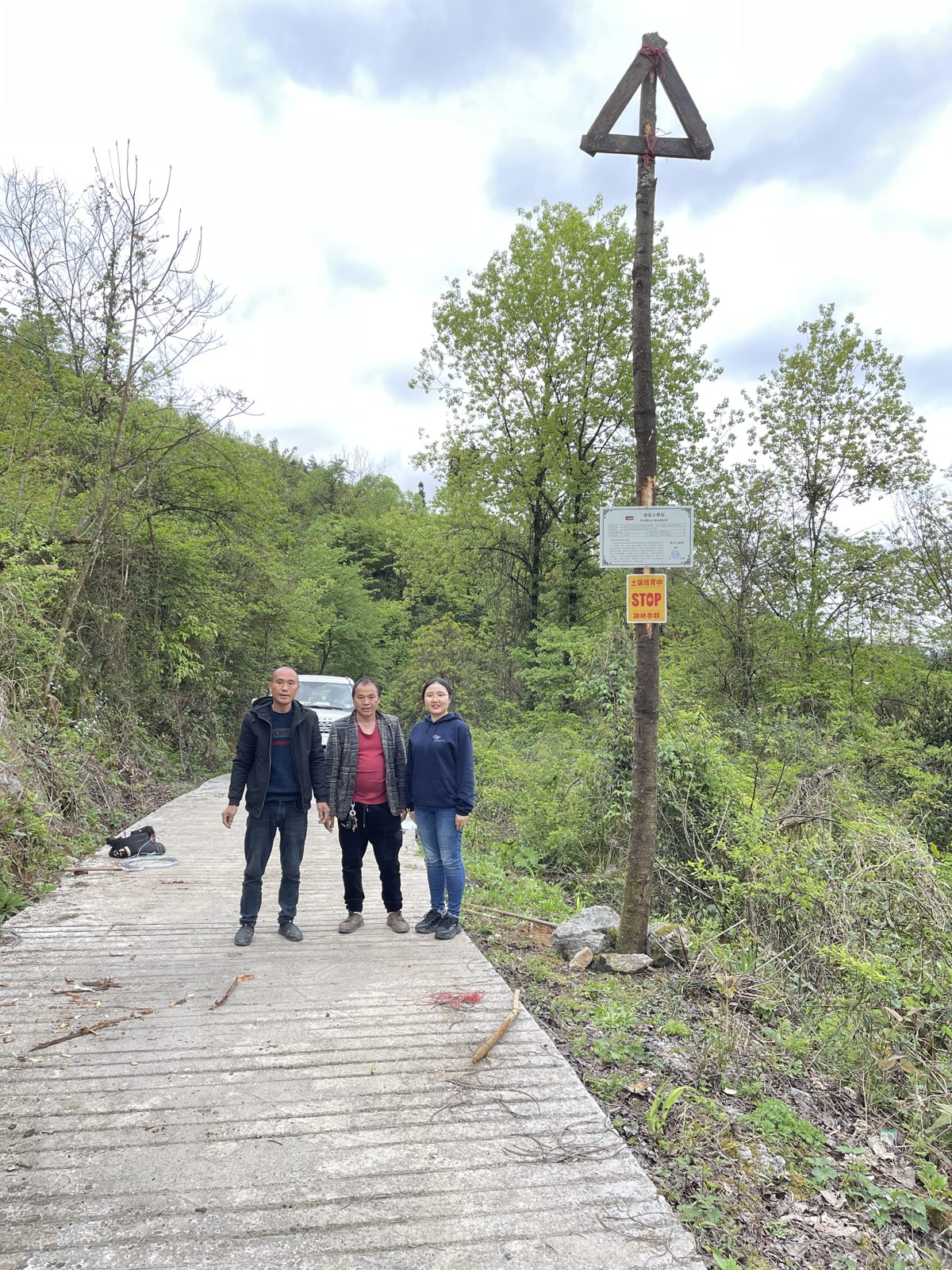
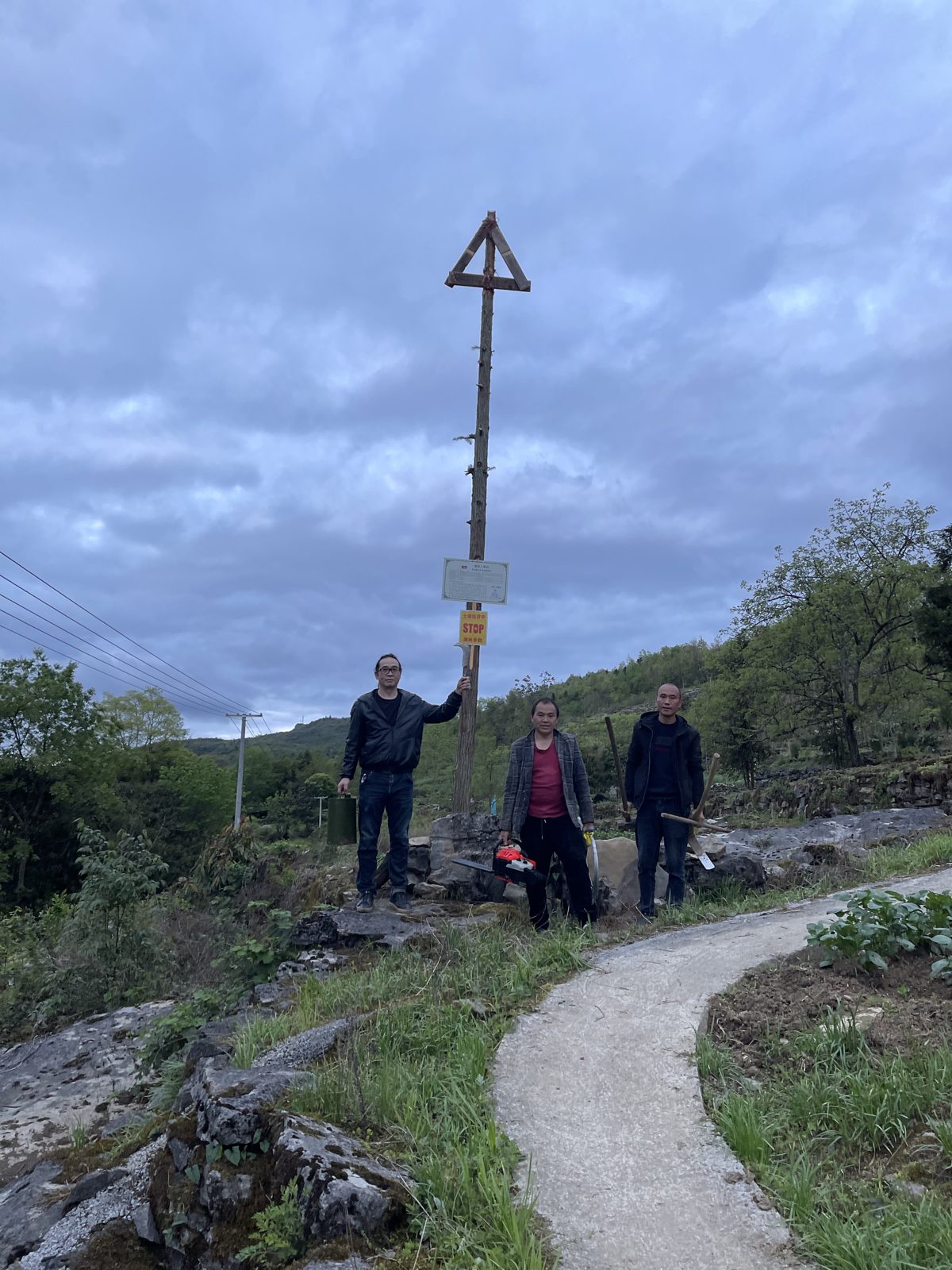
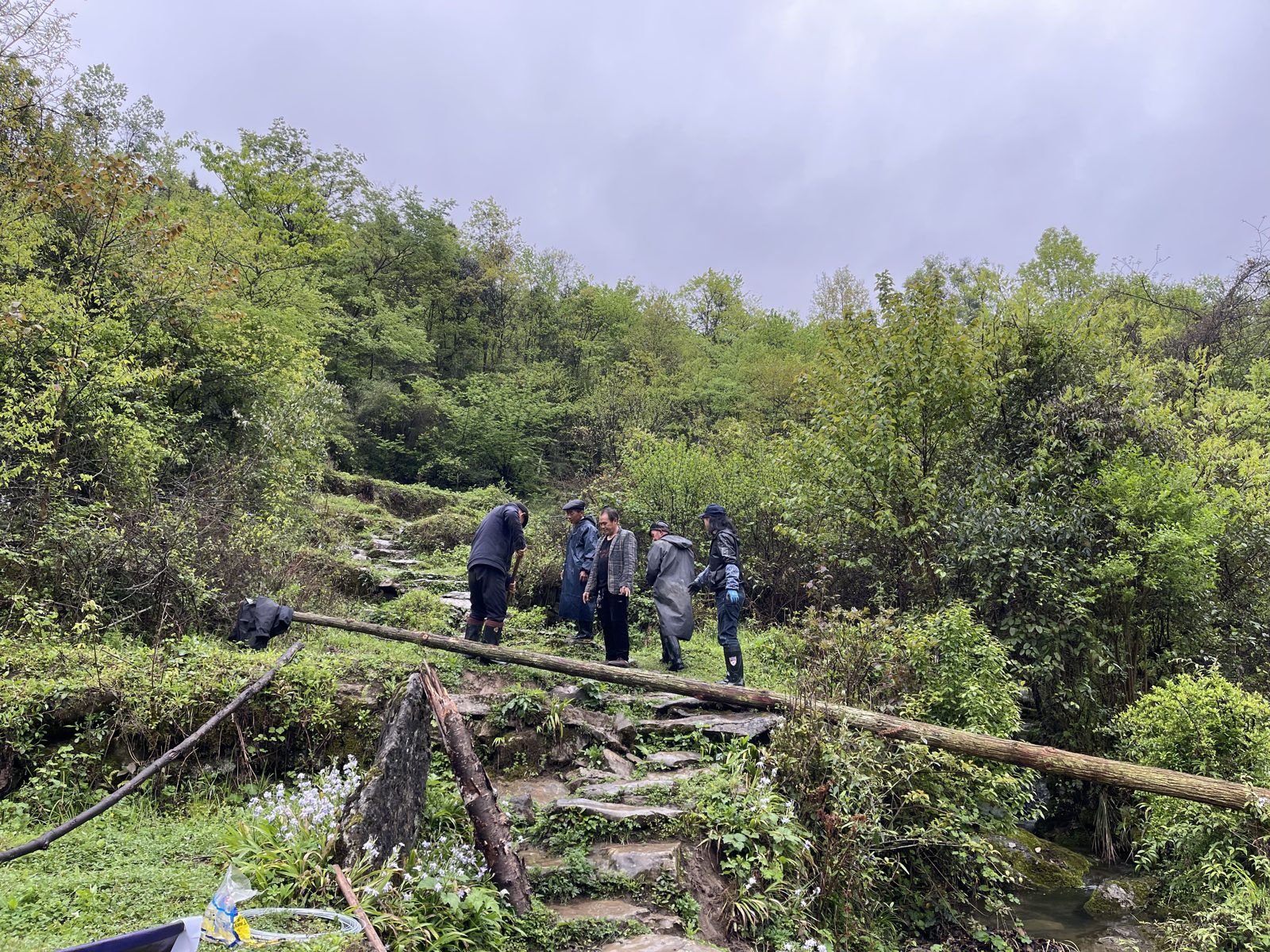
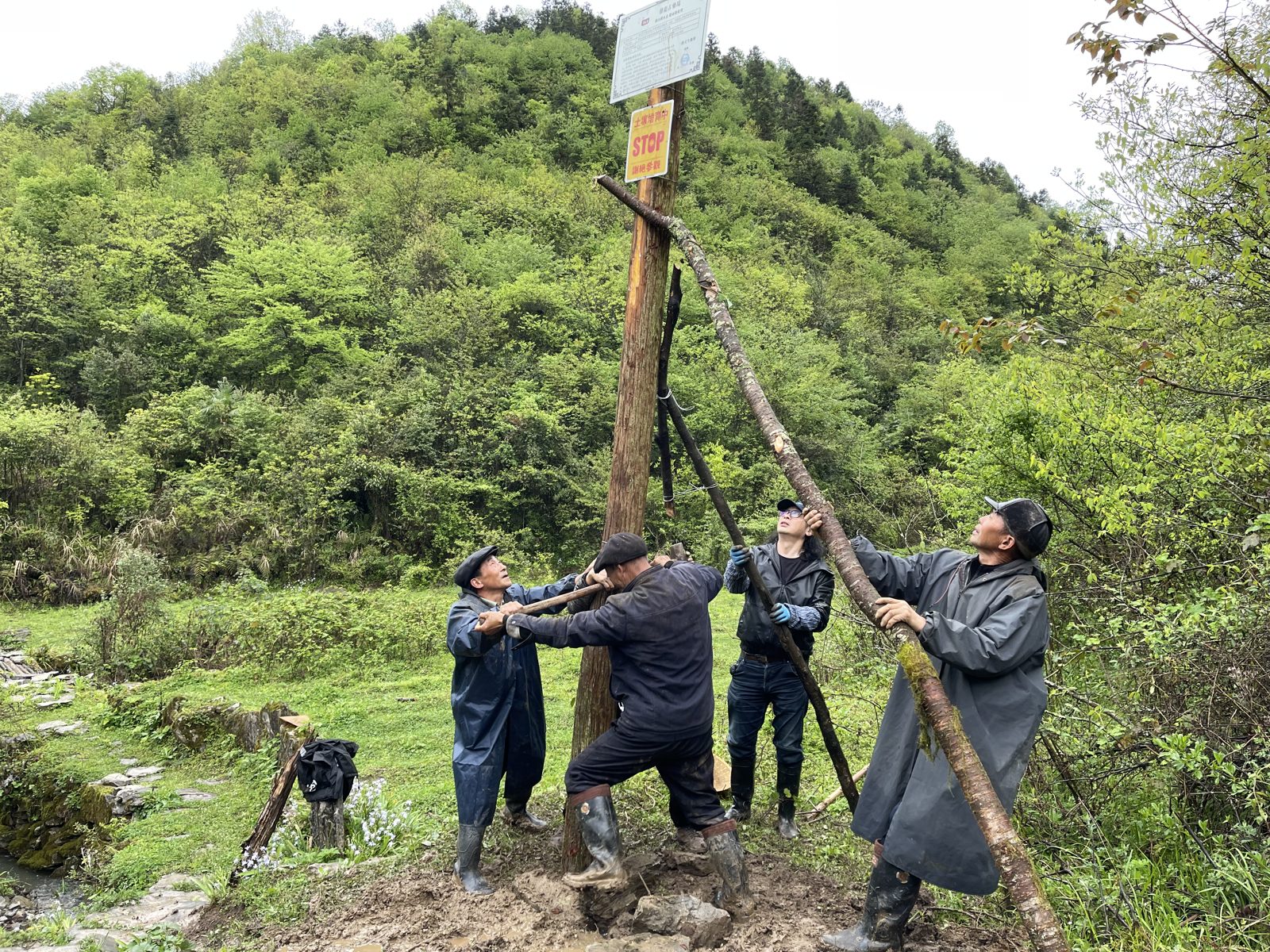
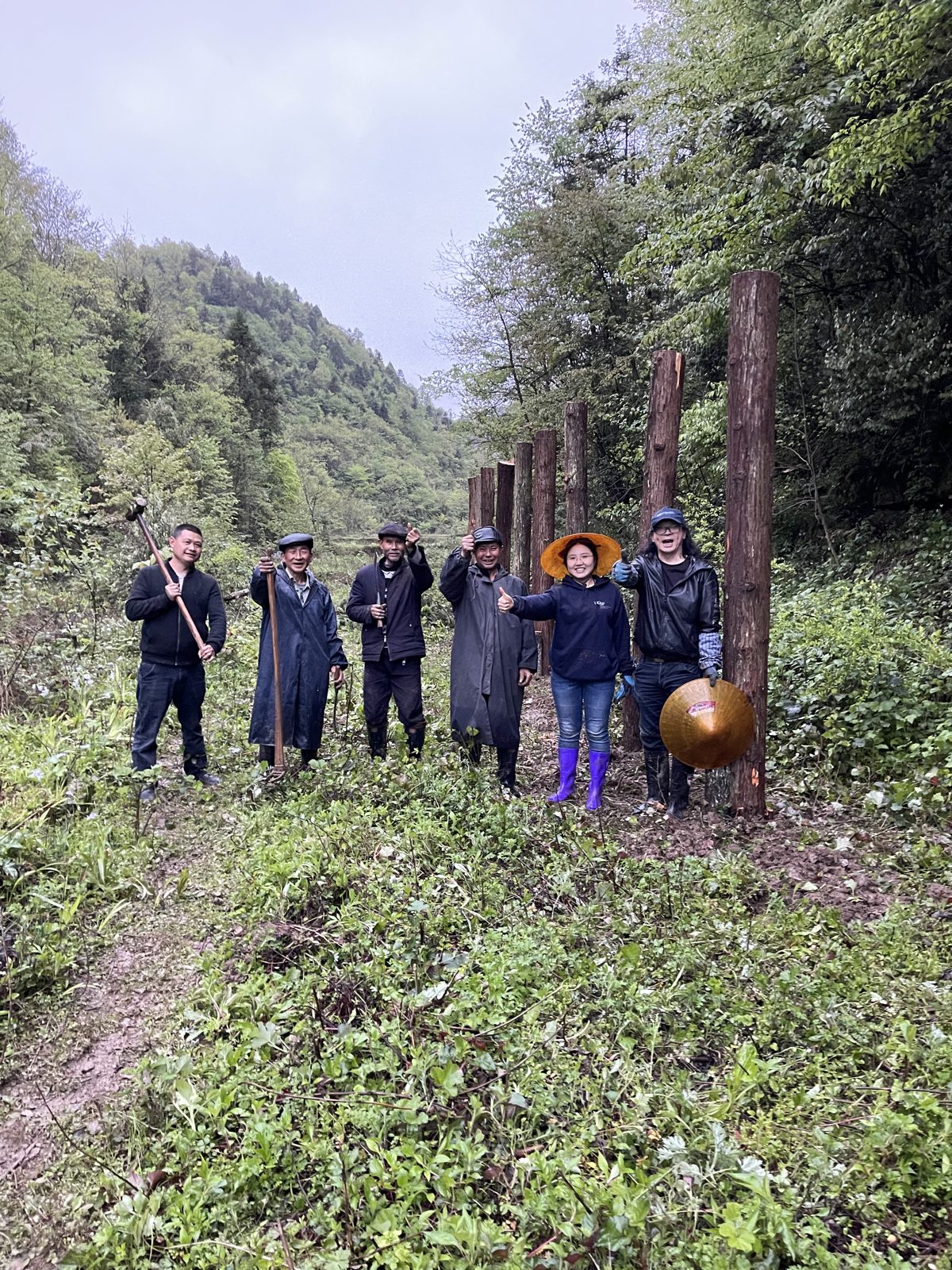
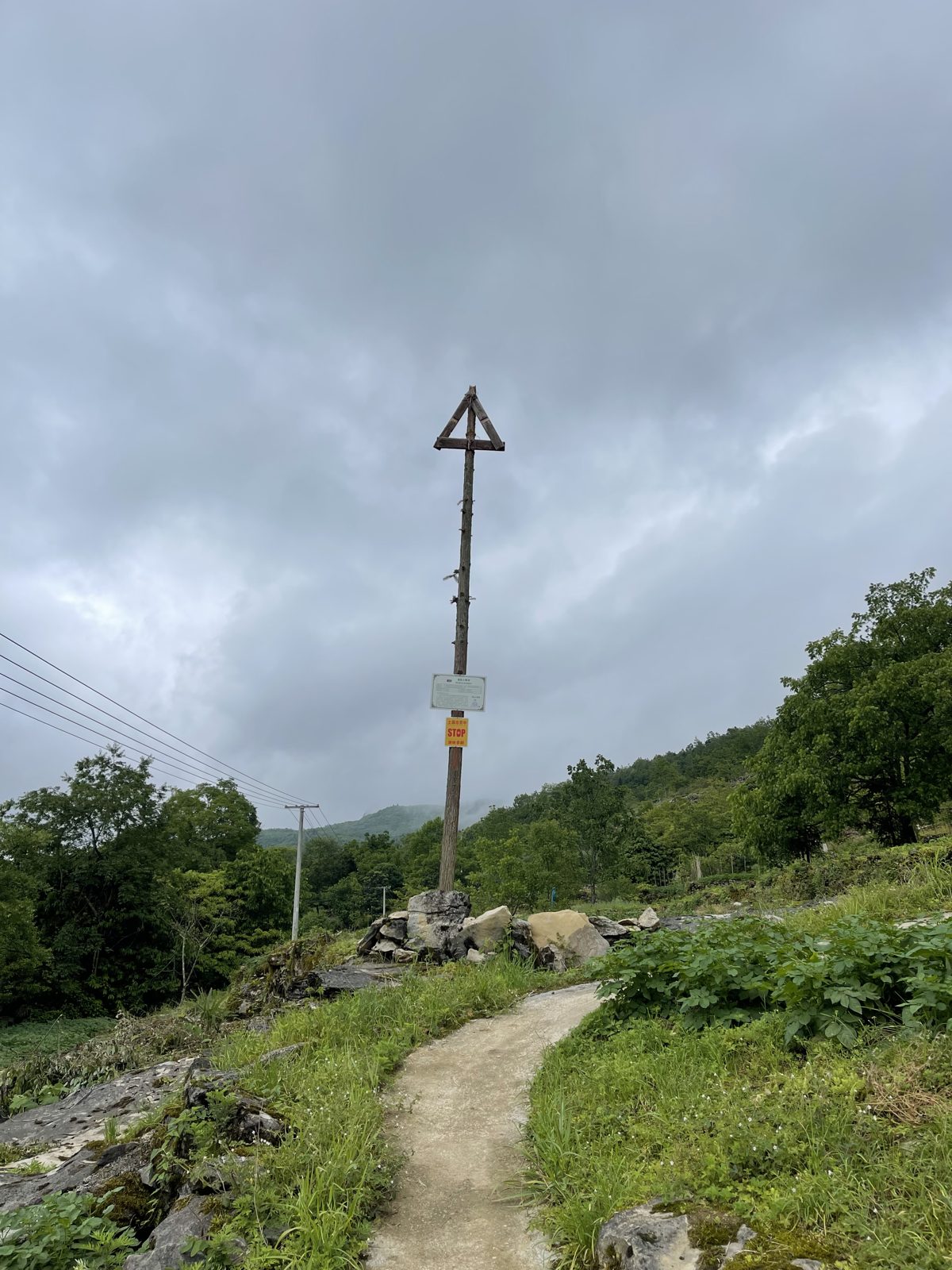
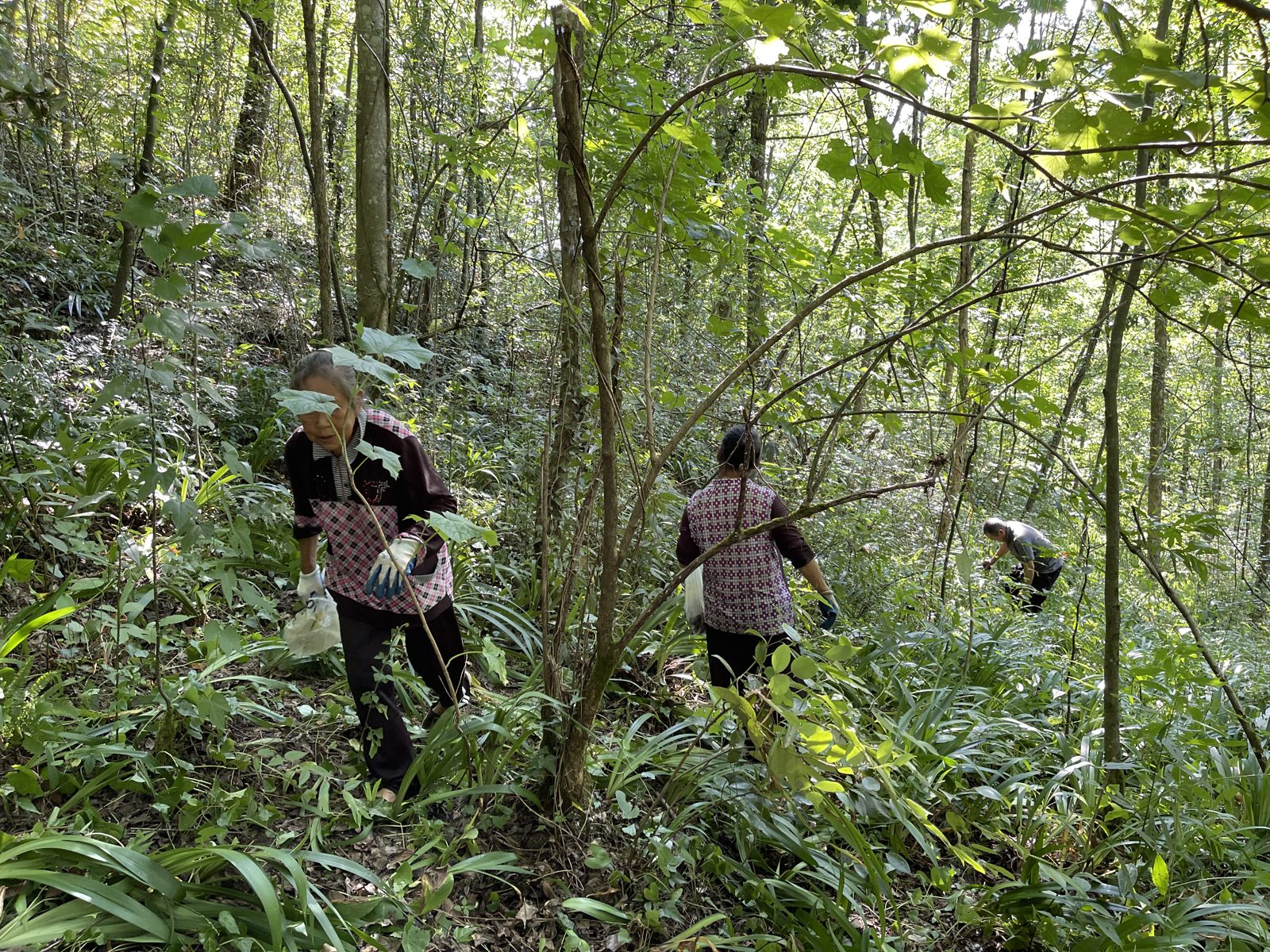
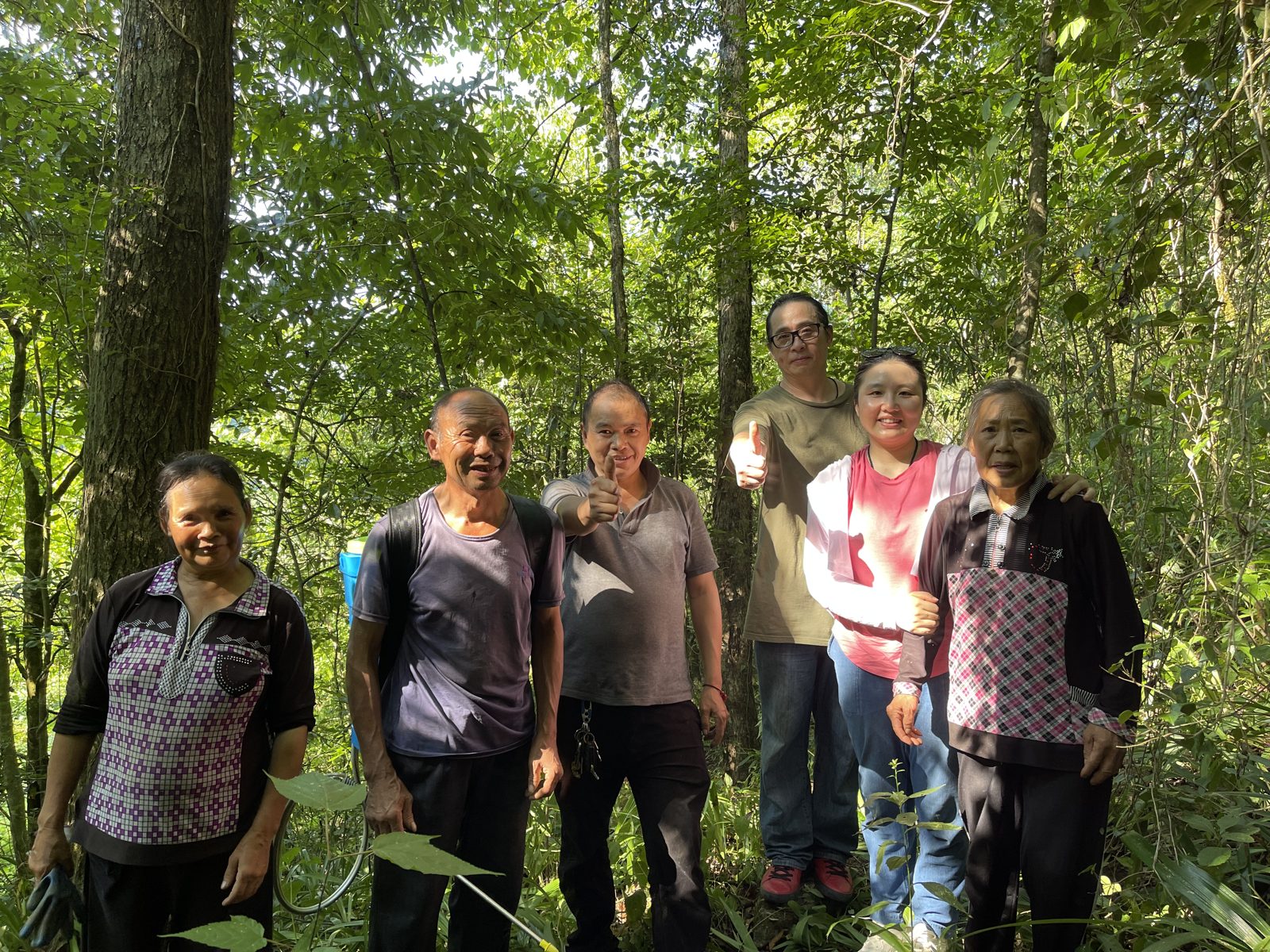
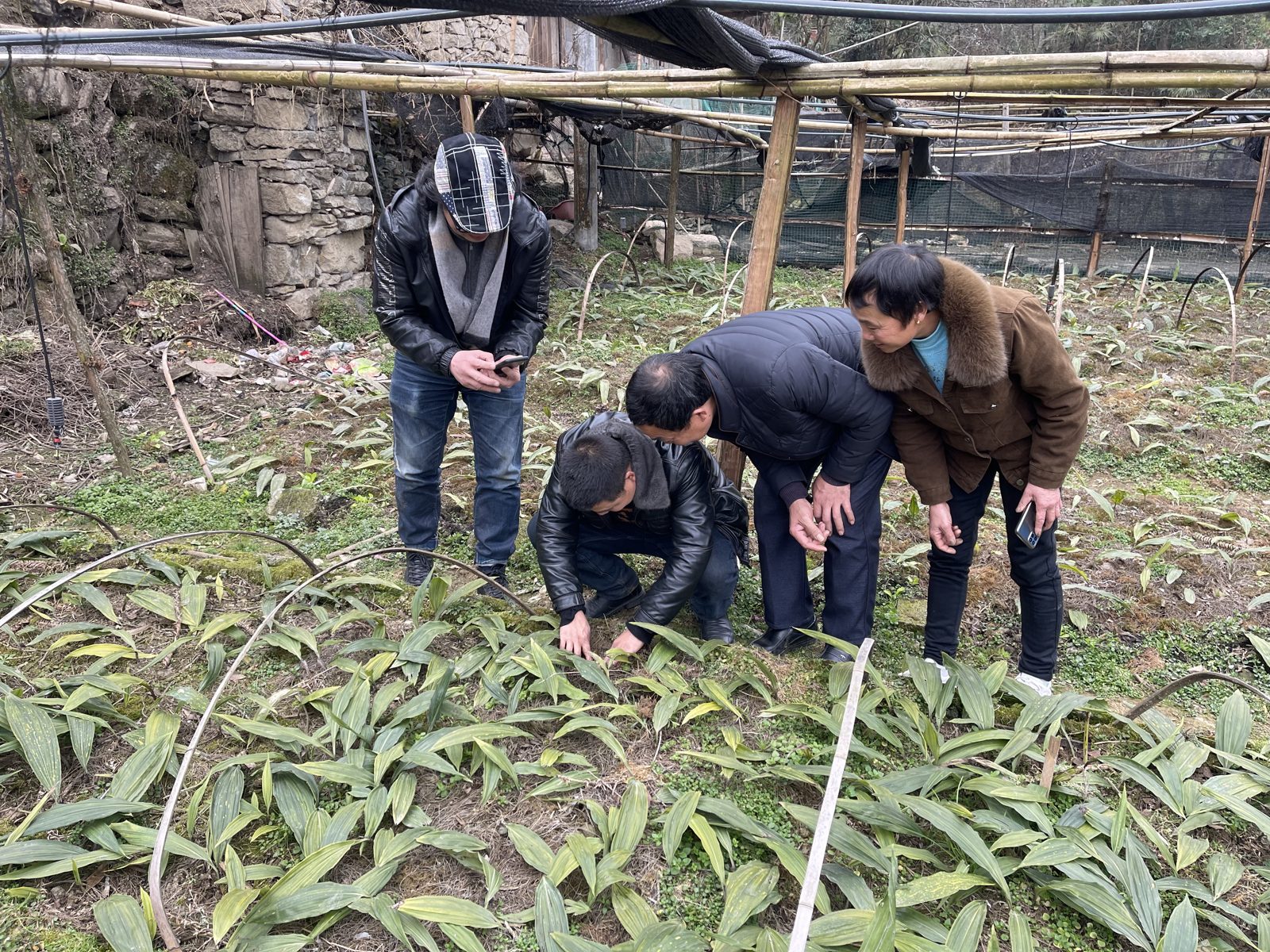
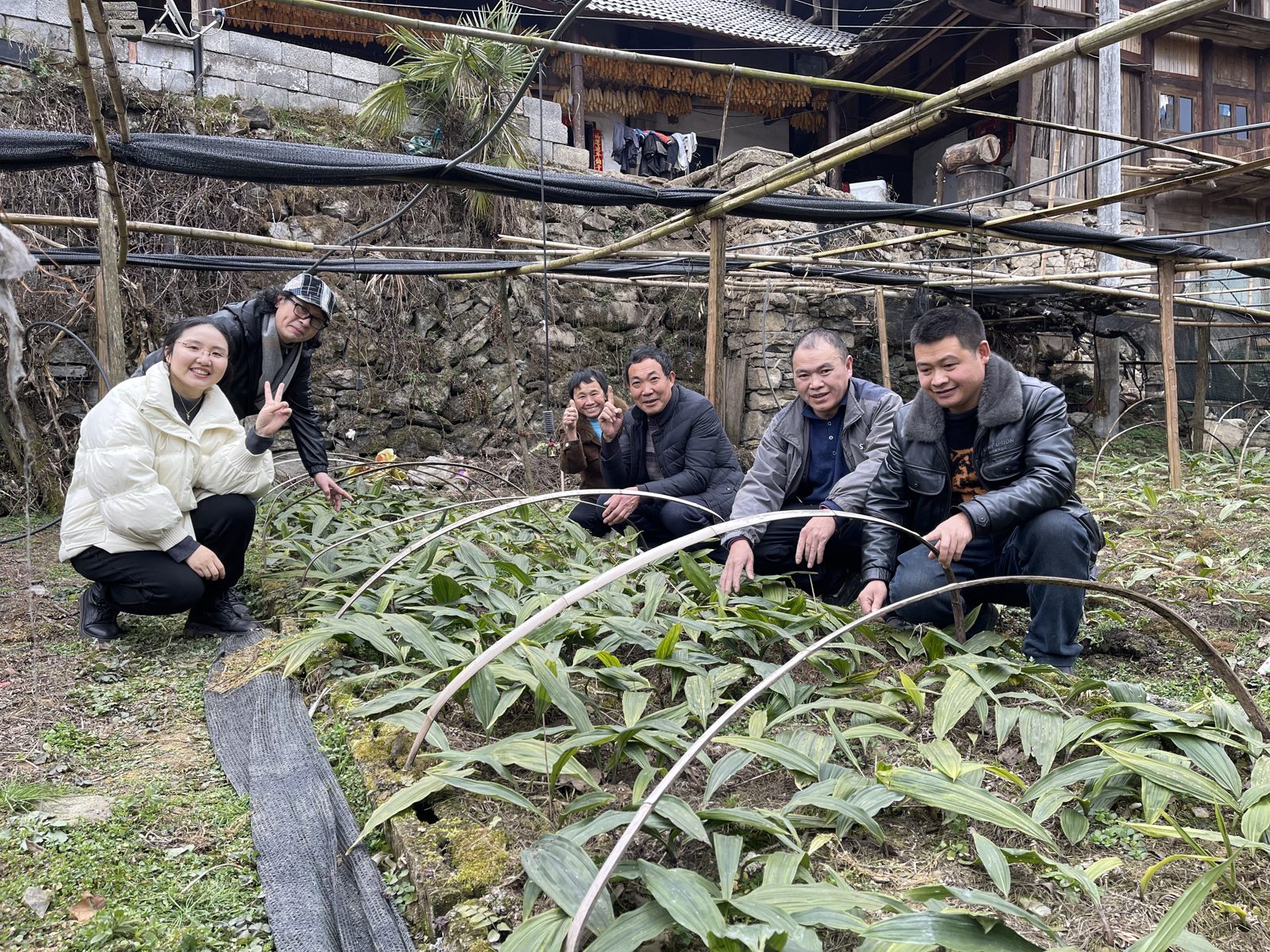
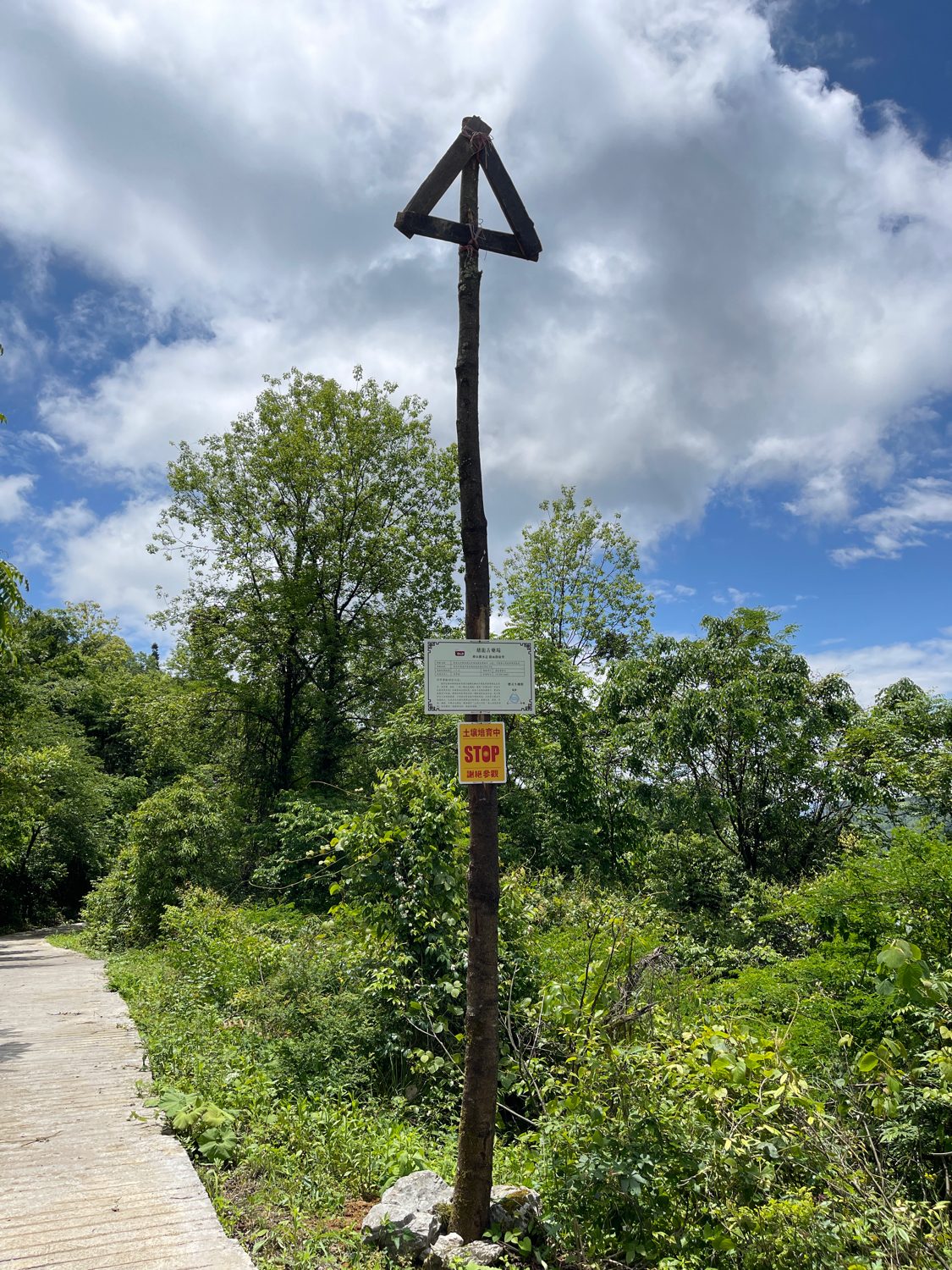
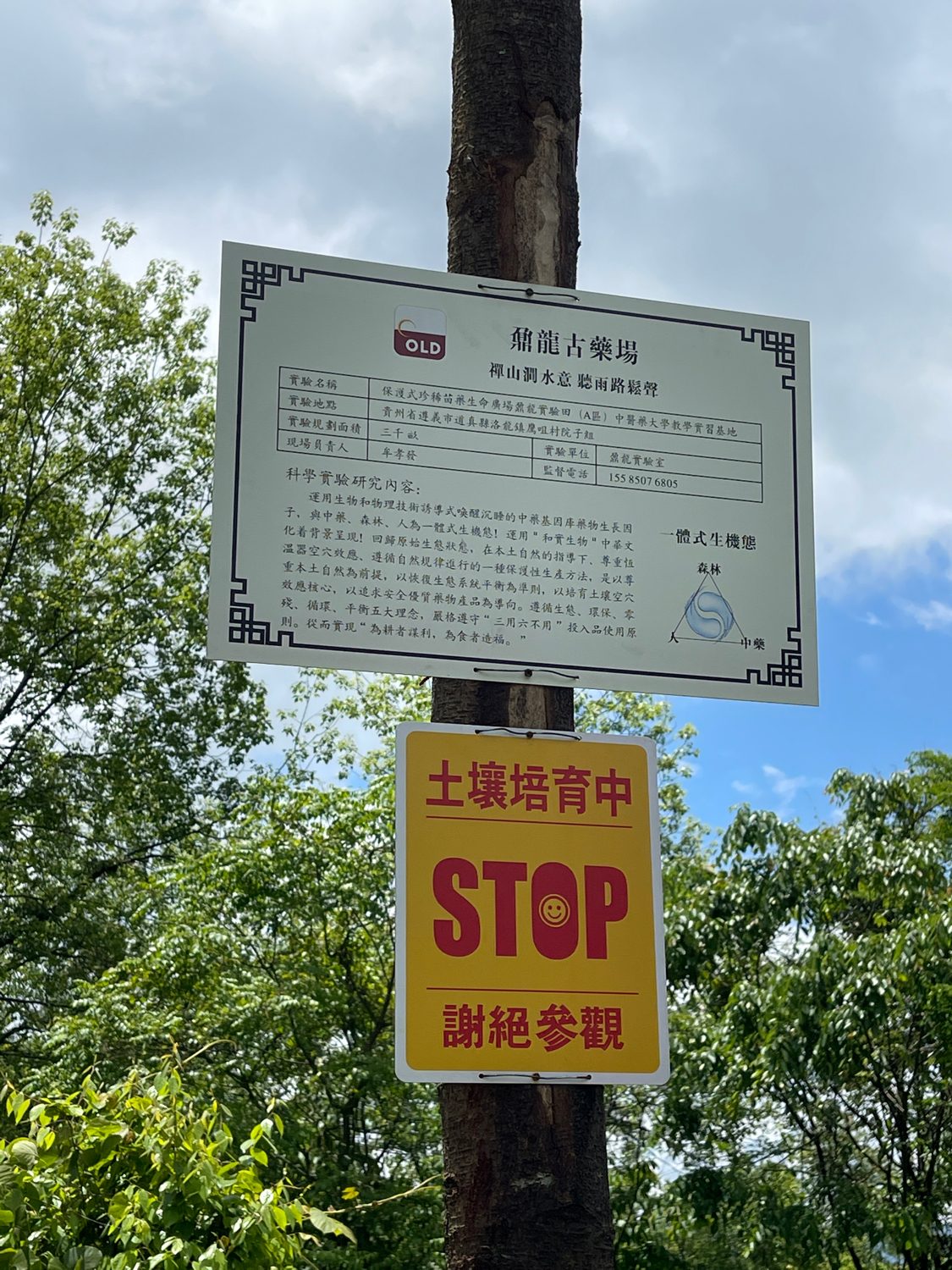
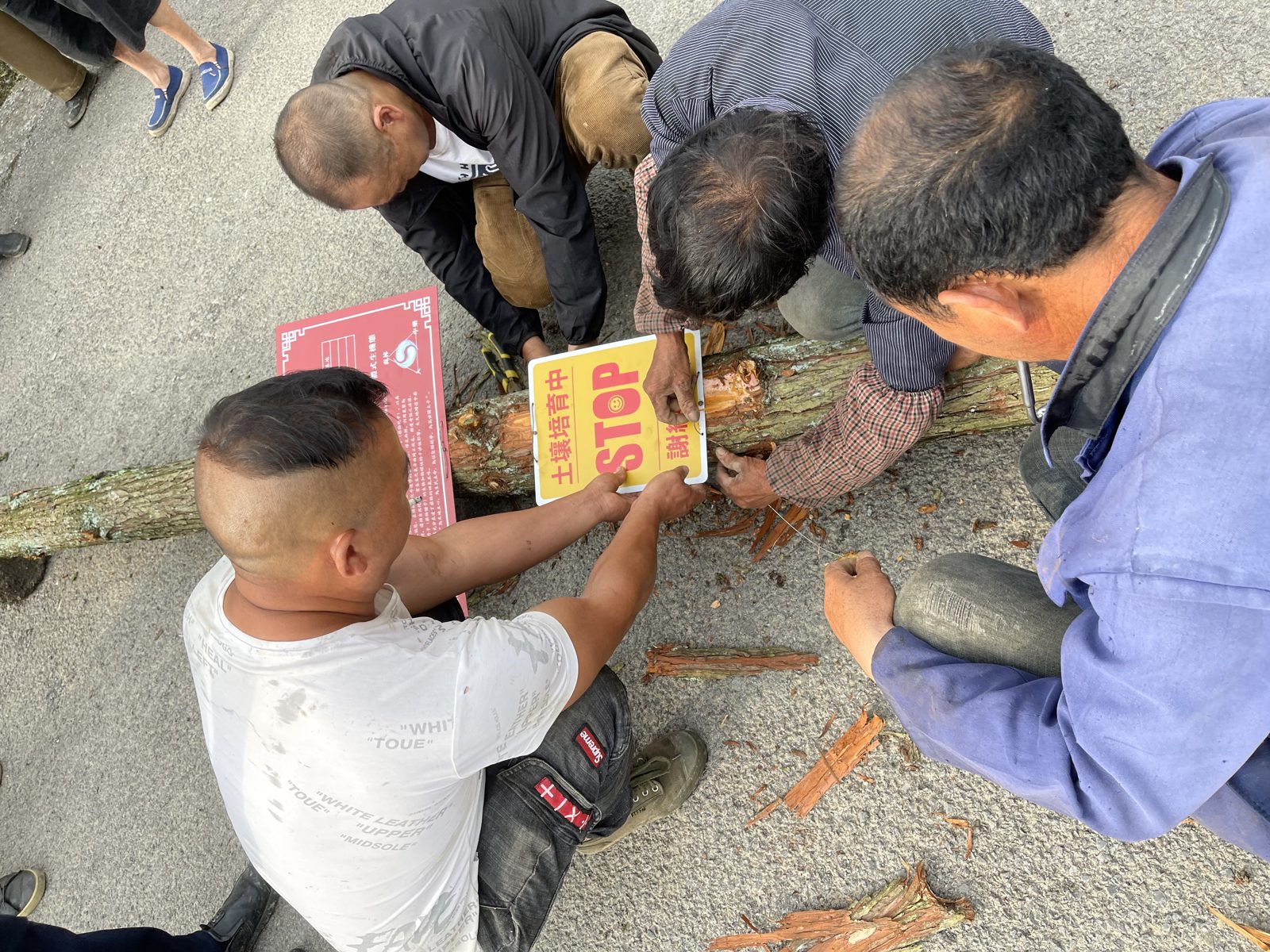
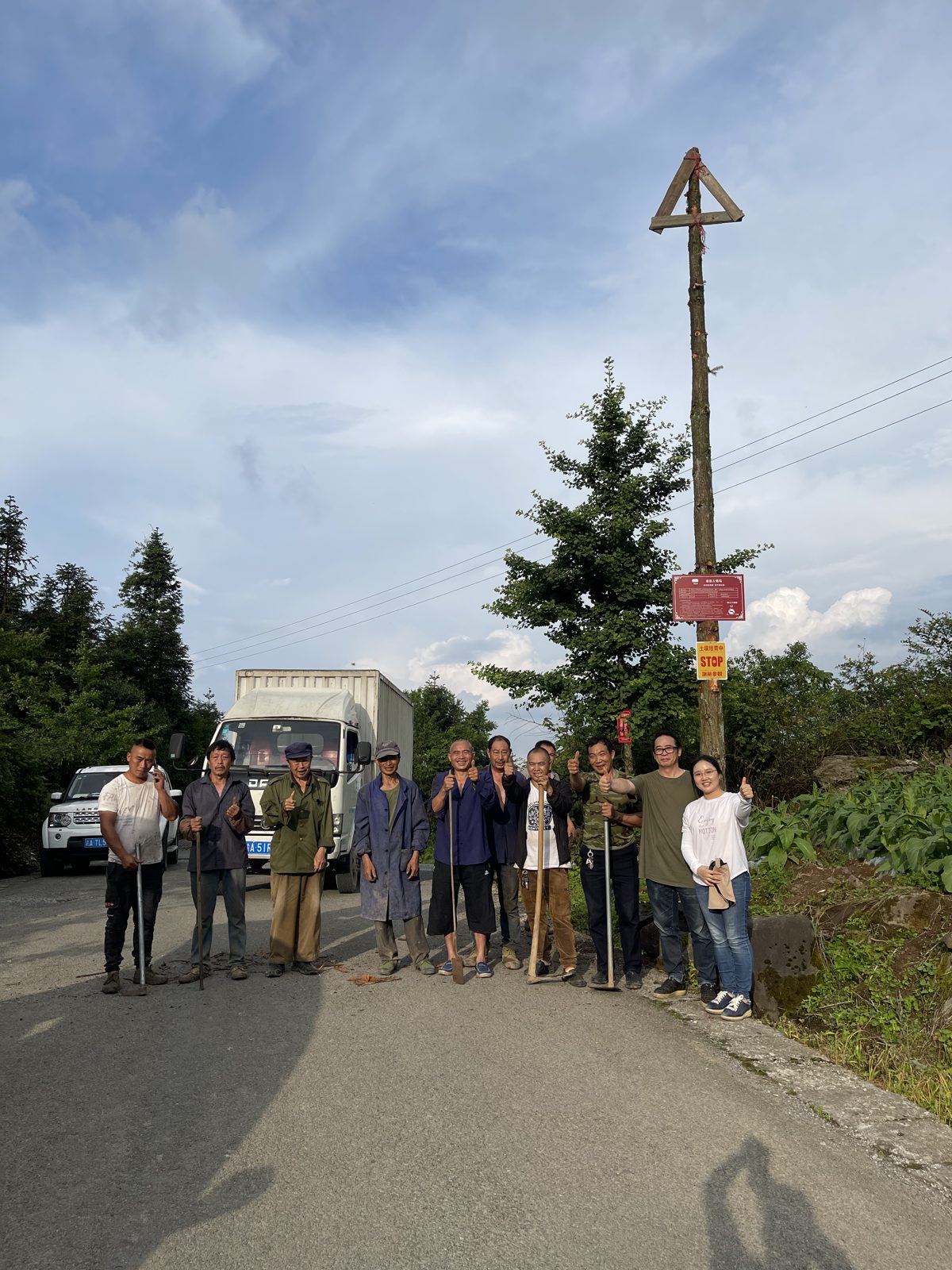
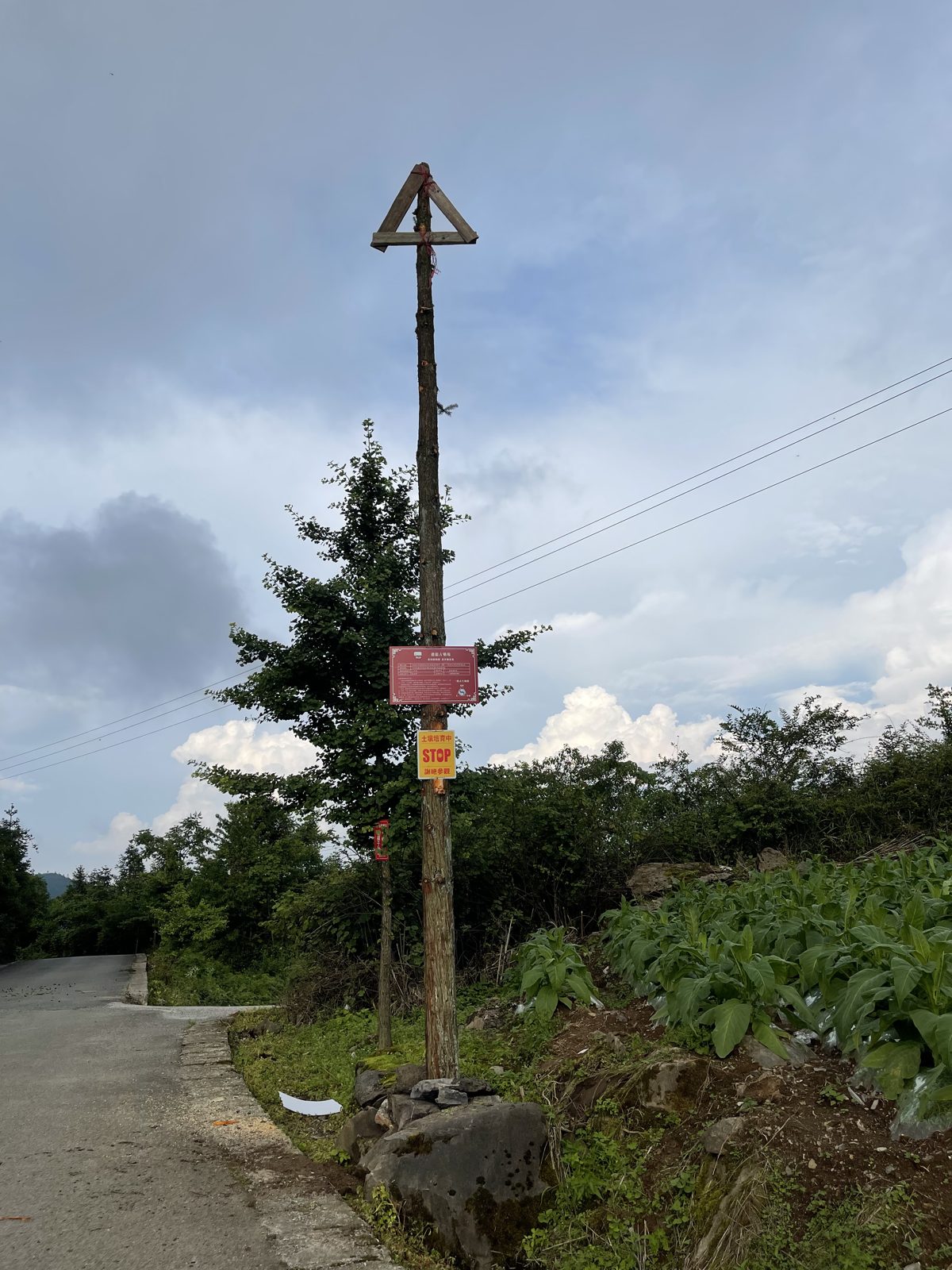
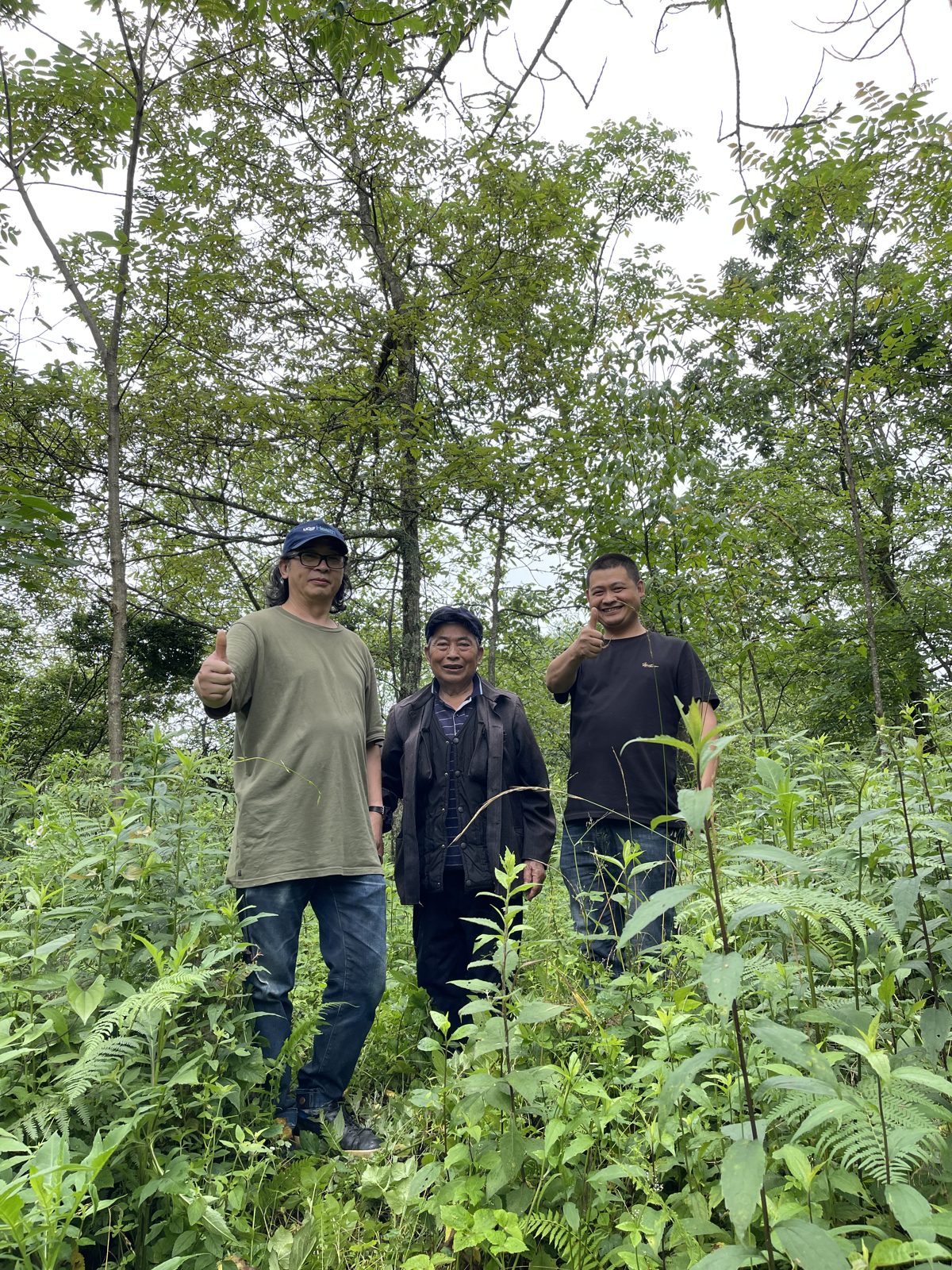
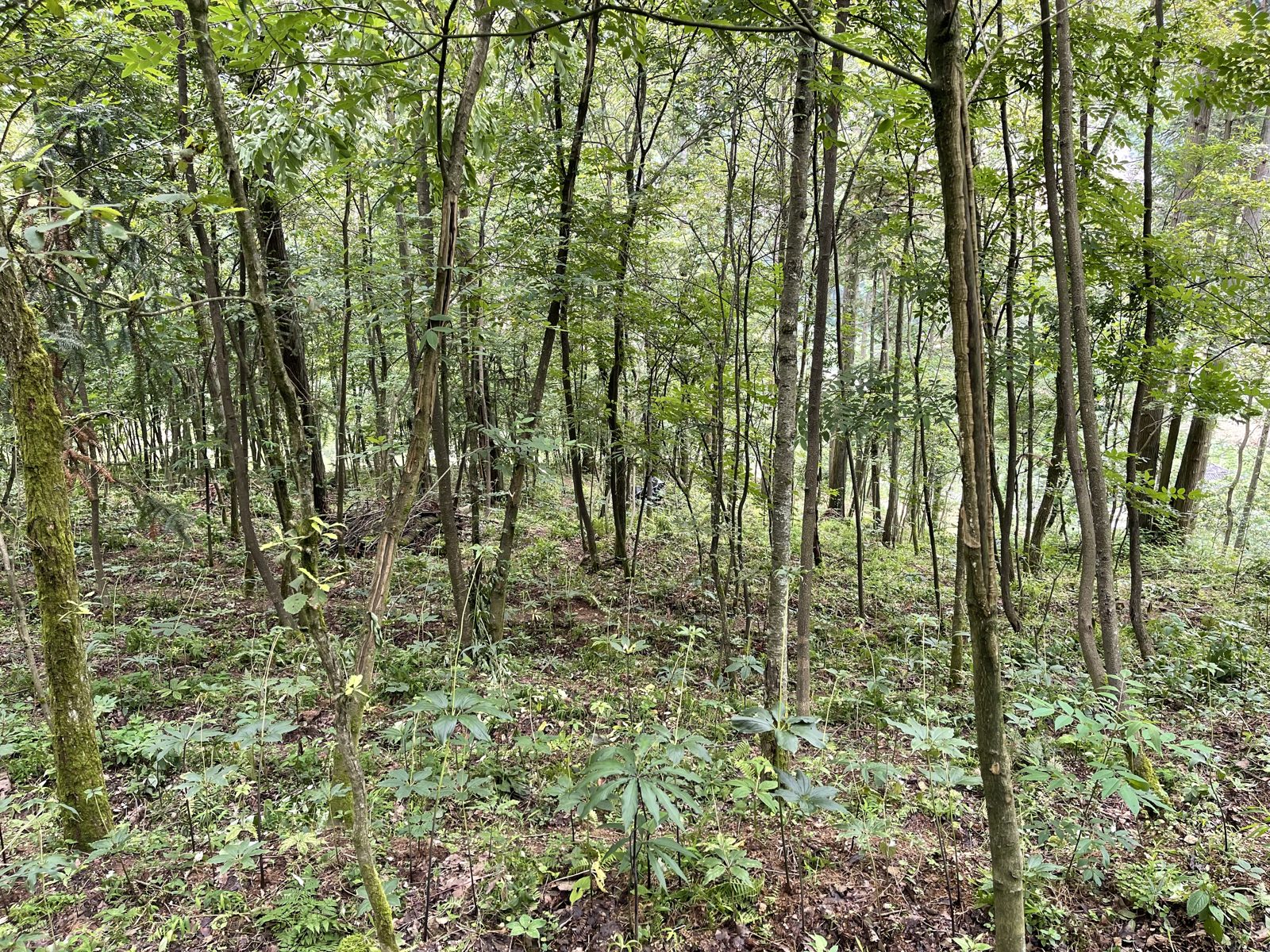
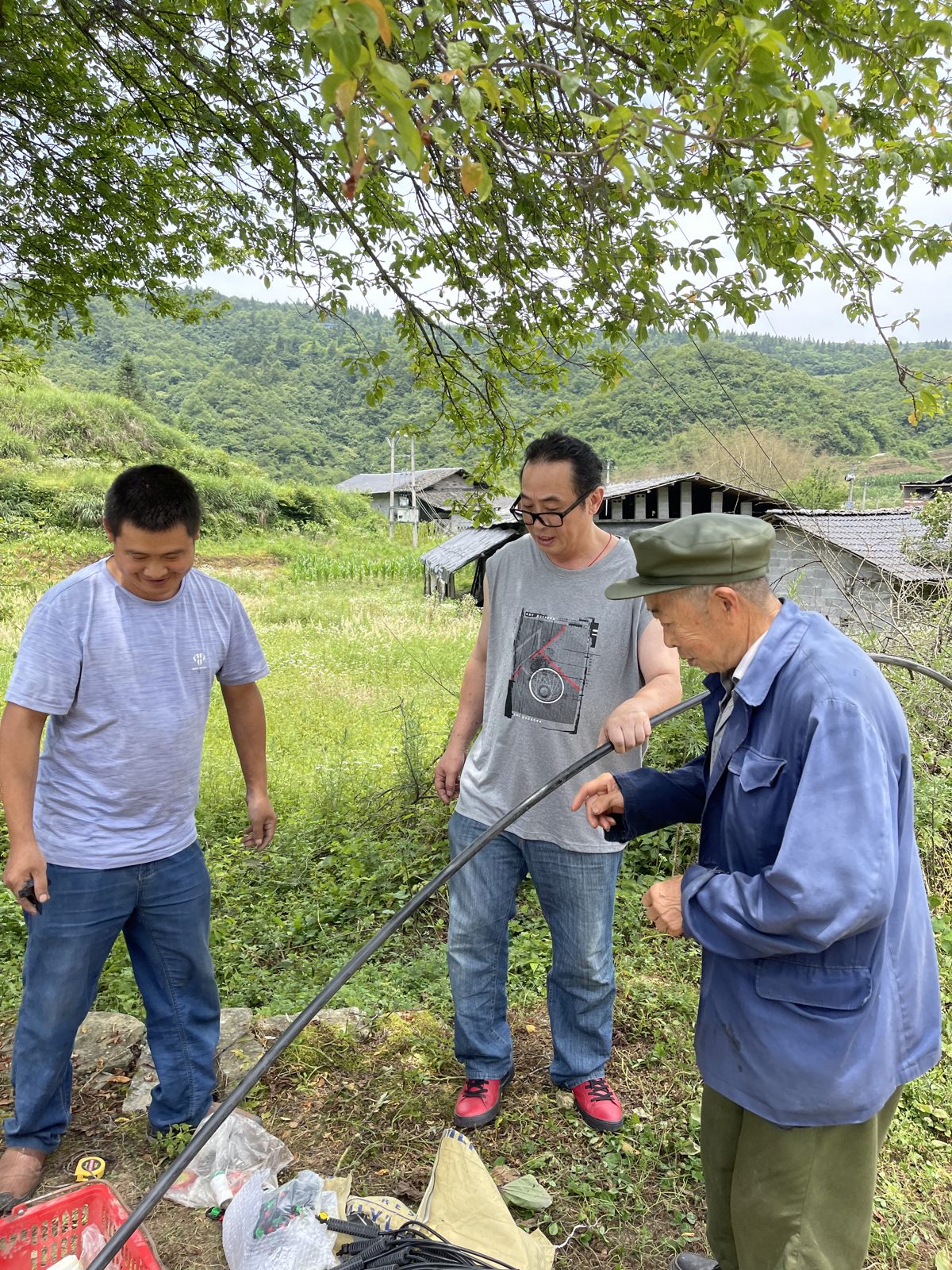
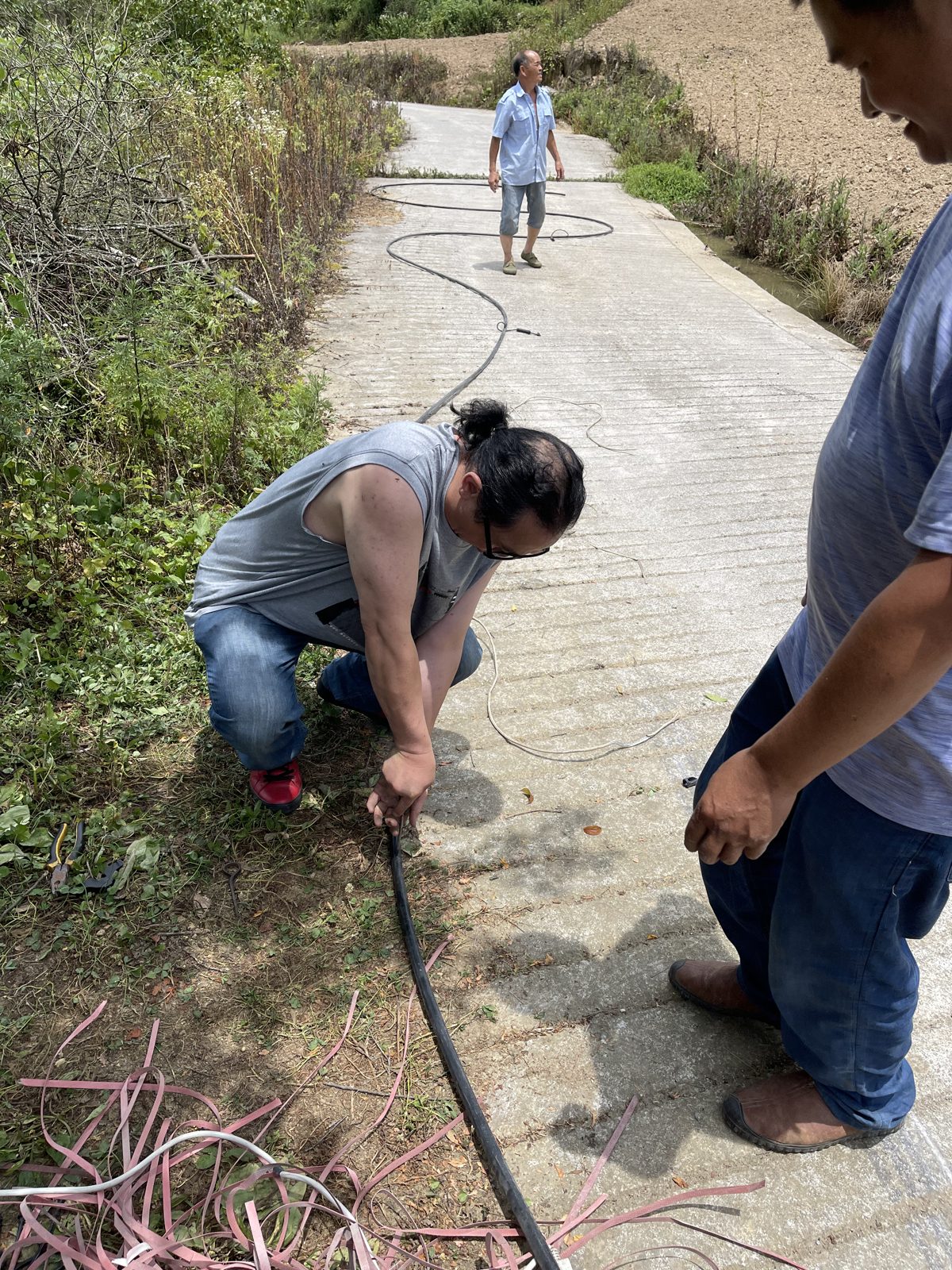
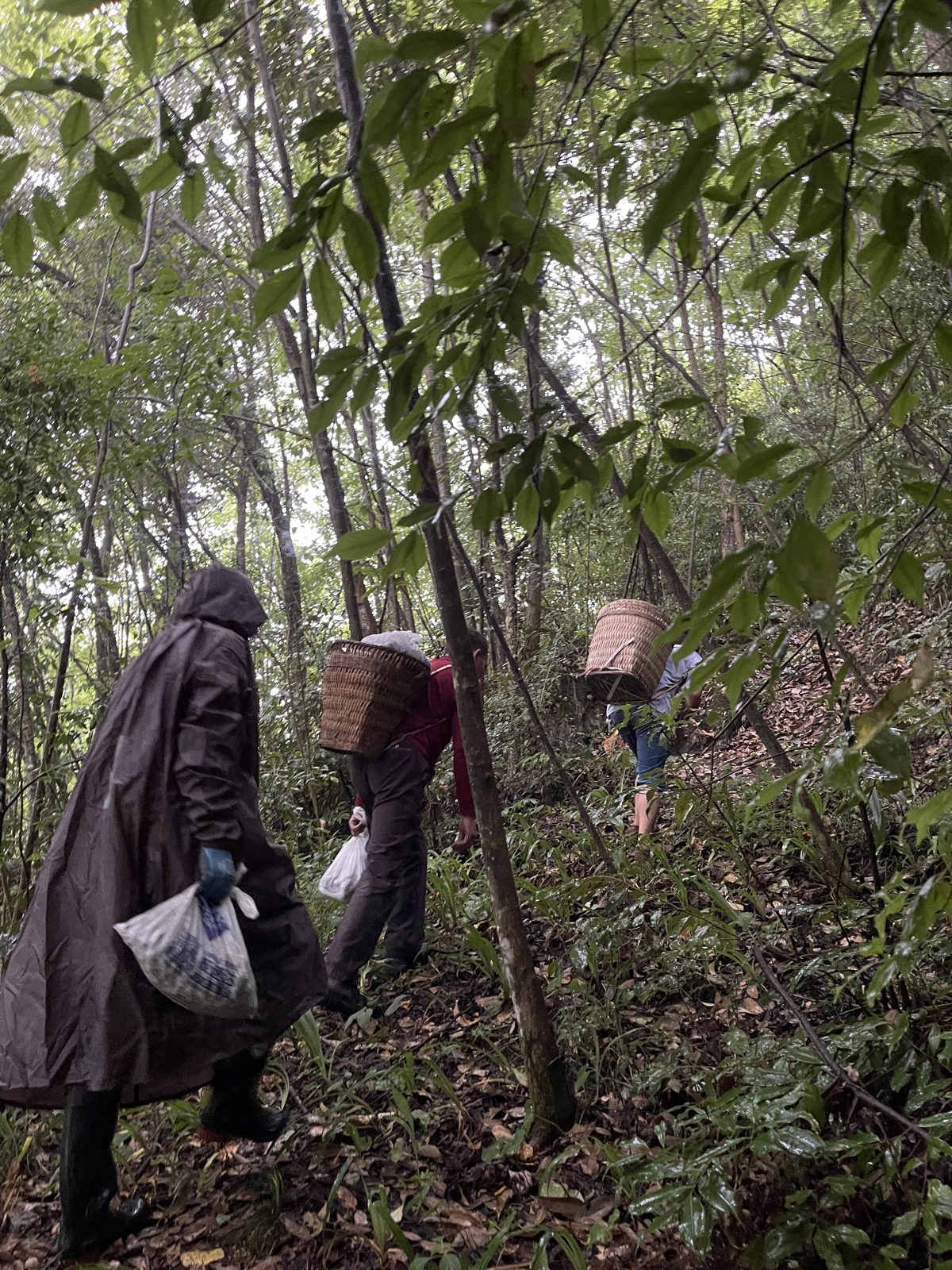
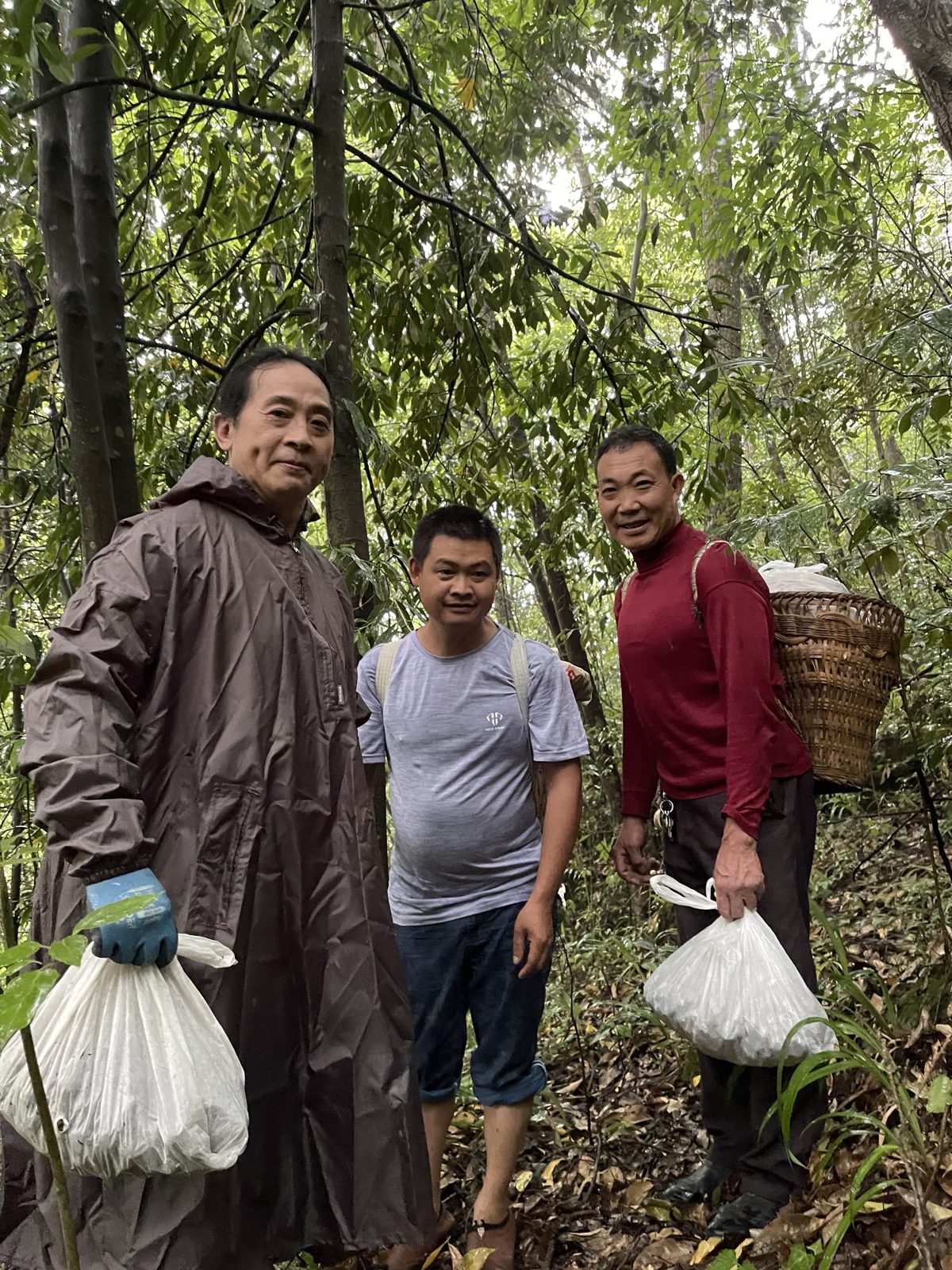
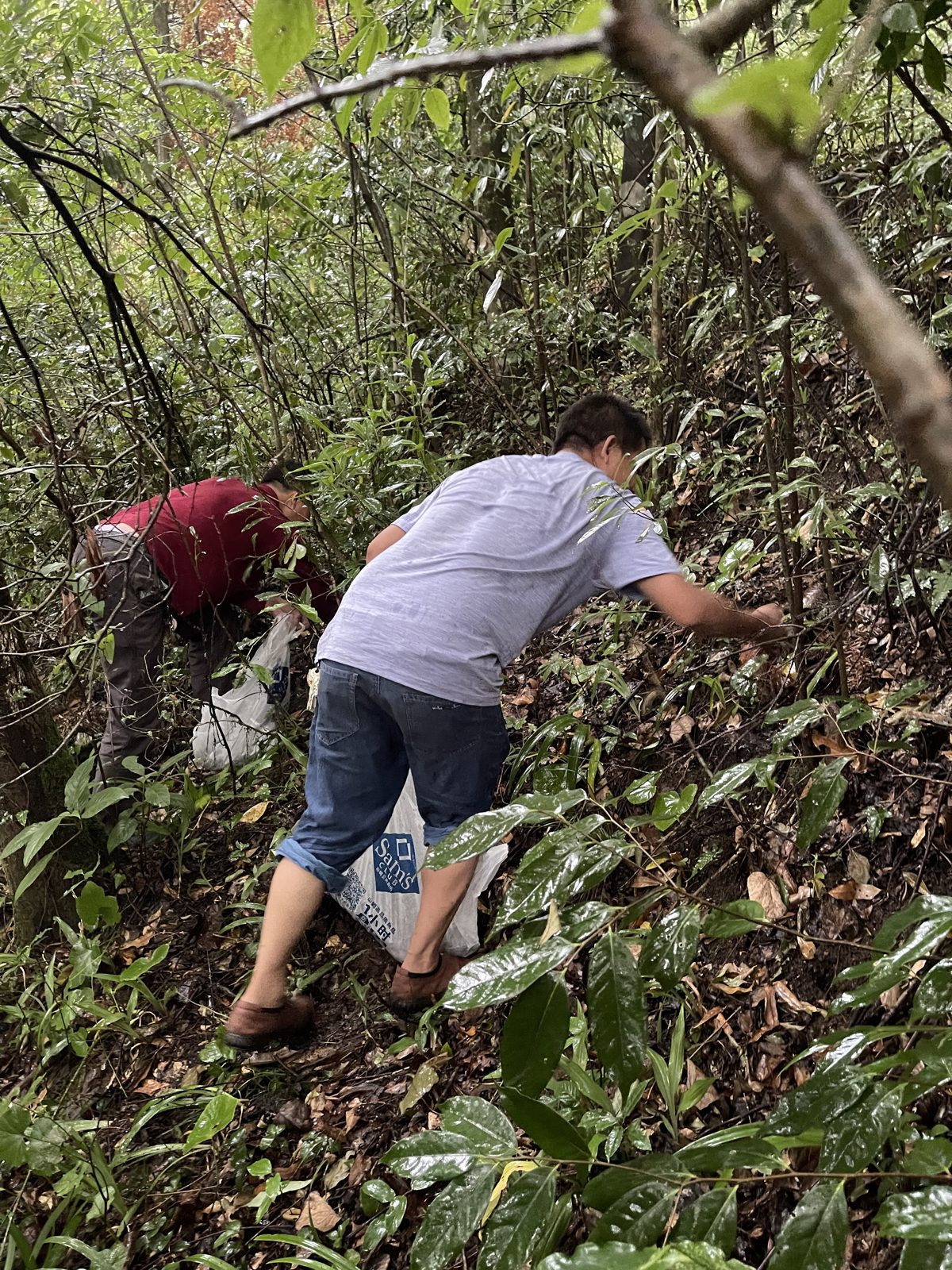
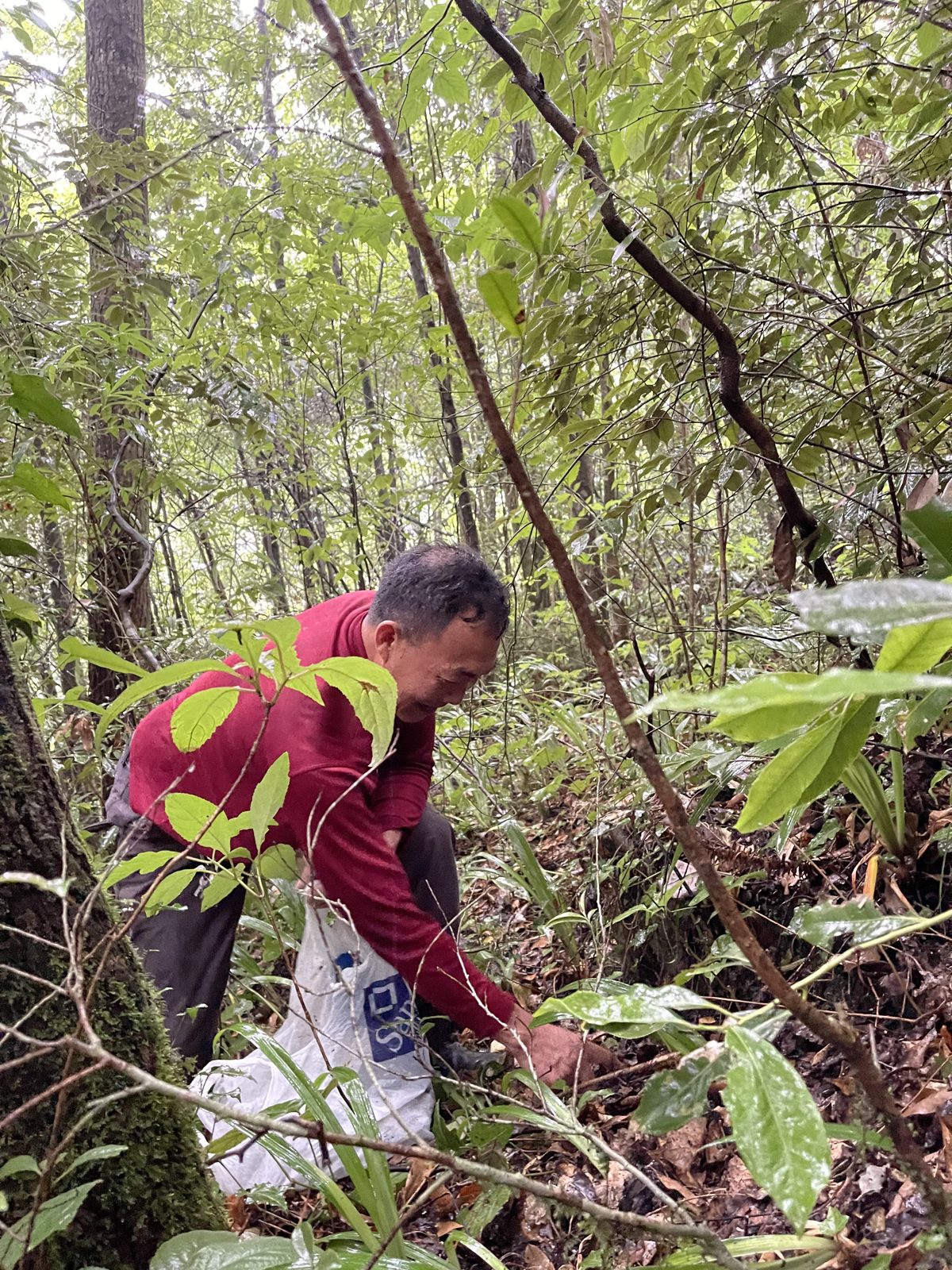
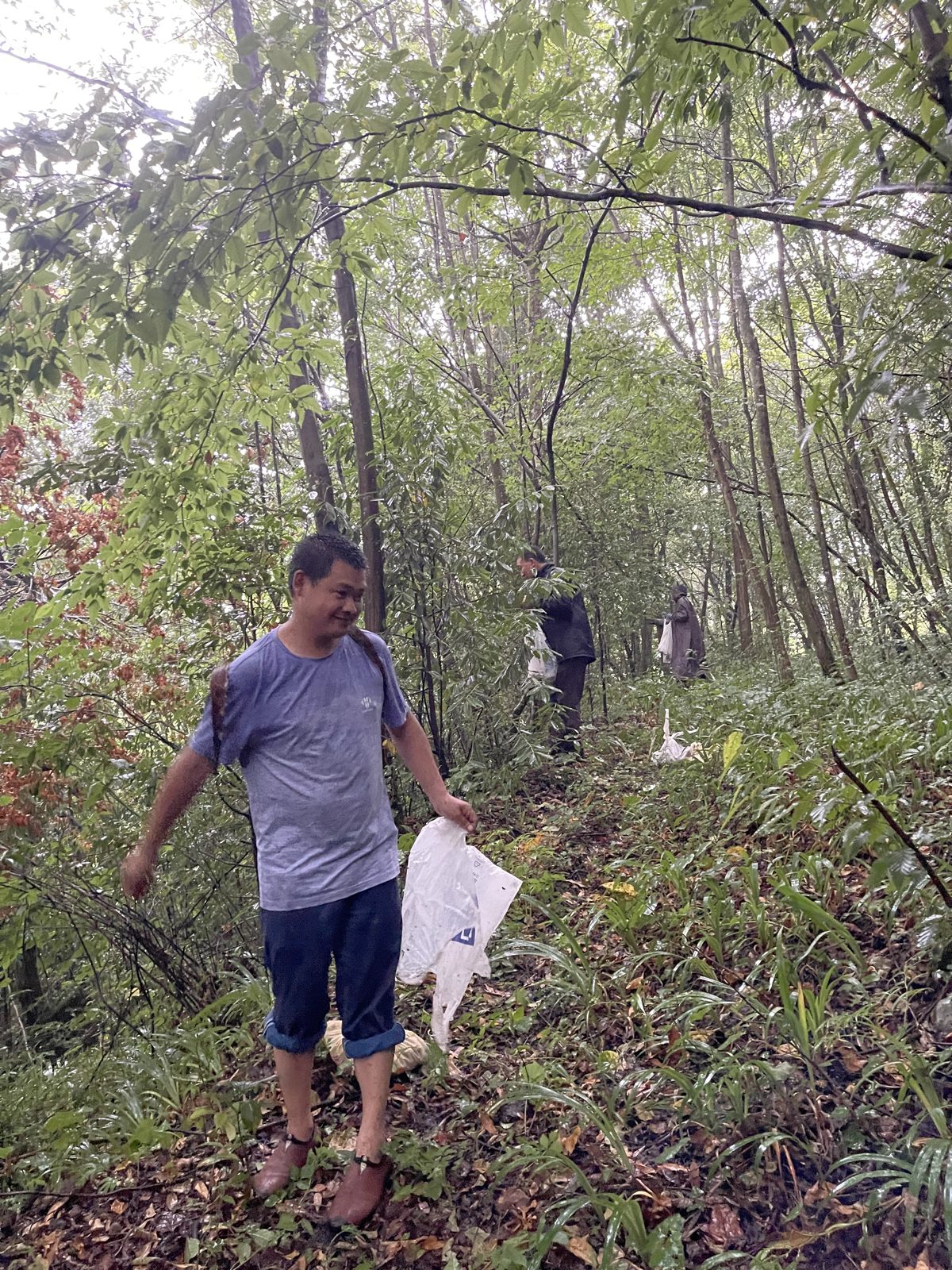
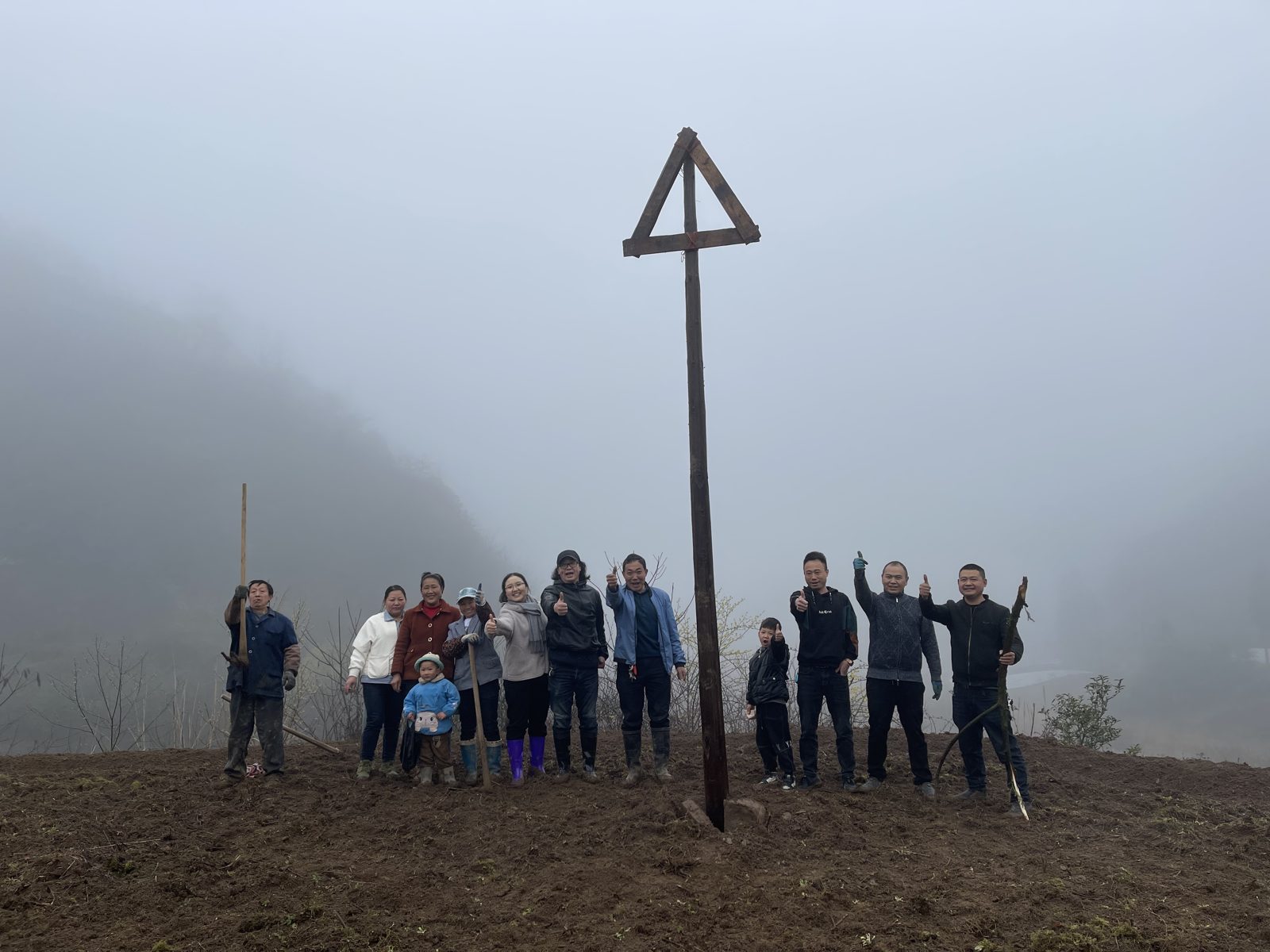
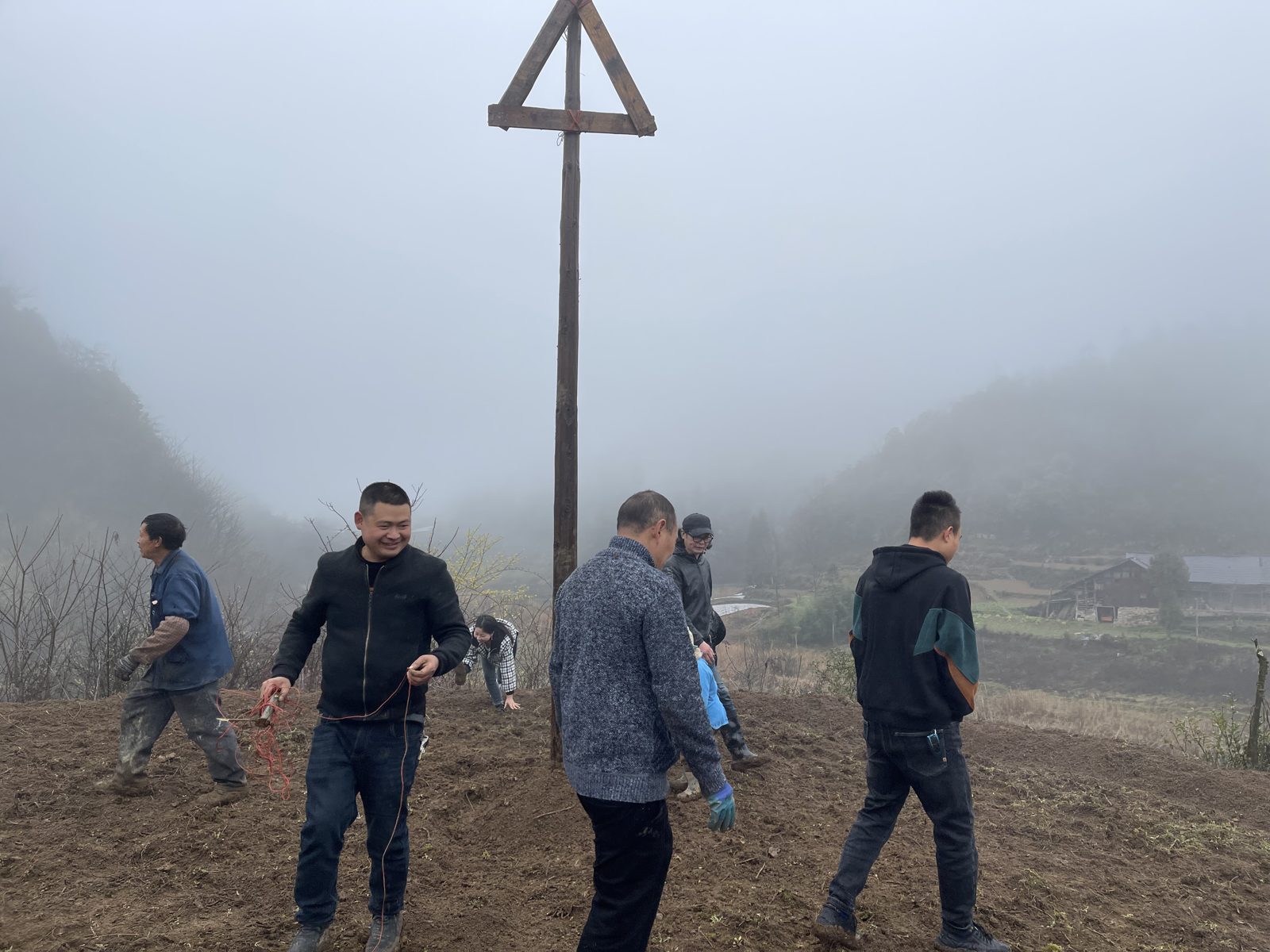
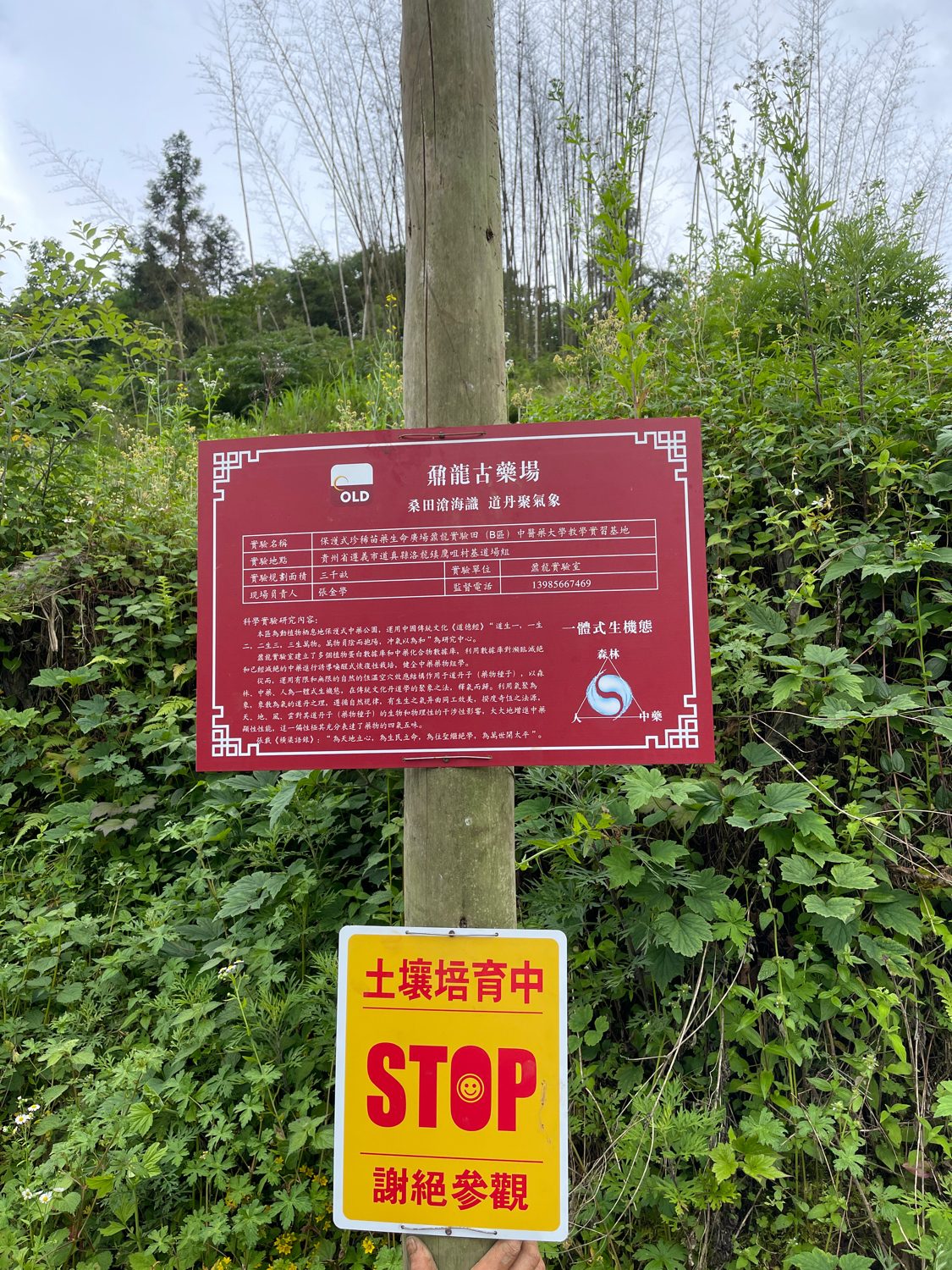
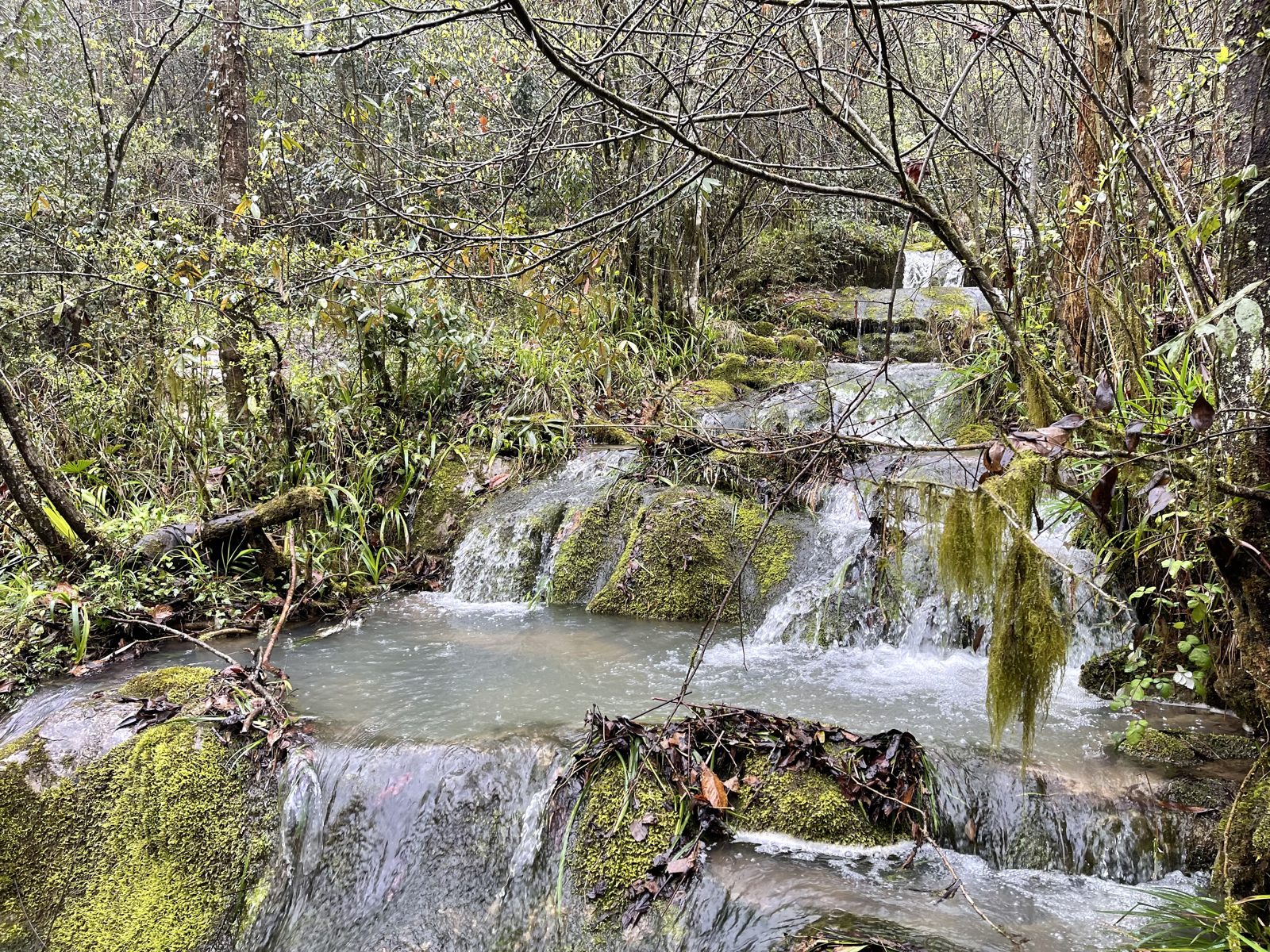
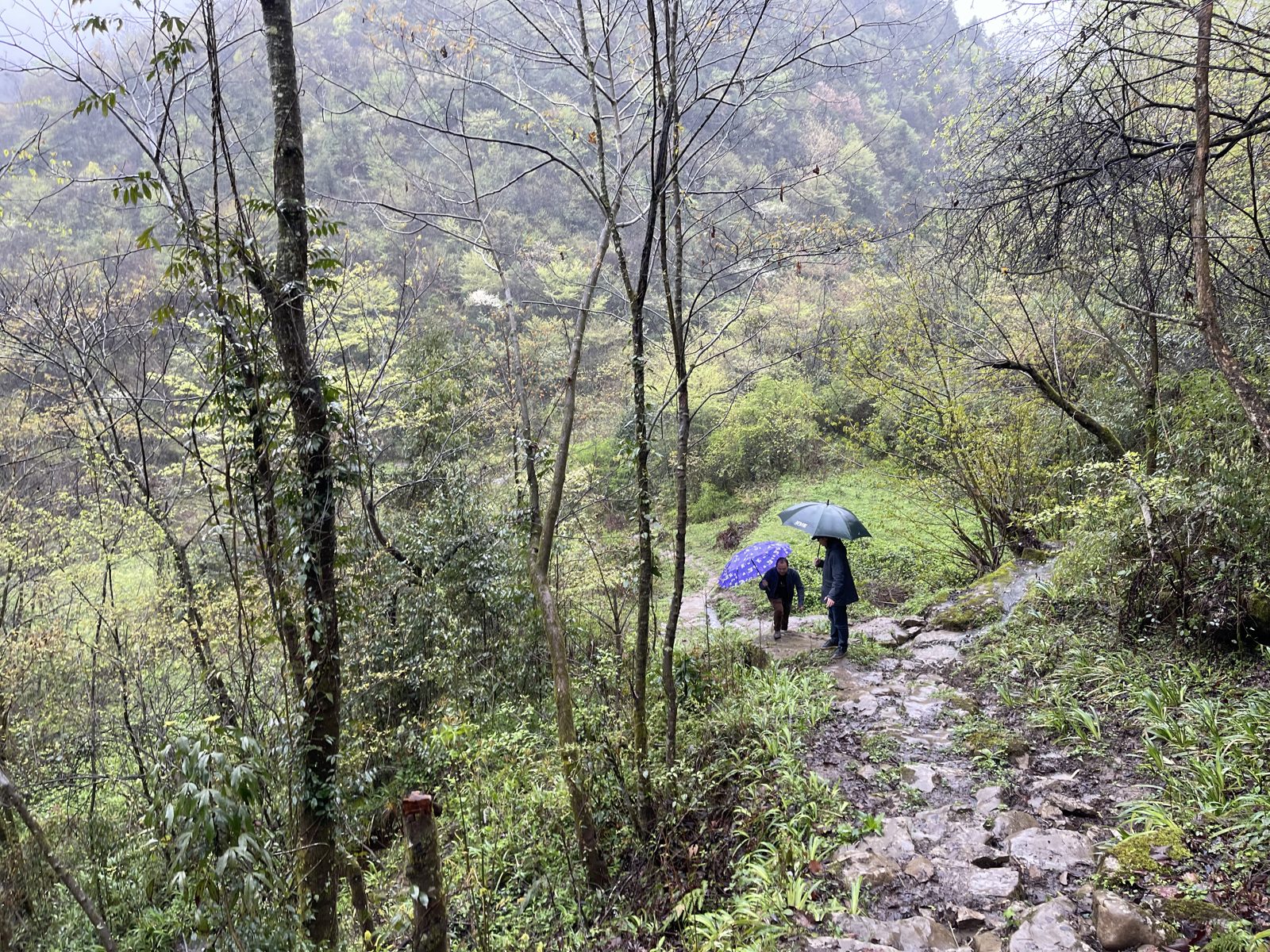
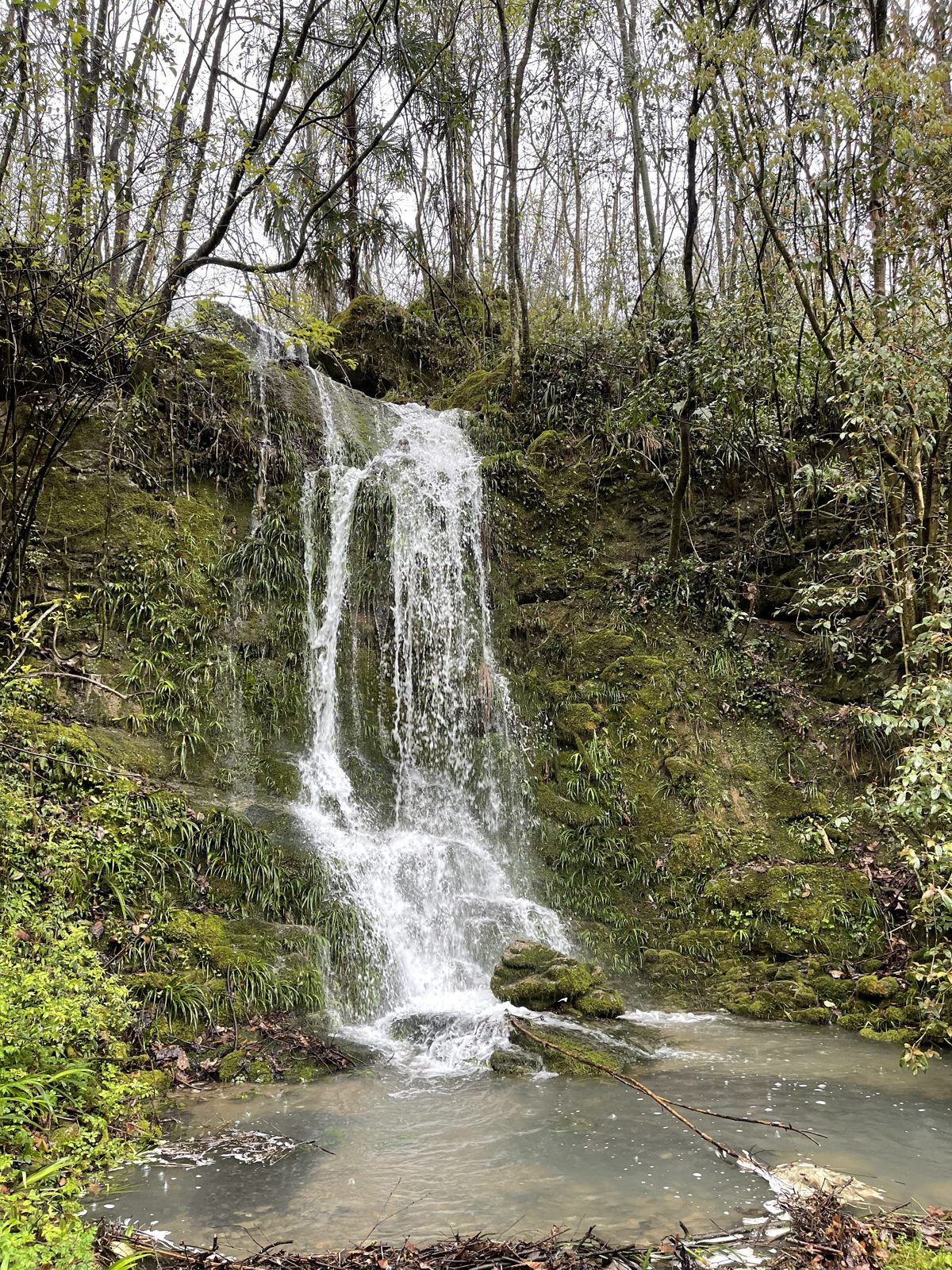
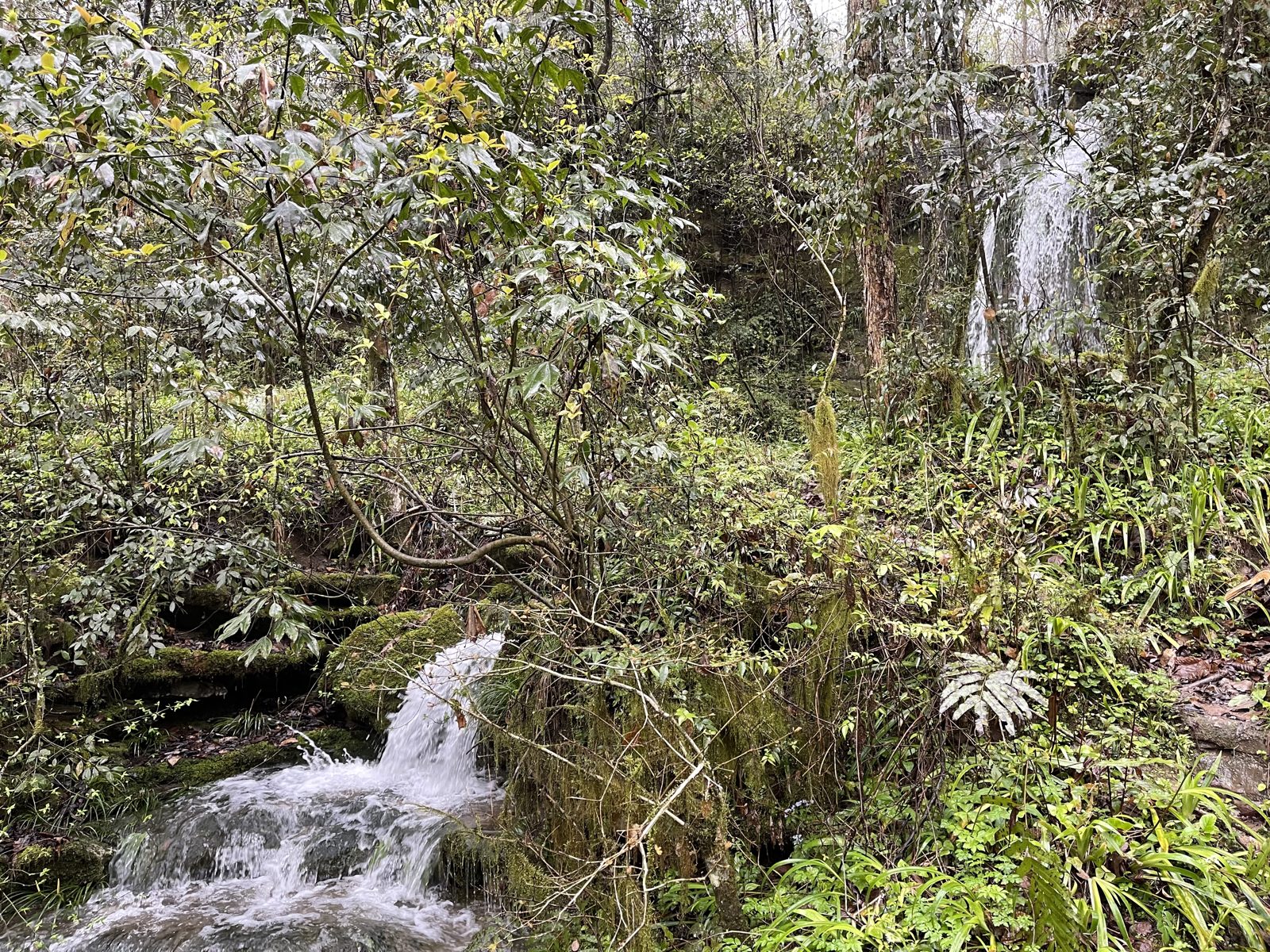
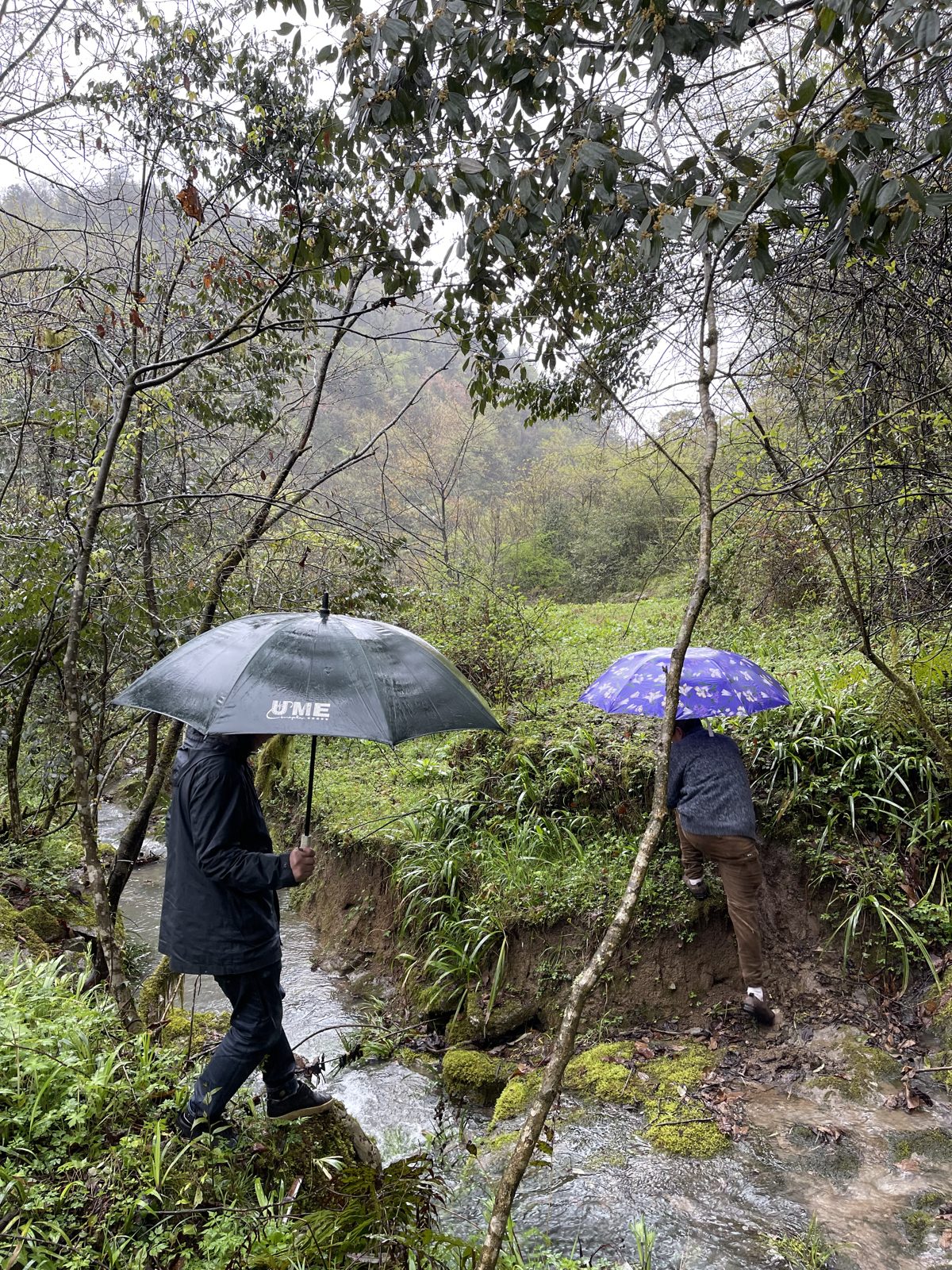
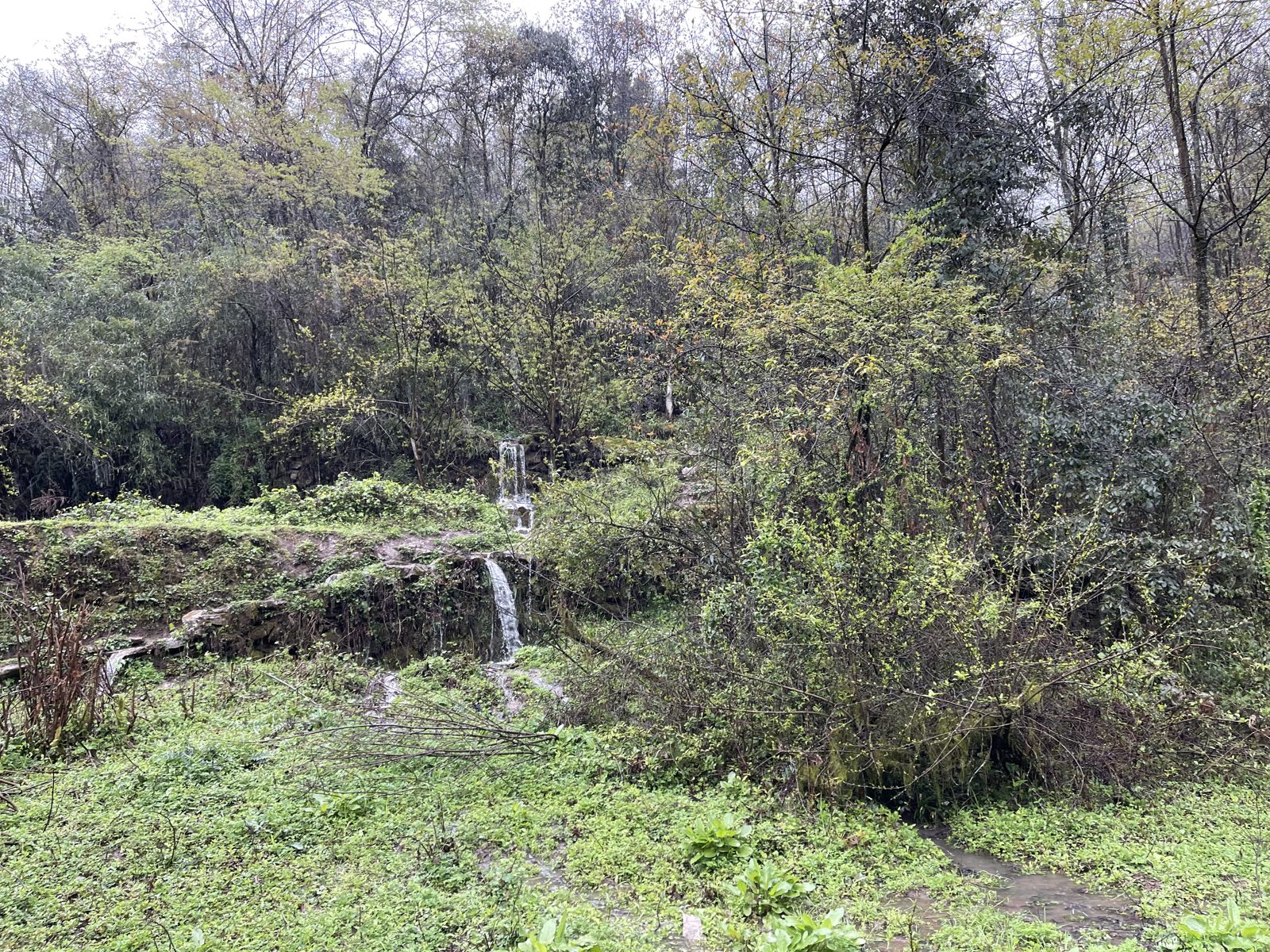
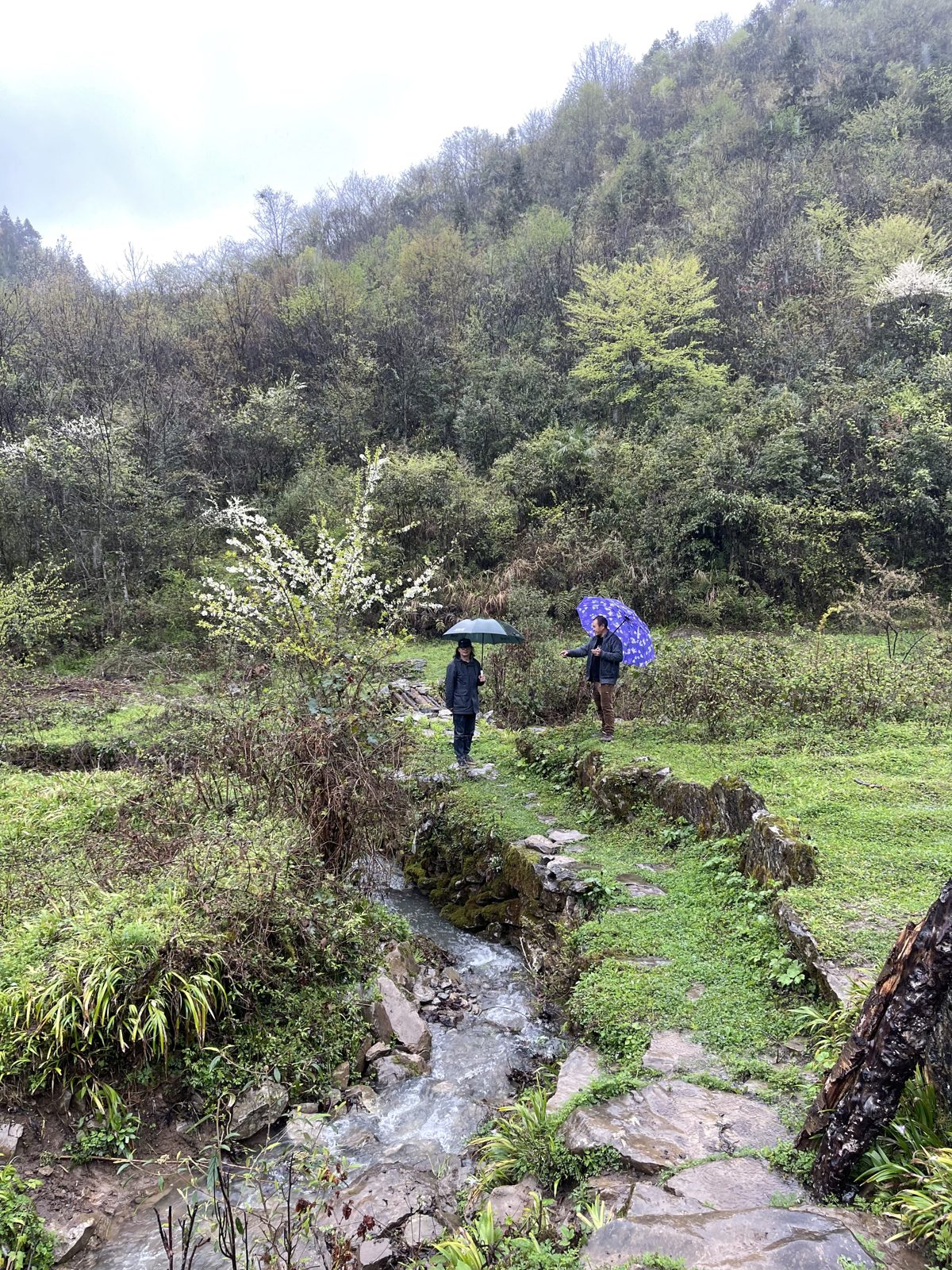
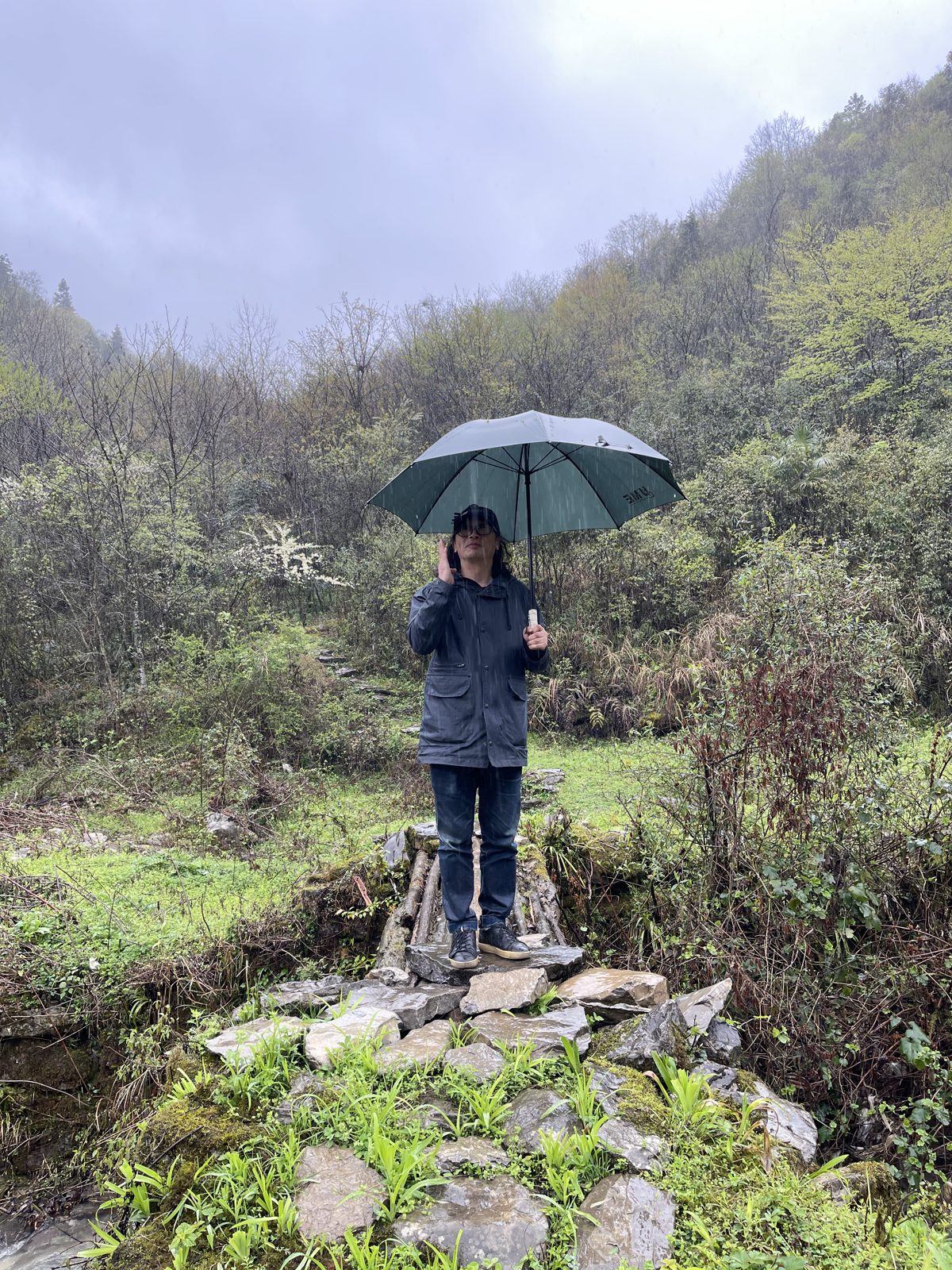
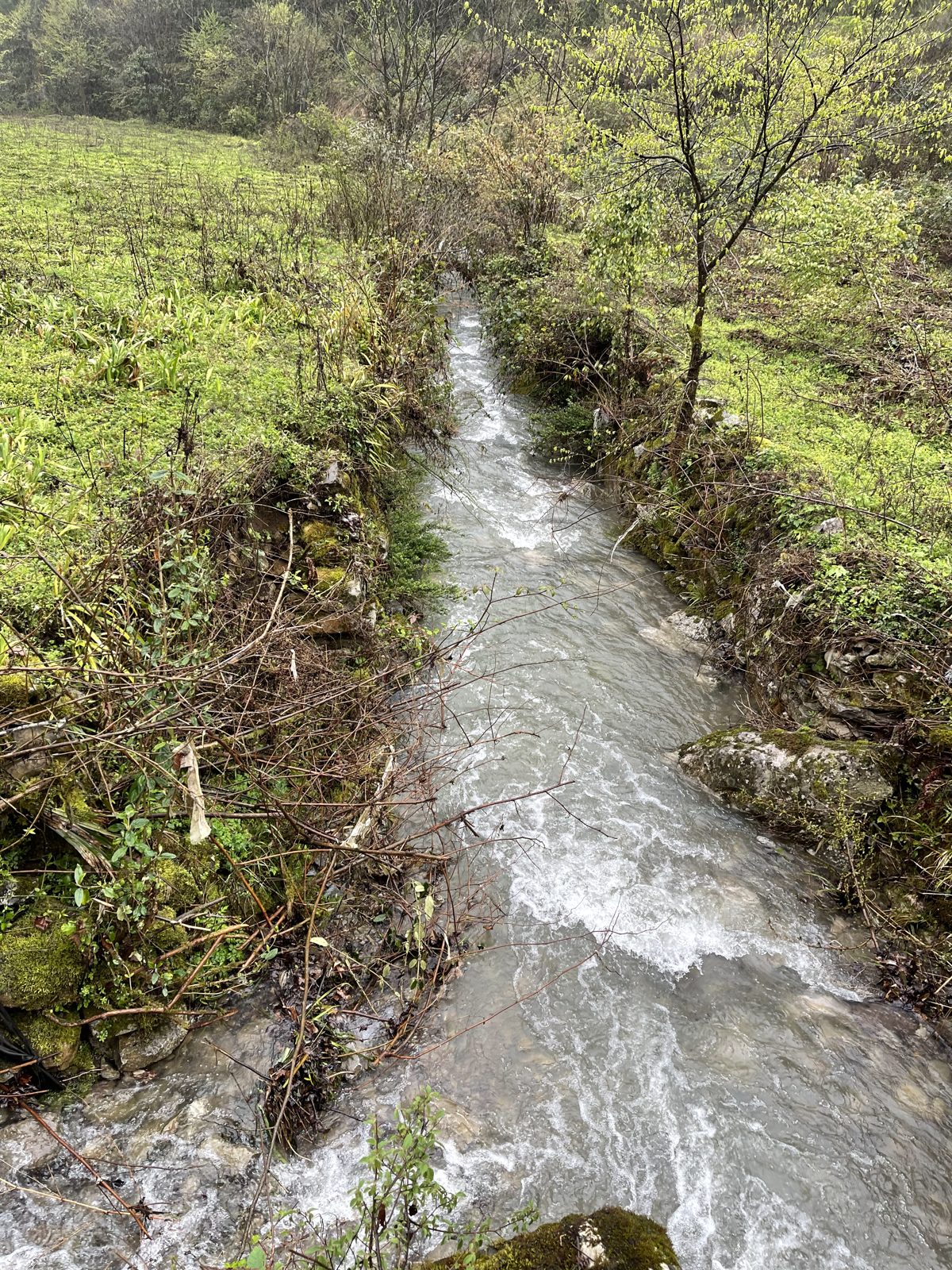
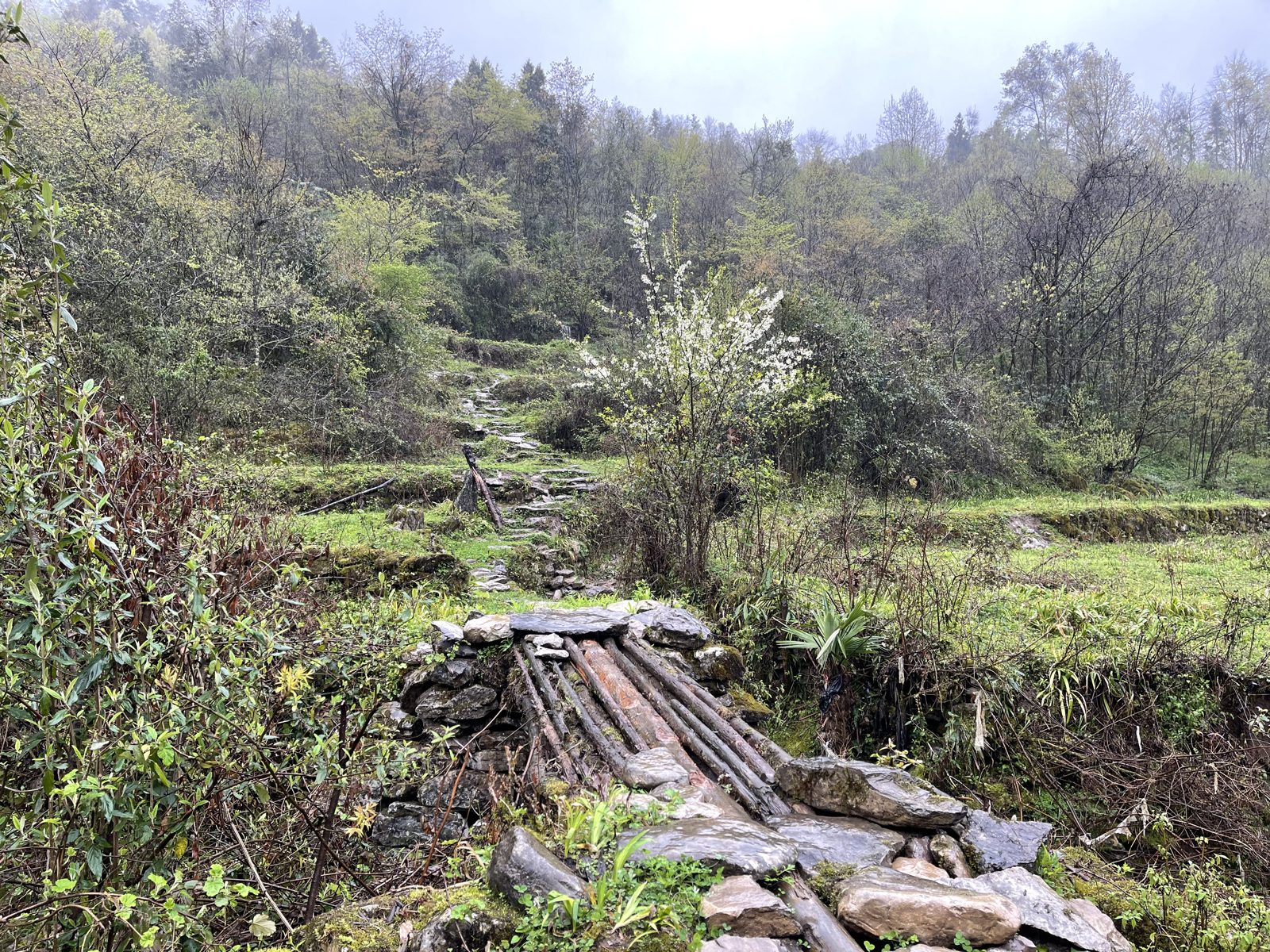
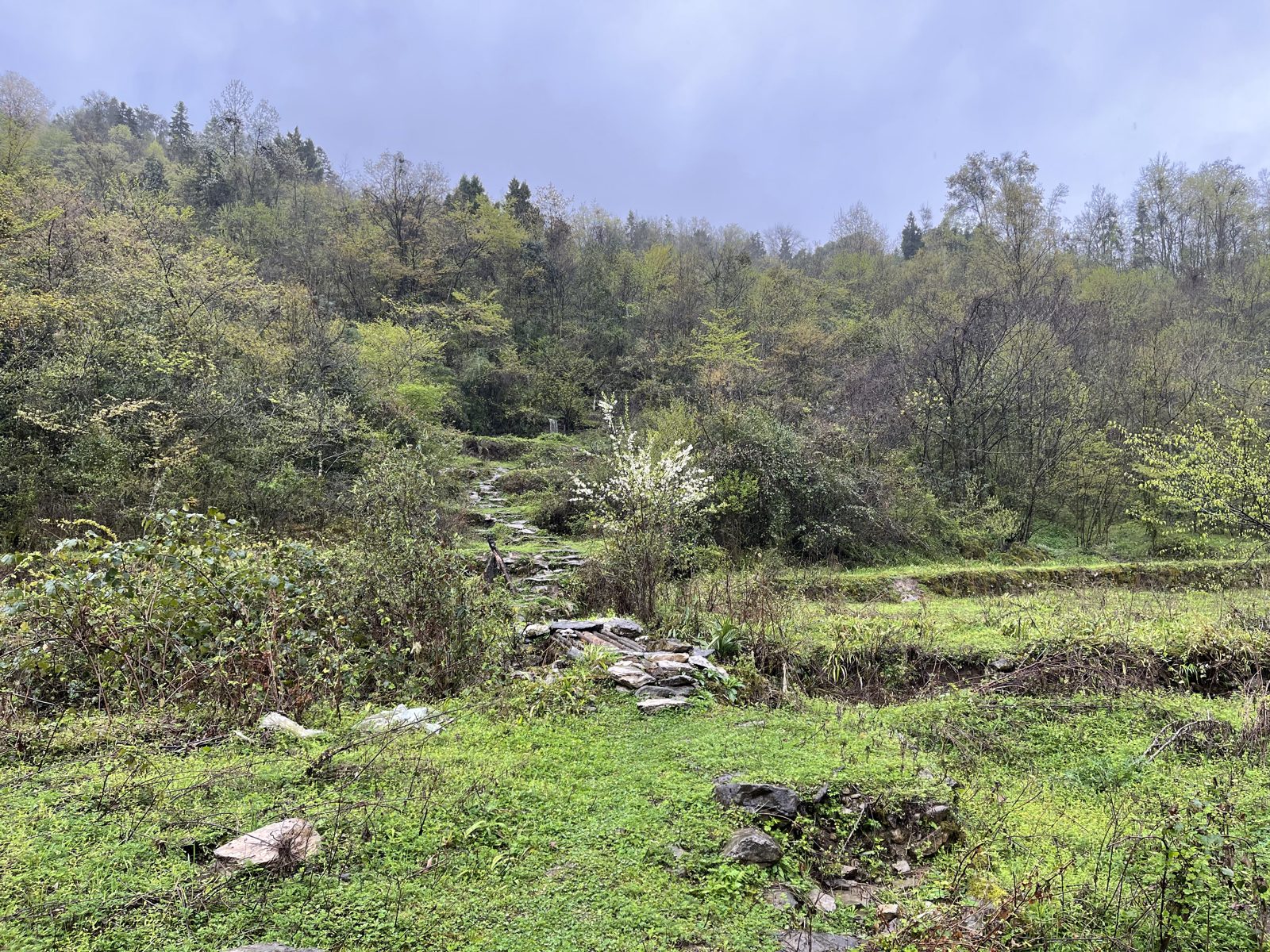
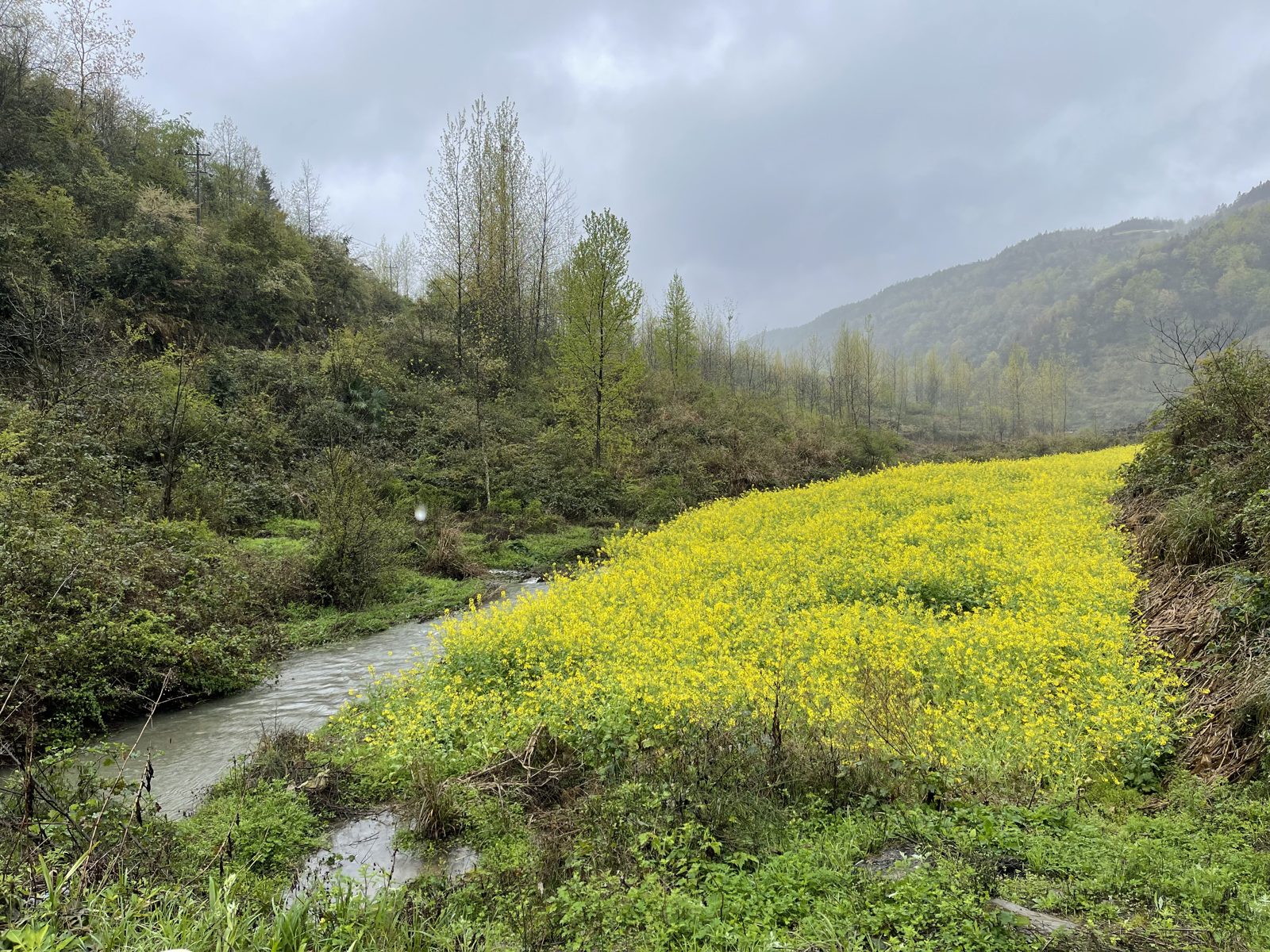
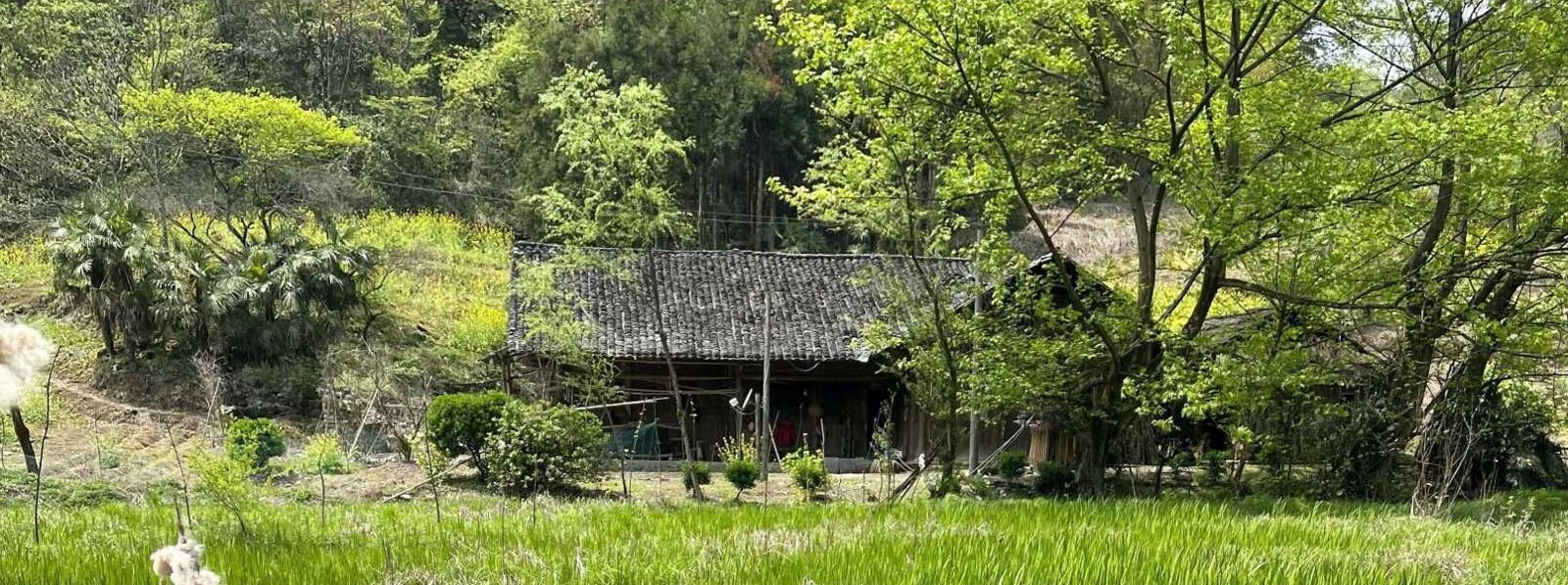
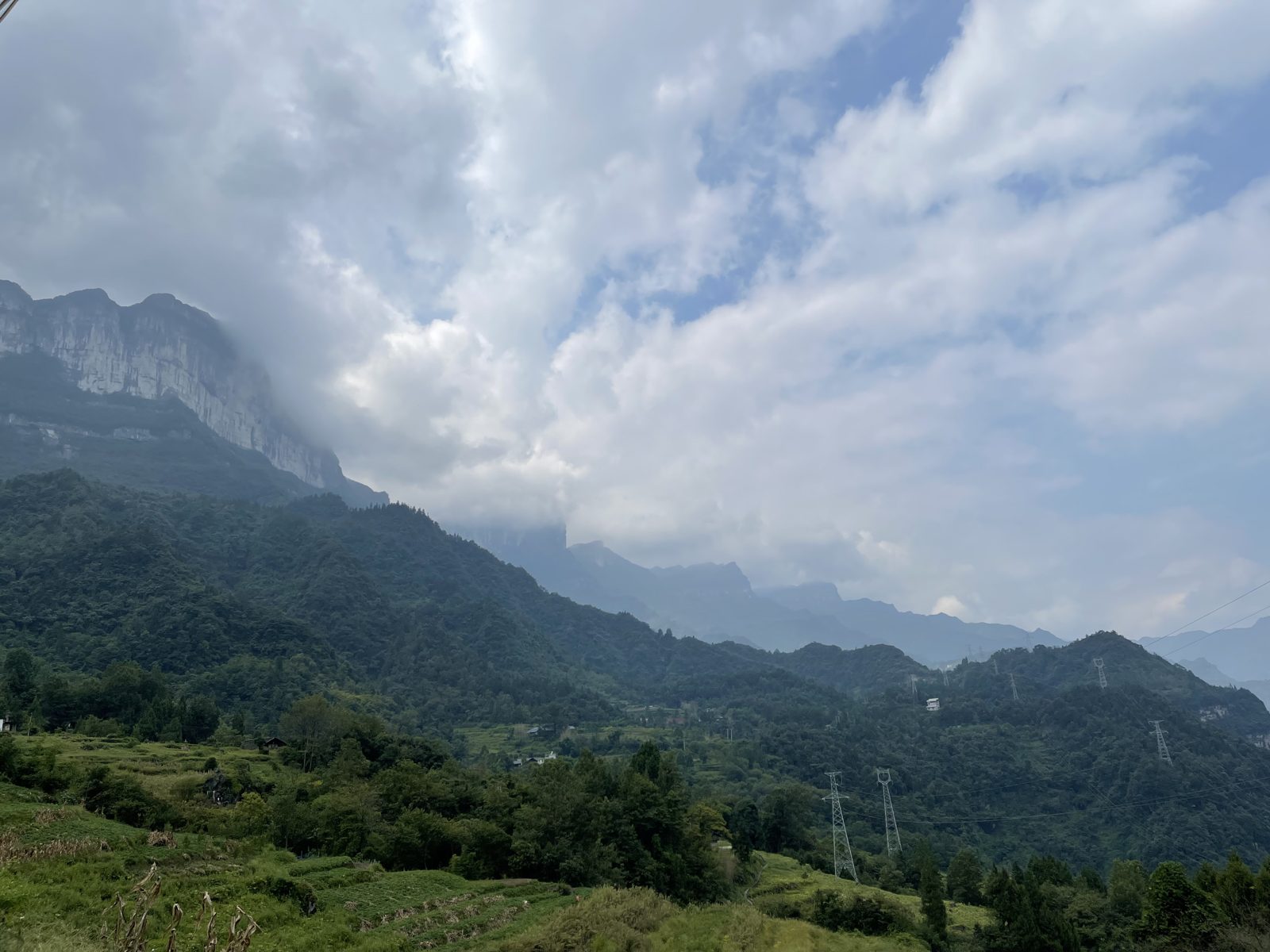
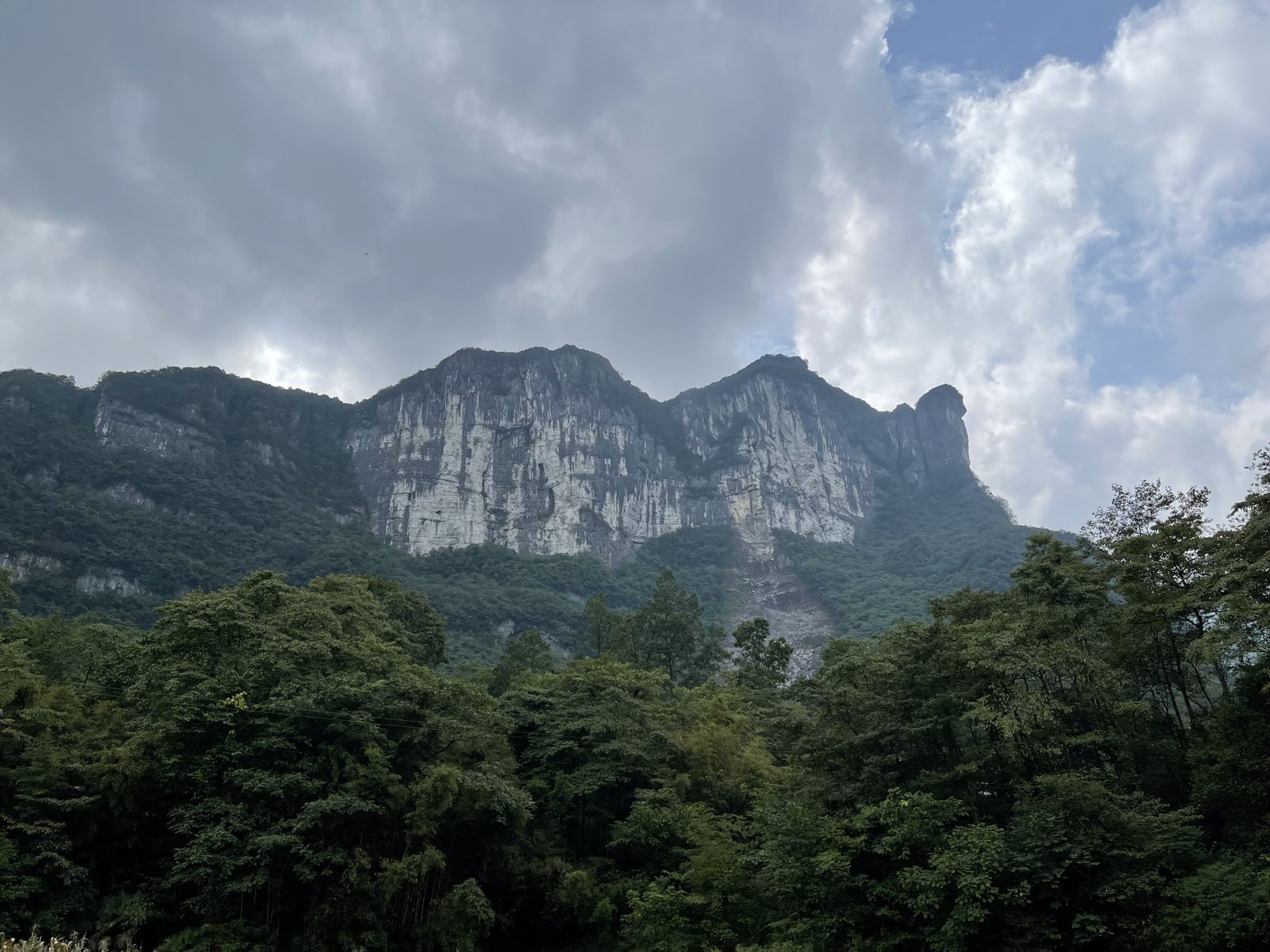
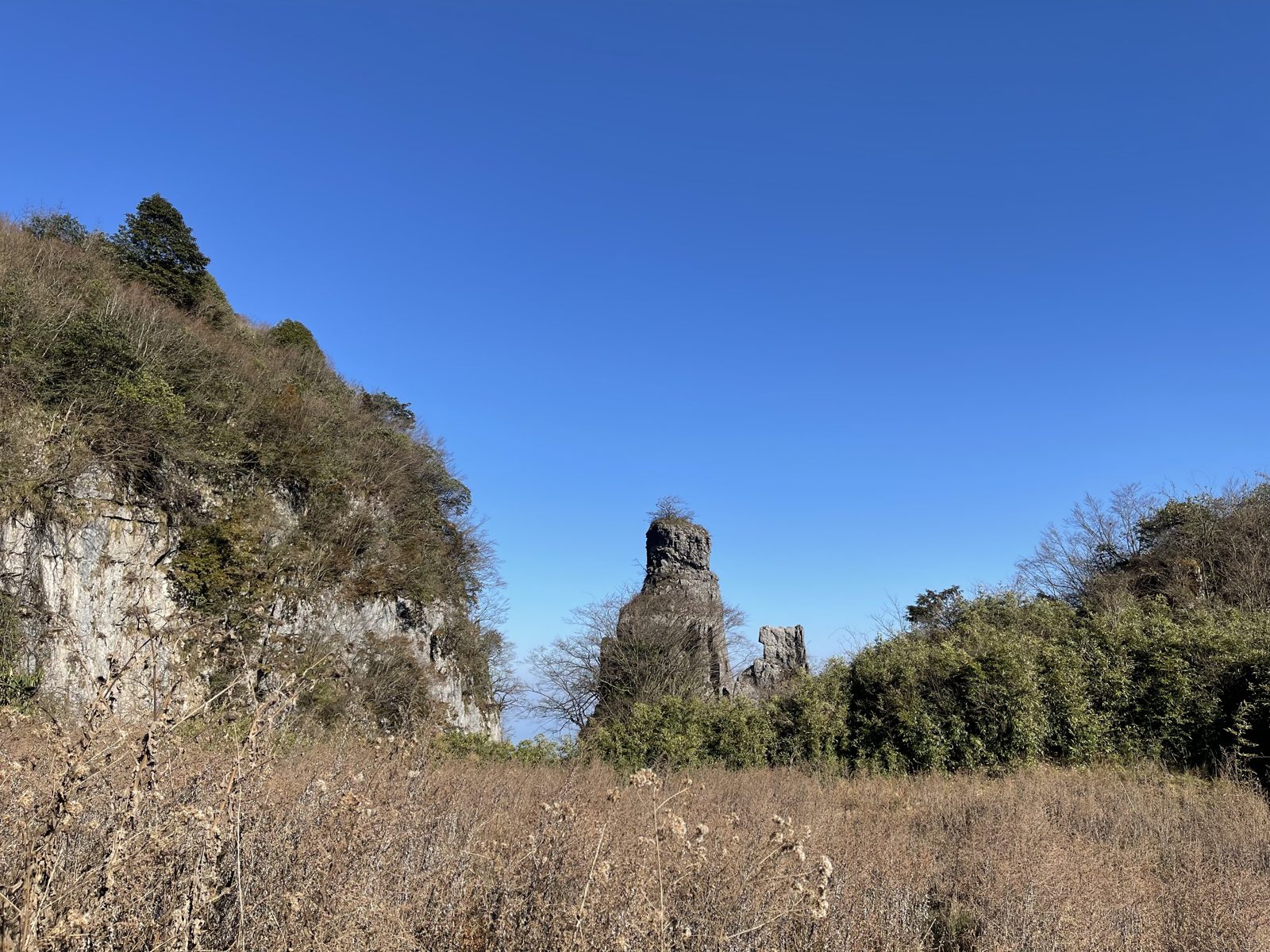
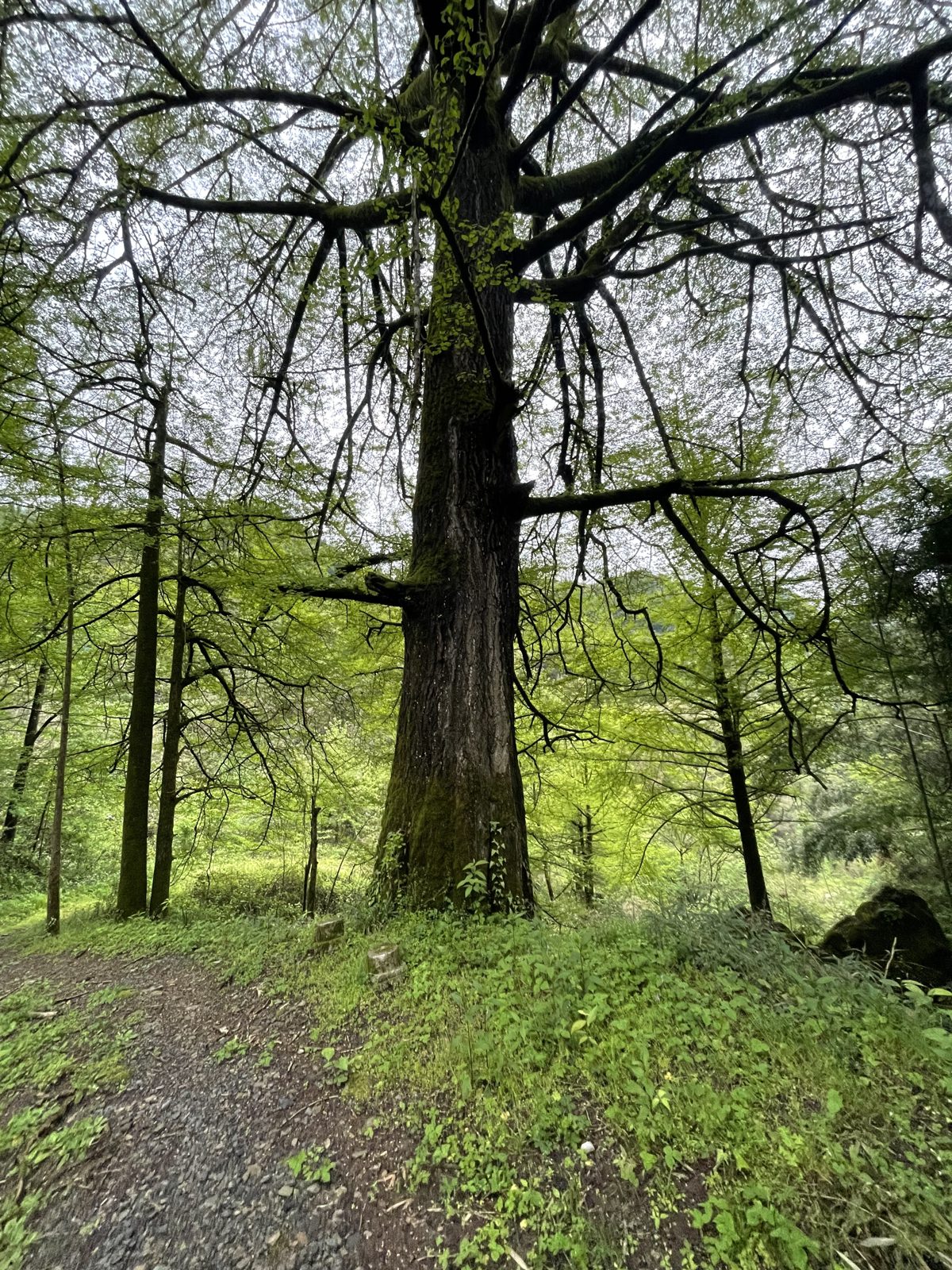
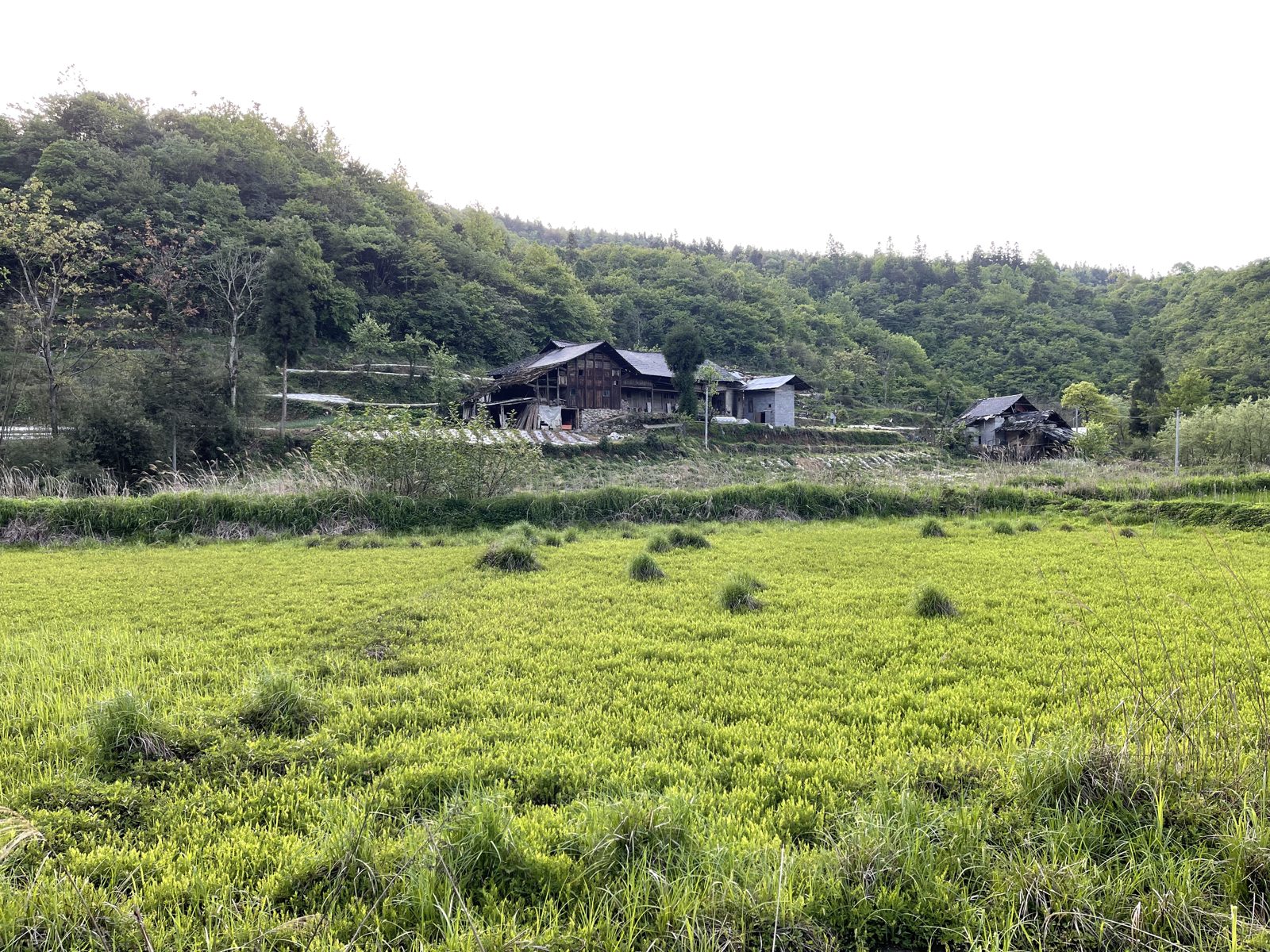
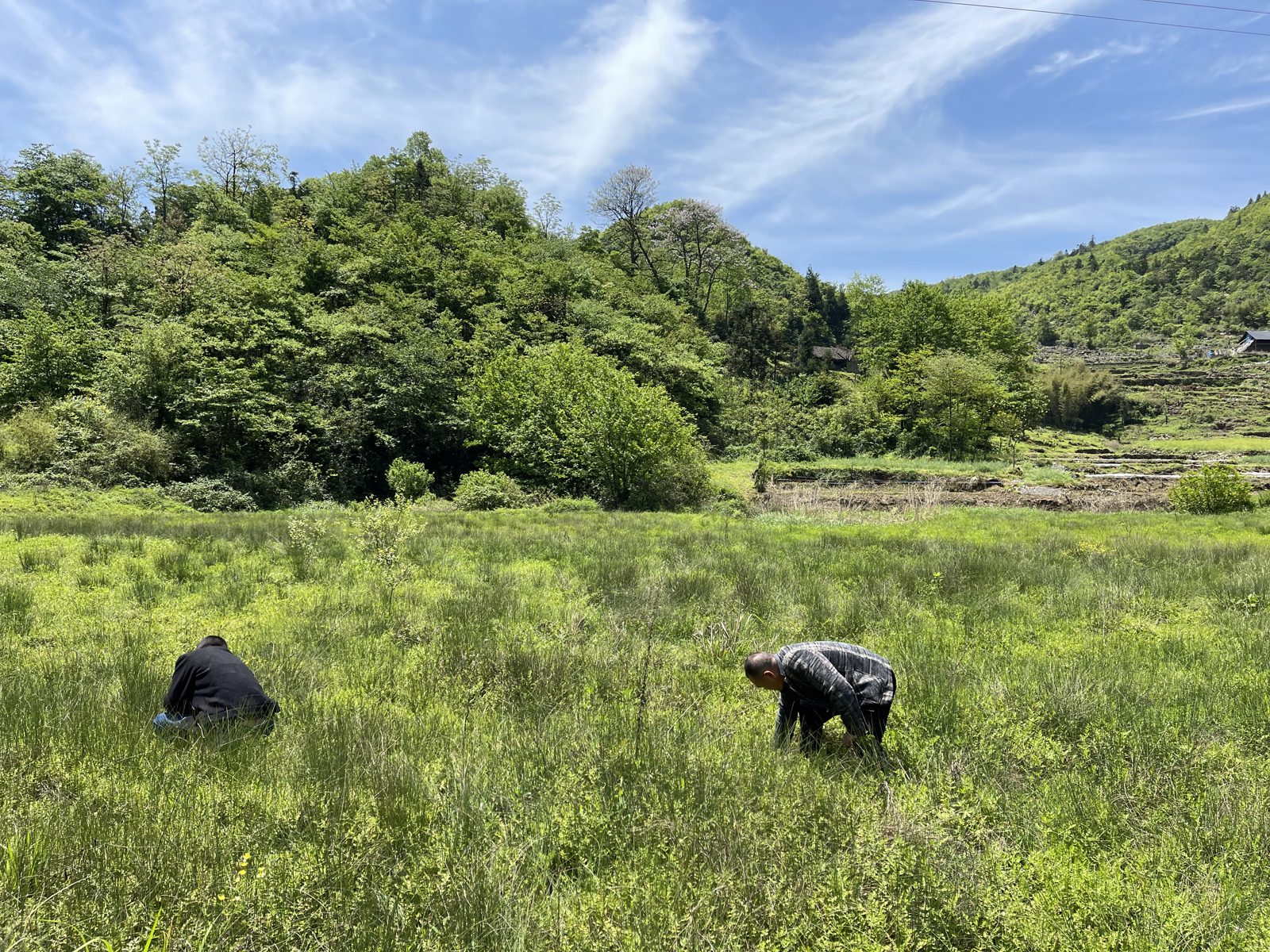
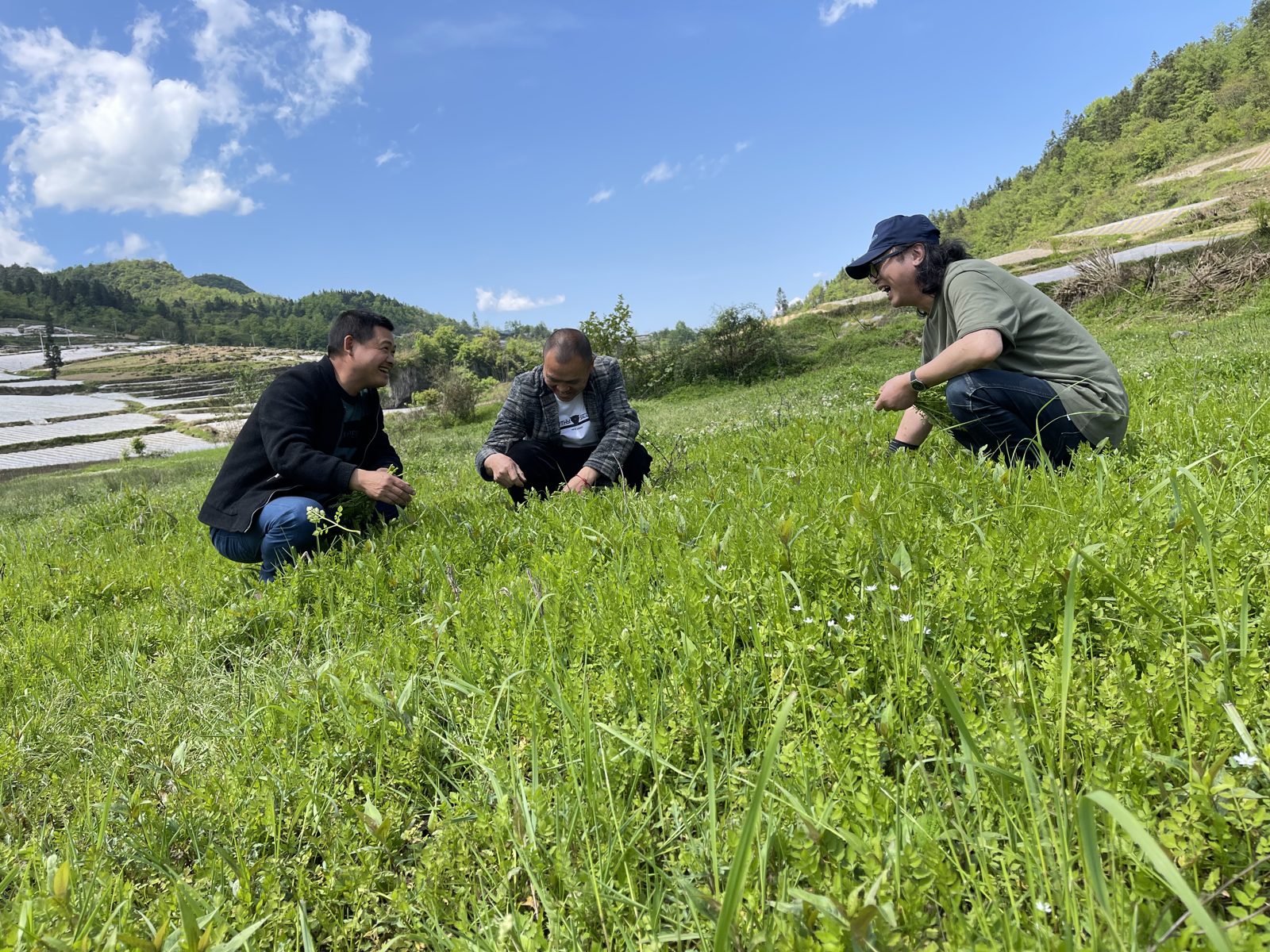
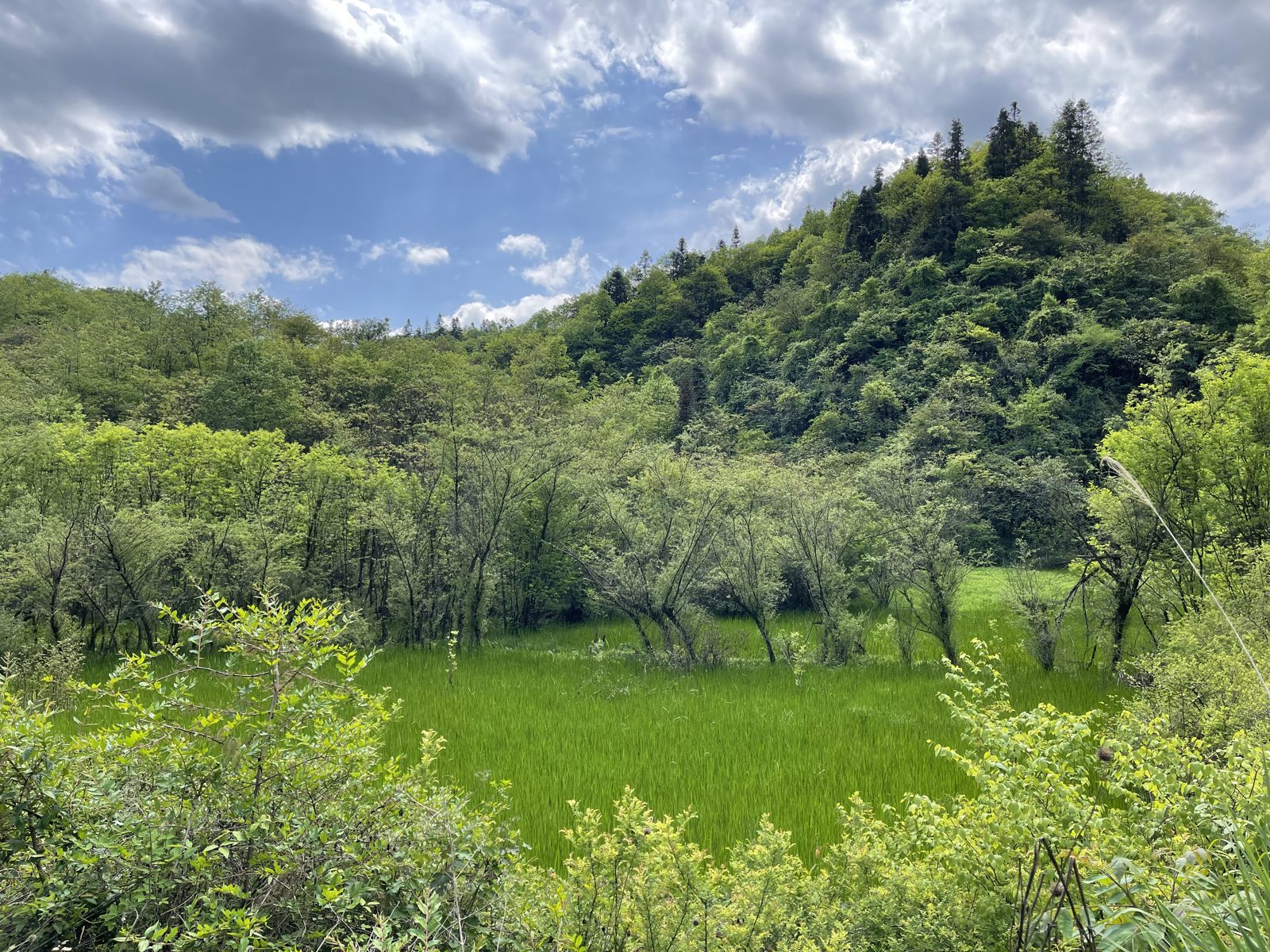
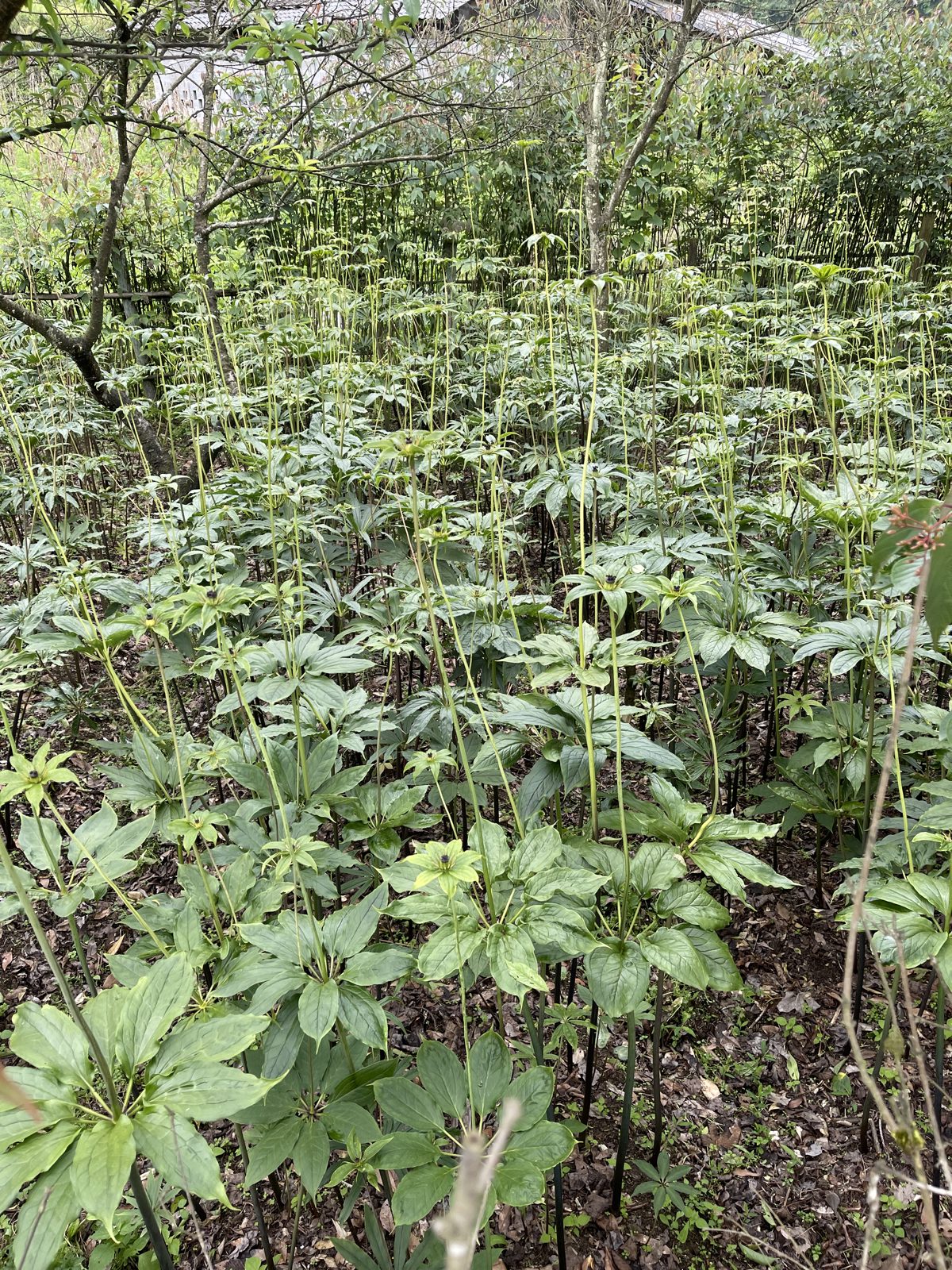
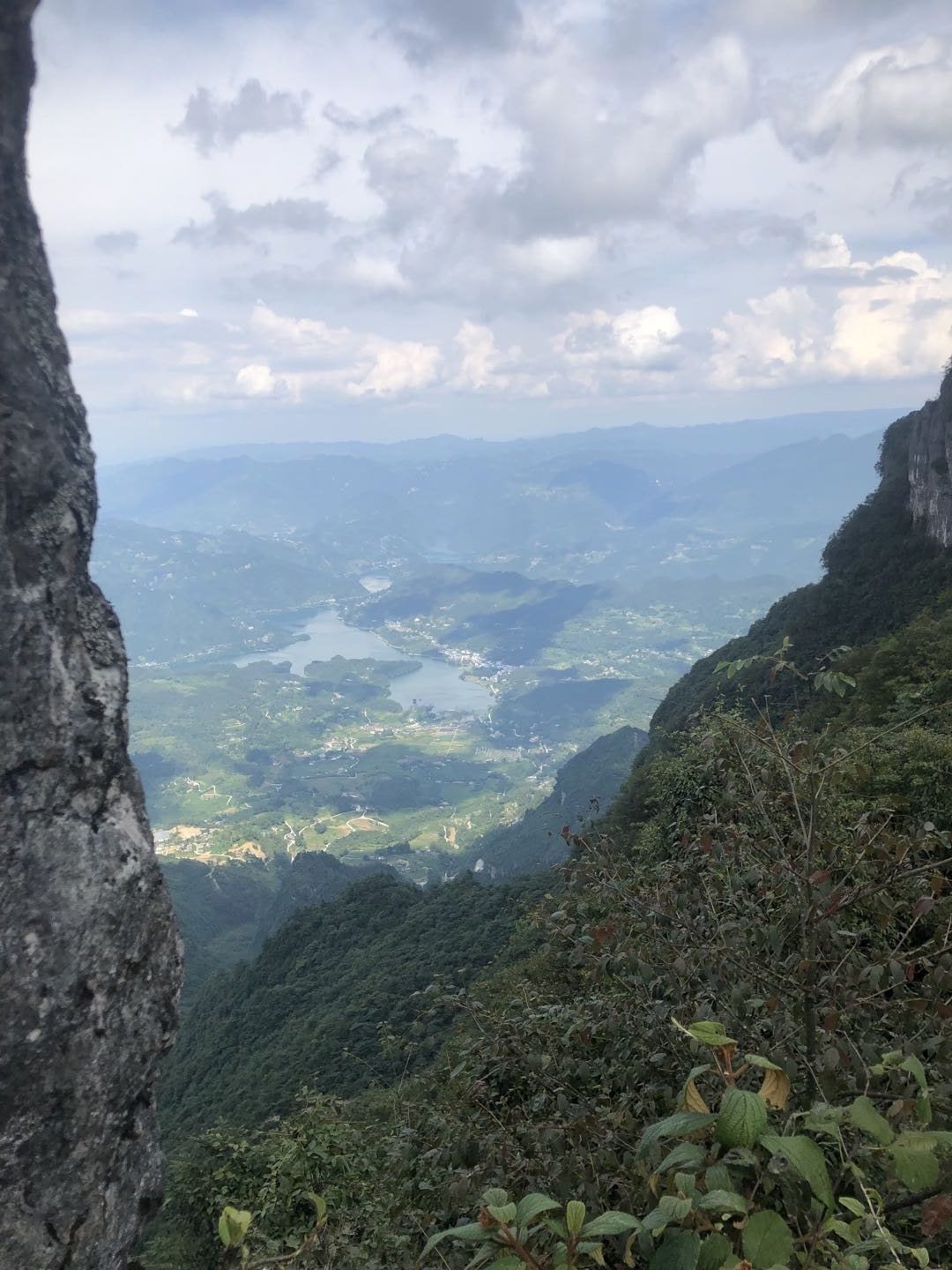
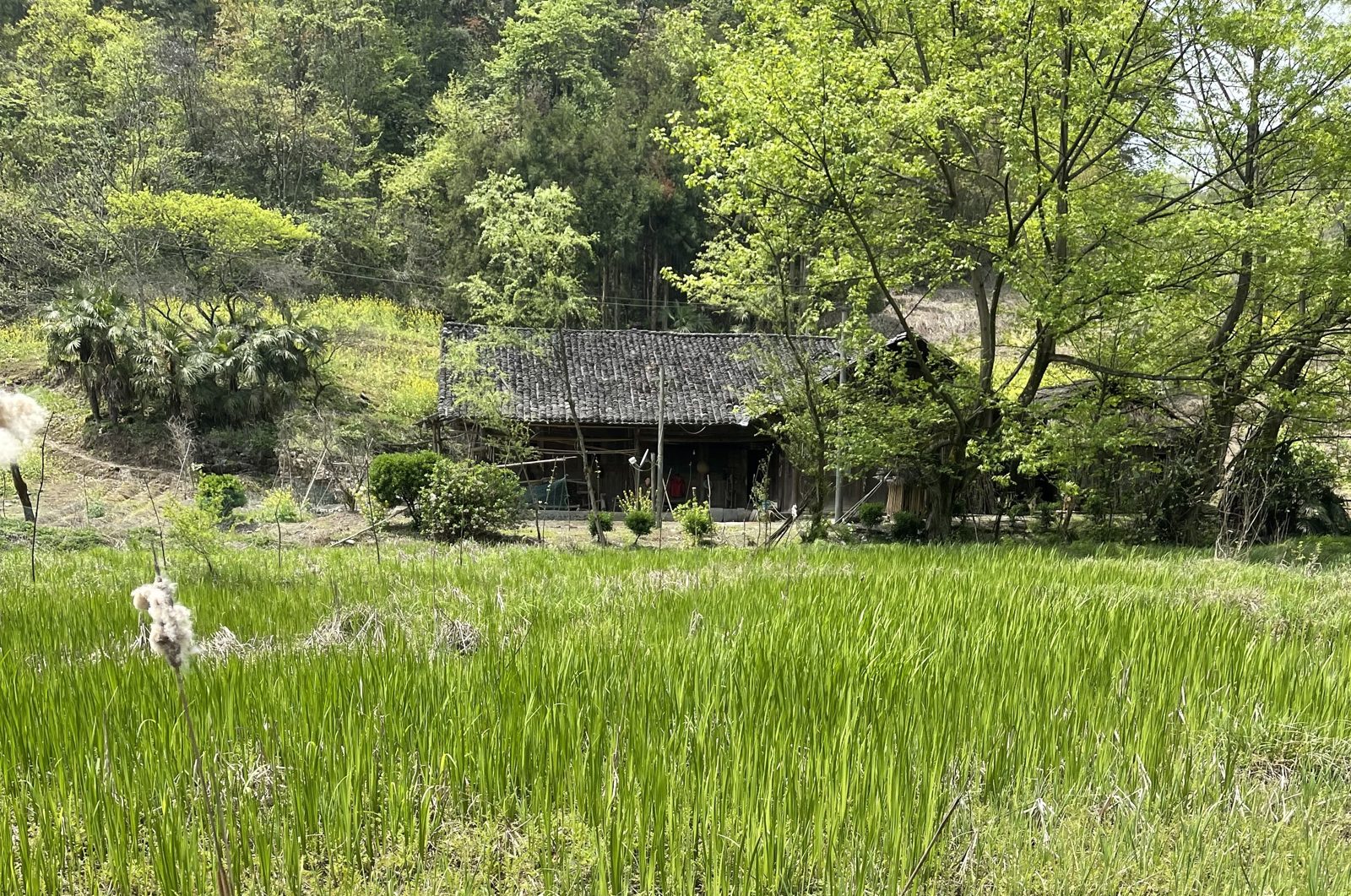
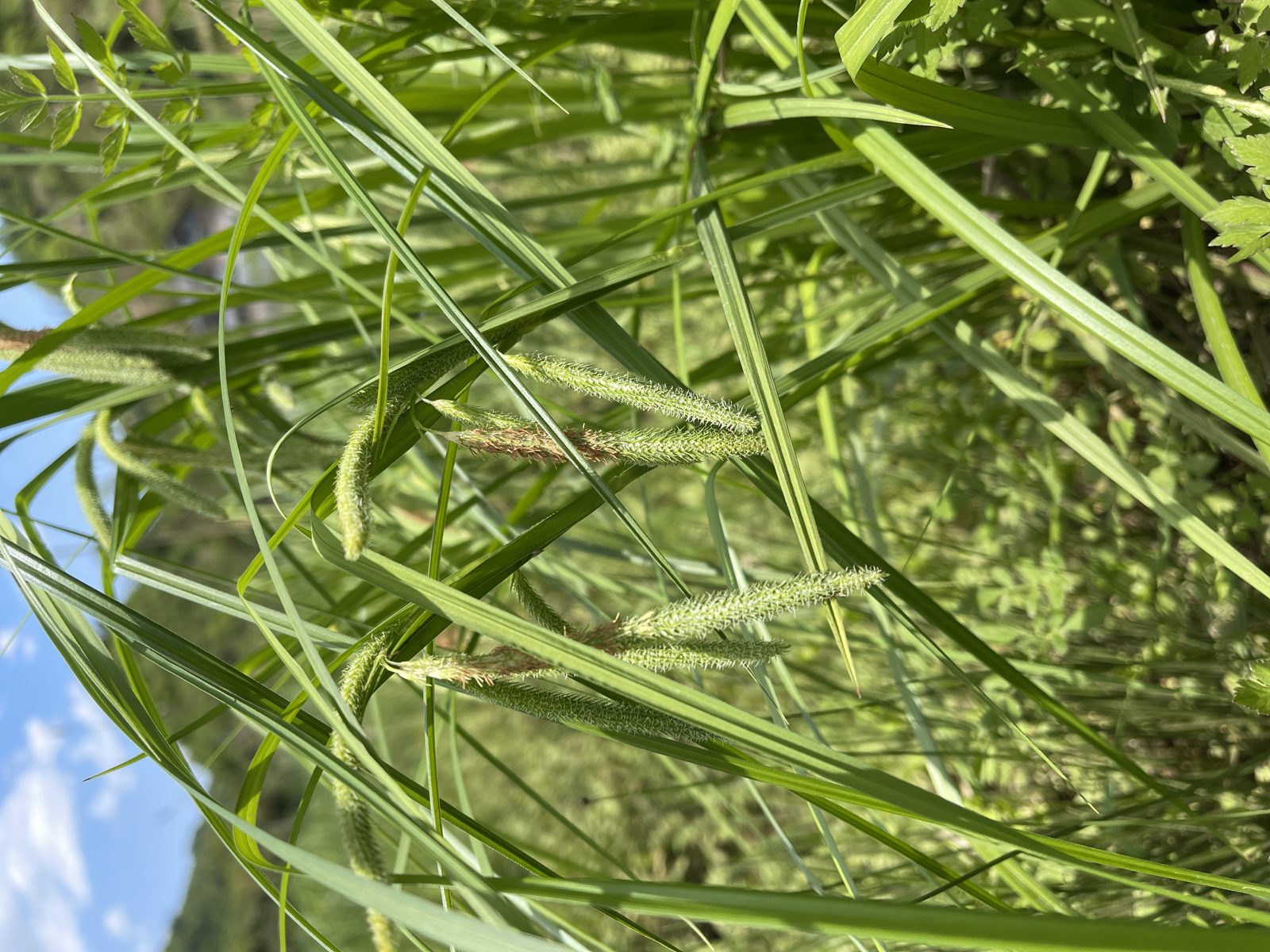
Caole Village · site photo 1 (taken 2021-09-04, 29.16798°N, 107.76878°E)Photo: Nailong Laboratorysee this object →Caole Village · site photo 2 (taken 2021-09-04, 29.1671°N, 107.76836°E)Photo: Nailong Laboratorysee this object →Caole Village · site photo 3 (taken 2021-09-08, 29.17541°N, 107.78072°E)Photo: Nailong Laboratorysee this object →Caole Village · site photo 4 (taken 2021-09-13, 29.16056°N, 107.80321°E)Photo: Nailong Laboratorysee this object →Caole Village · site photo 5 (taken 2021-09-13, 29.15164°N, 107.80177°E)Photo: Nailong Laboratorysee this object →Caole Village · site photo 6 (taken 2021-12-22, 29.16773°N, 107.76849°E)Photo: Nailong Laboratorysee this object →Caole Village · site photo 7 (taken 2022-04-16, 29.11746°N, 107.6675°E)Photo: Nailong Laboratorysee this object →Caole Village · site photo 8 (taken 2022-05-02, 29.09371°N, 107.78271°E)Photo: Nailong Laboratorysee this object →Caole Village · site photo 9 (taken 2022-05-03, 29.05467°N, 107.77242°E)Photo: Nailong Laboratorysee this object →Caole Village · site photo 10 (taken 2022-05-03, 29.11171°N, 107.78942°E)Photo: Nailong Laboratorysee this object →Caole Village · site photo 11 (taken 2022-05-03, 29.10201°N, 107.78529°E)Photo: Nailong Laboratorysee this object →Caole Village · site photo 12 (taken 2022-05-31, 29.09477°N, 107.78426°E)Photo: Nailong Laboratorysee this object →Caole Village · site photo 13Photo: Nailong Laboratorysee this object →Caole Village · site photo 14Photo: Nailong Laboratorysee this object →Caole Village · site photo 15Photo: Nailong Laboratorysee this object →Caole Village · from the Return to the East programme (an "AI Healing Street" for Eastern traditional medicine culture)Nailong Laboratory · from the doorm.ai pagesee this object →Caole Village · looking out from the ridge (Return to the East programme)Nailong Laboratory · from the doorm.ai pagesee this object →Nailong field, Zone A · site photo 1 (taken 2022-01-20, 29.0745°N, 107.75887°E)Photo: Nailong Laboratorysee this object →Nailong field, Zone A · site photo 2 (taken 2022-02-25, 29.07405°N, 107.75871°E)Photo: Nailong Laboratorysee this object →Nailong field, Zone A · site photo 3 (taken 2022-03-10, 29.07409°N, 107.75872°E)Photo: Nailong Laboratorysee this object →Nailong field, Zone A · site photo 4 (taken 2022-03-15, 29.07432°N, 107.75891°E)Photo: Nailong Laboratorysee this object →Nailong field, Zone A · site photo 5 (taken 2022-03-30, 29.07443°N, 107.75895°E)Photo: Nailong Laboratorysee this object →Nailong field, Zone A · site photo 6 (taken 2022-04-13, 29.07436°N, 107.75899°E)Photo: Nailong Laboratorysee this object →Nailong field, Zone A · site photo 7 (taken 2022-04-13, 29.07837°N, 107.76106°E)Photo: Nailong Laboratorysee this object →Nailong field, Zone A · site photo 8 (taken 2022-04-13, 29.07839°N, 107.76109°E)Photo: Nailong Laboratorysee this object →Nailong field, Zone A · site photo 9 (taken 2022-04-13, 29.07842°N, 107.76109°E)Photo: Nailong Laboratorysee this object →Nailong field, Zone A · site photo 10 (taken 2022-04-13, 29.07842°N, 107.76108°E)Photo: Nailong Laboratorysee this object →Nailong field, Zone A · site photo 11 (taken 2022-04-13, 29.07233°N, 107.75784°E)Photo: Nailong Laboratorysee this object →Nailong field, Zone A · site photo 12 (taken 2022-04-14, 29.05839°N, 107.74828°E)Photo: Nailong Laboratorysee this object →Nailong field, Zone A · site photo 13 (taken 2022-04-14, 29.07696°N, 107.75909°E)Photo: Nailong Laboratorysee this object →Nailong field, Zone A · site photo 14 (taken 2022-04-14, 29.07693°N, 107.75894°E)Photo: Nailong Laboratorysee this object →Nailong field, Zone A · site photo 15 (taken 2022-04-14, 29.07686°N, 107.75887°E)Photo: Nailong Laboratorysee this object →Nailong field, Zone A · site photo 16 (taken 2022-04-14, 29.07597°N, 107.75796°E)Photo: Nailong Laboratorysee this object →Nailong field, Zone A · site photo 17 (taken 2022-04-14, 29.05569°N, 107.74697°E)Photo: Nailong Laboratorysee this object →Nailong field, Zone A · site photo 18 (taken 2022-04-14, 29.07533°N, 107.75779°E)Photo: Nailong Laboratorysee this object →Nailong field, Zone A · site photo 19 (taken 2022-05-19, 29.07232°N, 107.75784°E)Photo: Nailong Laboratorysee this object →Nailong field, Zone A · site photo 20 (taken 2022-08-04, 29.07555°N, 107.75906°E)Photo: Nailong Laboratorysee this object →Nailong field, Zone A · site photo 21 (taken 2022-08-04, 29.07555°N, 107.75907°E)Photo: Nailong Laboratorysee this object →Nailong field, Zone A · site photo 22 (taken 2023-02-07, 29.07457°N, 107.75874°E)Photo: Nailong Laboratorysee this object →Nailong field, Zone A · site photo 23 (taken 2023-02-07, 29.07446°N, 107.75894°E)Photo: Nailong Laboratorysee this object →Nailong field, Zone A · site photo 24Photo: Nailong Laboratorysee this object →Nailong field, Zone A · site photo 25Photo: Nailong Laboratorysee this object →Nailong field, Zone A · site photo 26Photo: Nailong Laboratorysee this object →Nailong field, Zone A · site photo 27Photo: Nailong Laboratorysee this object →Nailong field, Zone A · site photo 28Photo: Nailong Laboratorysee this object →Nailong field, Zone A · site photo 29Photo: Nailong Laboratorysee this object →Nailong field, Zone B · site photo 1 (taken 2022-06-23)Photo: Nailong Laboratorysee this object →Nailong field, Zone B · site photo 2 (taken 2022-06-24, 29.09592°N, 107.78374°E)Photo: Nailong Laboratorysee this object →Nailong field, Zone B · site photo 3 (taken 2022-06-24, 29.09593°N, 107.78372°E)Photo: Nailong Laboratorysee this object →Nailong field, Zone B · site photo 4 (taken 2022-06-24, 29.09869°N, 107.77676°E)Photo: Nailong Laboratorysee this object →Nailong field, Zone B · site photo 5 (taken 2022-06-24, 29.09872°N, 107.77679°E)Photo: Nailong Laboratorysee this object →Nailong field, Zone B · site photo 6 (taken 2022-06-24, 29.09871°N, 107.77672°E)Photo: Nailong Laboratorysee this object →Nailong field, Zone B · site photo 7 (taken 2022-06-24, 29.09871°N, 107.77676°E)Photo: Nailong Laboratorysee this object →Nailong field, Zone B · site photo 8 (taken 2022-06-25, 29.13048°N, 107.78014°E)Photo: Nailong Laboratorysee this object →Nailong field, Zone B · site photo 9 (taken 2022-06-25, 29.1303°N, 107.77933°E)Photo: Nailong Laboratorysee this object →Nailong field, Zone B · site photo 10 (taken 2022-07-16, 29.09421°N, 107.78449°E)Photo: Nailong Laboratorysee this object →Nailong field, Zone B · site photo 11 (taken 2022-07-16, 29.09491°N, 107.78394°E)Photo: Nailong Laboratorysee this object →Nailong field, Zone B · site photo 12 (taken 2022-07-17, 29.09419°N, 107.78496°E)Photo: Nailong Laboratorysee this object →Nailong field, Zone B · site photo 13 (taken 2022-07-17, 29.09407°N, 107.78502°E)Photo: Nailong Laboratorysee this object →Nailong field, Zone B · site photo 14 (taken 2022-07-17, 29.09409°N, 107.78508°E)Photo: Nailong Laboratorysee this object →Nailong field, Zone B · site photo 15 (taken 2022-07-17, 29.0941°N, 107.78507°E)Photo: Nailong Laboratorysee this object →Nailong field, Zone B · site photo 16 (taken 2022-07-17, 29.09425°N, 107.78517°E)Photo: Nailong Laboratorysee this object →Nailong field, Zone B · site photo 17 (taken 2022-08-05, 29.09372°N, 107.78506°E)Photo: Nailong Laboratorysee this object →Nailong field, Zone B · site photo 18 (taken 2022-08-05, 29.09364°N, 107.78612°E)Photo: Nailong Laboratorysee this object →Nailong field, Zone B · site photo 19 (taken 2022-08-05, 29.0923°N, 107.78374°E)Photo: Nailong Laboratorysee this object →Nailong field, Zone B · site photo 20 (taken 2023-03-18, 29.09431°N, 107.78349°E)Photo: Nailong Laboratorysee this object →Nailong field, Zone B · site photo 21 (taken 2023-03-18, 29.09437°N, 107.78352°E)Photo: Nailong Laboratorysee this object →Nailong field, Zone B · site photo 22 (taken 2023-03-18, 29.09436°N, 107.78352°E)Photo: Nailong Laboratorysee this object →Nailong field, Zone B · site photo 23Photo: Nailong Laboratorysee this object →Walking route · site photo 1 (taken 2022-03-31, 29.07619°N, 107.75923°E)Photo: Nailong Laboratorysee this object →Walking route · site photo 2 (taken 2022-03-31, 29.07639°N, 107.75915°E)Photo: Nailong Laboratorysee this object →Walking route · site photo 3 (taken 2022-03-31, 29.07632°N, 107.75908°E)Photo: Nailong Laboratorysee this object →Walking route · site photo 4 (taken 2022-03-31, 29.07637°N, 107.759°E)Photo: Nailong Laboratorysee this object →Walking route · site photo 5 (taken 2022-03-31, 29.07639°N, 107.75894°E)Photo: Nailong Laboratorysee this object →Walking route · site photo 6 (taken 2022-03-31, 29.07667°N, 107.75905°E)Photo: Nailong Laboratorysee this object →Walking route · site photo 7 (taken 2022-03-31, 29.07124°N, 107.7584°E)Photo: Nailong Laboratorysee this object →Walking route · site photo 8 (taken 2022-03-31, 29.07697°N, 107.75889°E)Photo: Nailong Laboratorysee this object →Walking route · site photo 9 (taken 2022-03-31, 29.07698°N, 107.75887°E)Photo: Nailong Laboratorysee this object →Walking route · site photo 10 (taken 2022-03-31, 29.07703°N, 107.75884°E)Photo: Nailong Laboratorysee this object →Walking route · site photo 11 (taken 2022-03-31, 29.07707°N, 107.75879°E)Photo: Nailong Laboratorysee this object →Walking route · site photo 12 (taken 2022-03-31, 29.07395°N, 107.75629°E)Photo: Nailong Laboratorysee this object →Nailong Ancient Medicine Field · an old house and herb field in the forestNailong Laboratory · from the doorm.ai pagesee this object →Nailong Ancient Medicine Field · the team on the first day of work, in fogNailong Laboratory · from the doorm.ai pagesee this object →Nailong Ancient Medicine Field · the team at the route signNailong Laboratory · from the doorm.ai pagesee this object →Nailong Ancient Medicine Field · collecting in the forest understoreyNailong Laboratory · from the doorm.ai pagesee this object →Nailong Ancient Medicine Field · the work crew after setting the postsNailong Laboratory · from the doorm.ai pagesee this object →The Round Mirror · site guide panel (forest, people and medicine; "the mysterious 30th parallel")Nailong Laboratory · from the doorm.ai pagesee this object →
Image tour: the hall's own licensed images, slowly panned. This is not filmed footage.
01Origins: Caole Village
Caole Village: letting the plants be glad
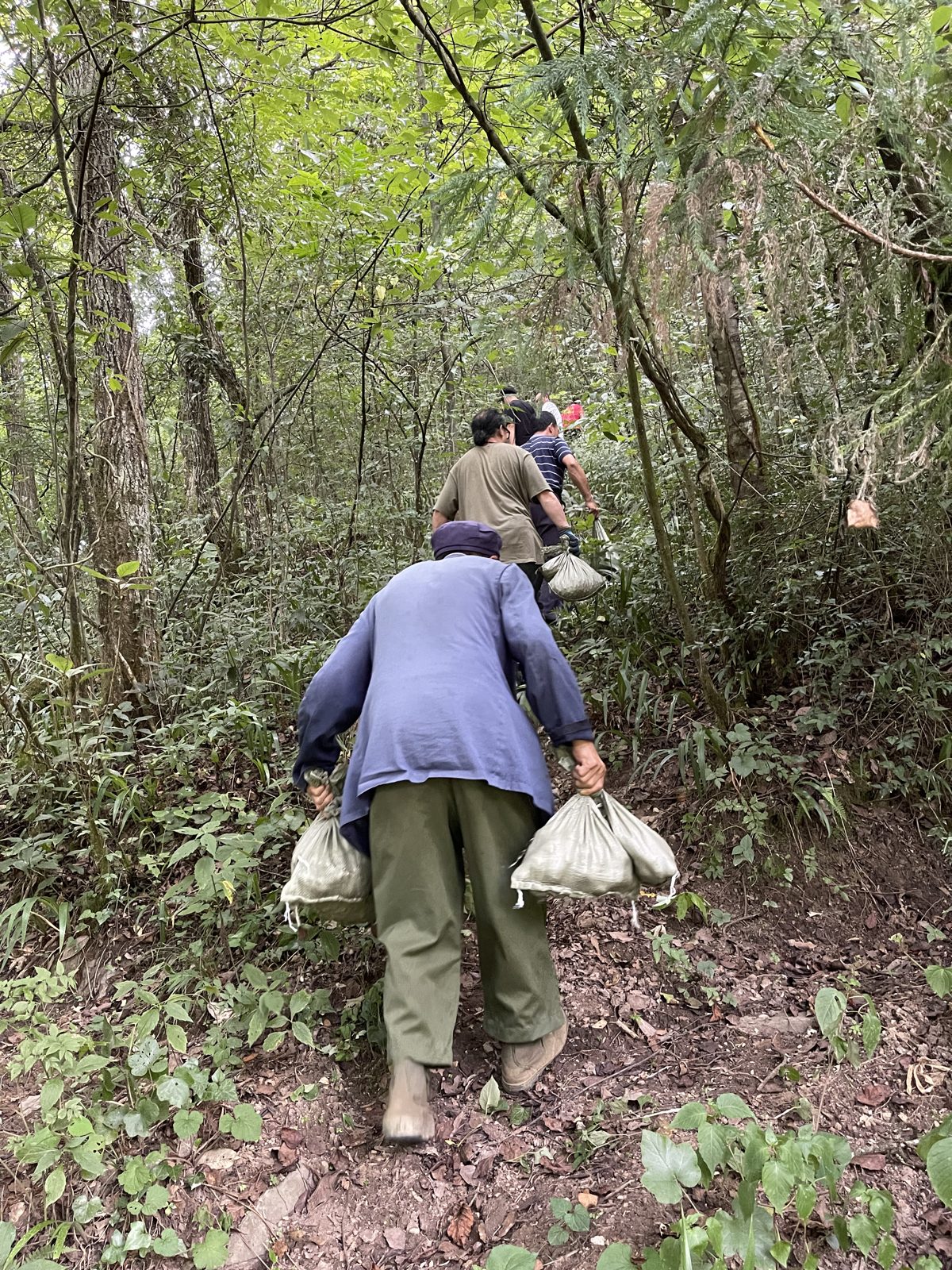
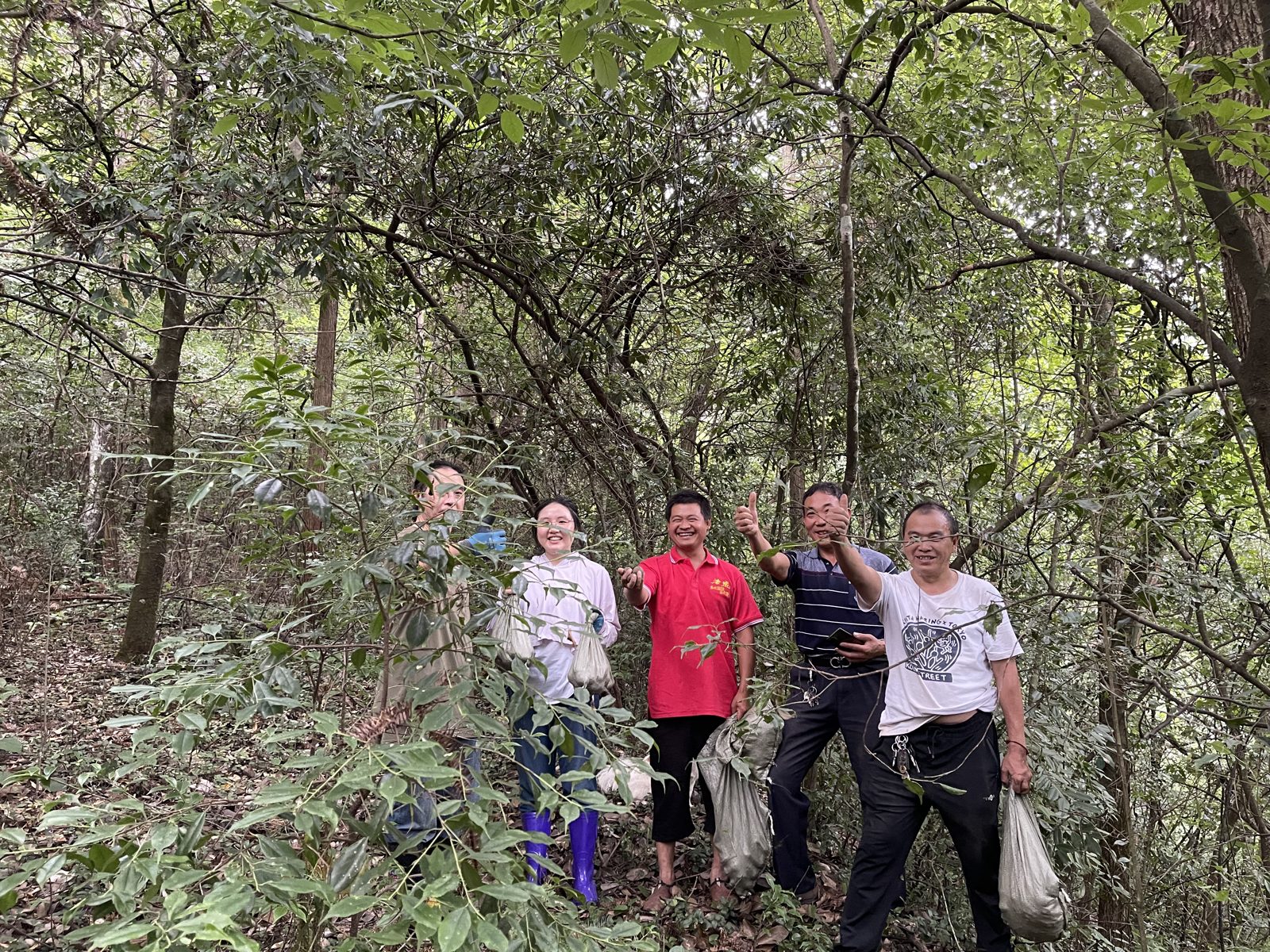
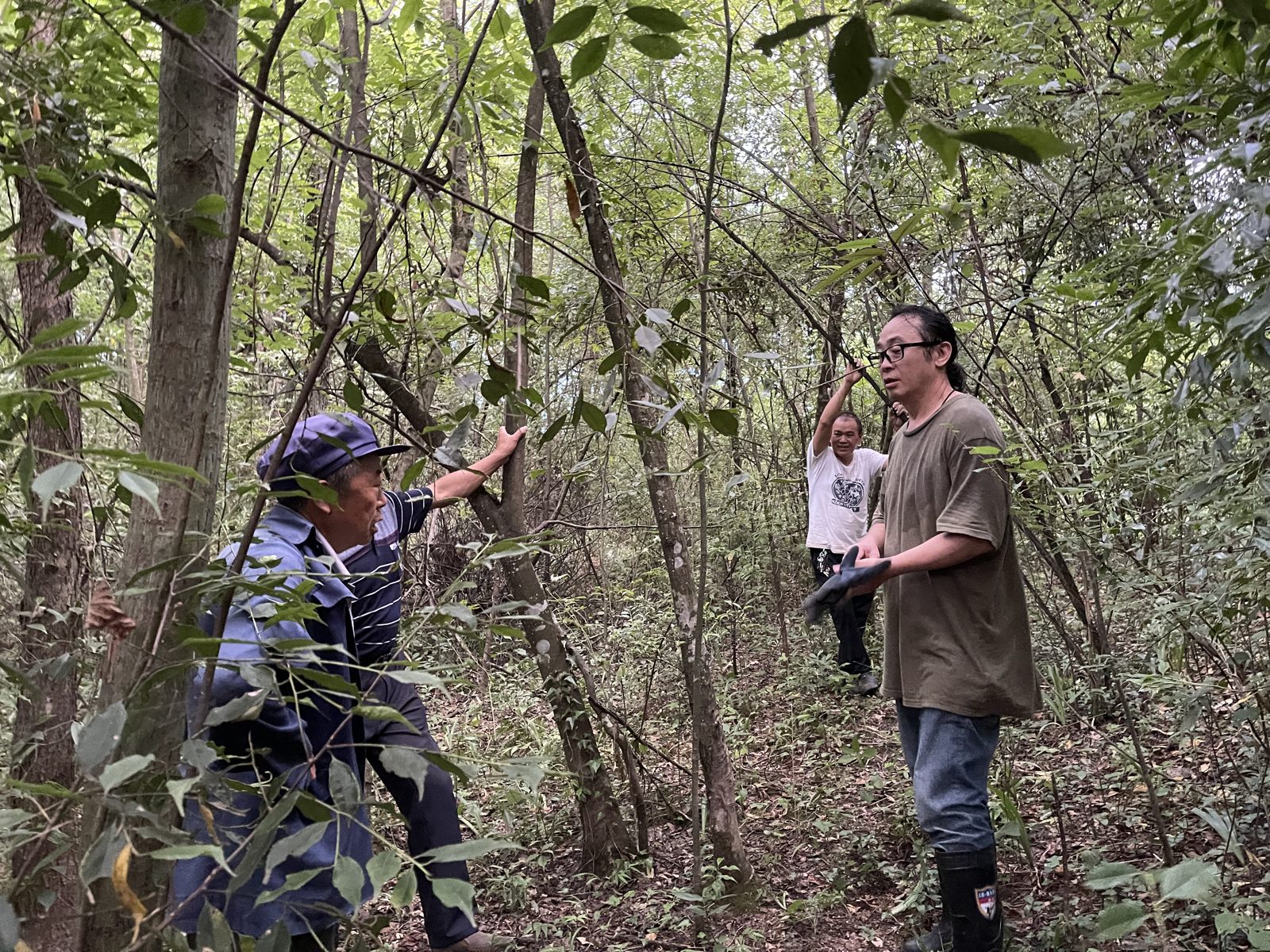
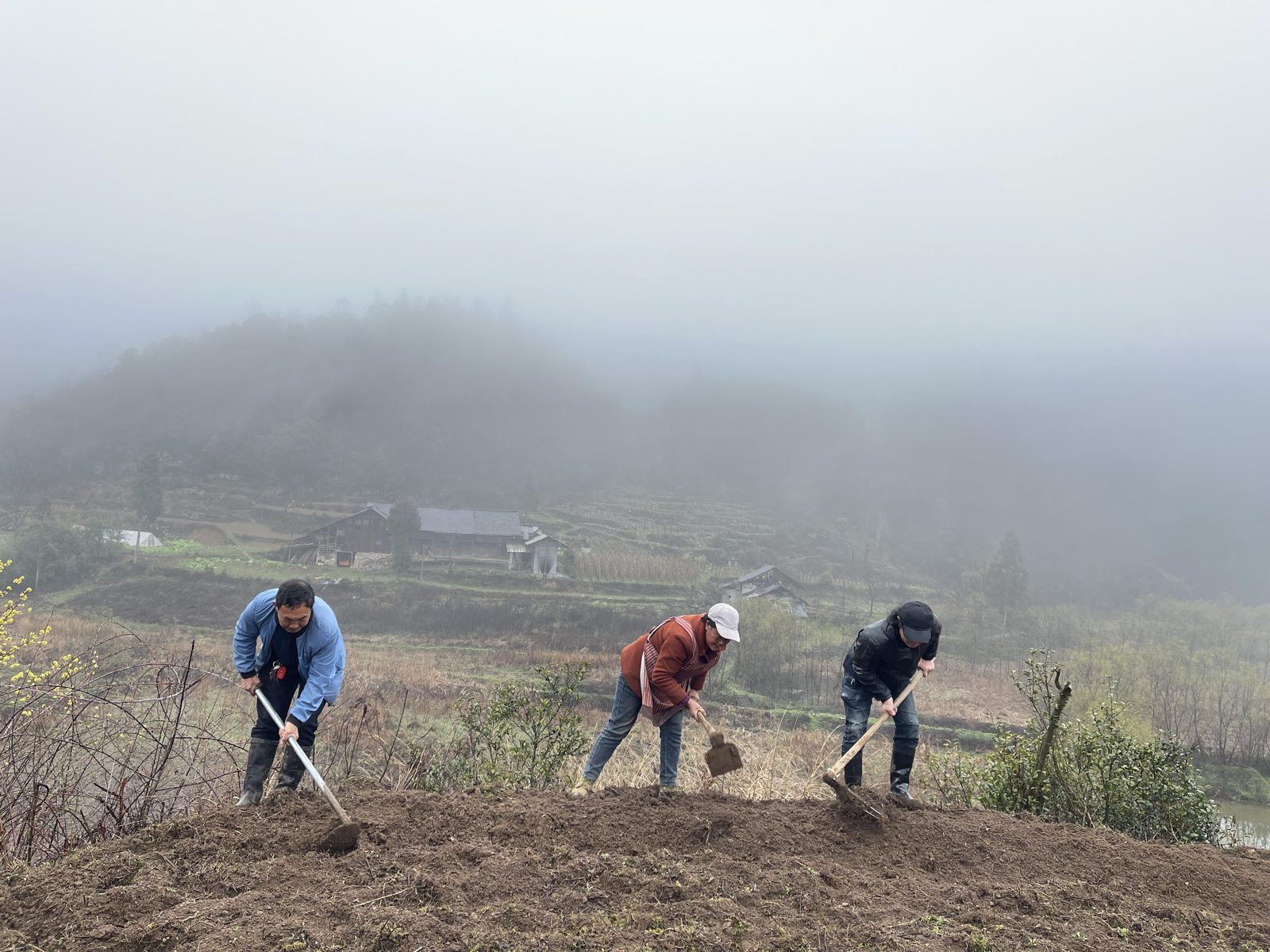
Caole Village (literally "the village where the grass is glad") is the name of Nailong Laboratory's trial field. Its founding note hopes to "let the plants be glad" by returning medicinal plants to the conditions they grow in by nature (latitude, moisture, temperature, altitude, and the give and take with the "weeds" around them) so as to grow herbs true to their place of origin. From June 2021 the team planned and built the Nailong Ancient Medicine Field in Luolong Town, Daozhen County, Guizhou, with a forest retreat in old-growth woodland and two zones, A and B. The project takes its motto from Zhang Zai: "to set the heart of heaven and earth, to secure the lives of the people, to carry on the lost teachings of past sages, and to open an age of peace for all generations."
Caole Village · 15
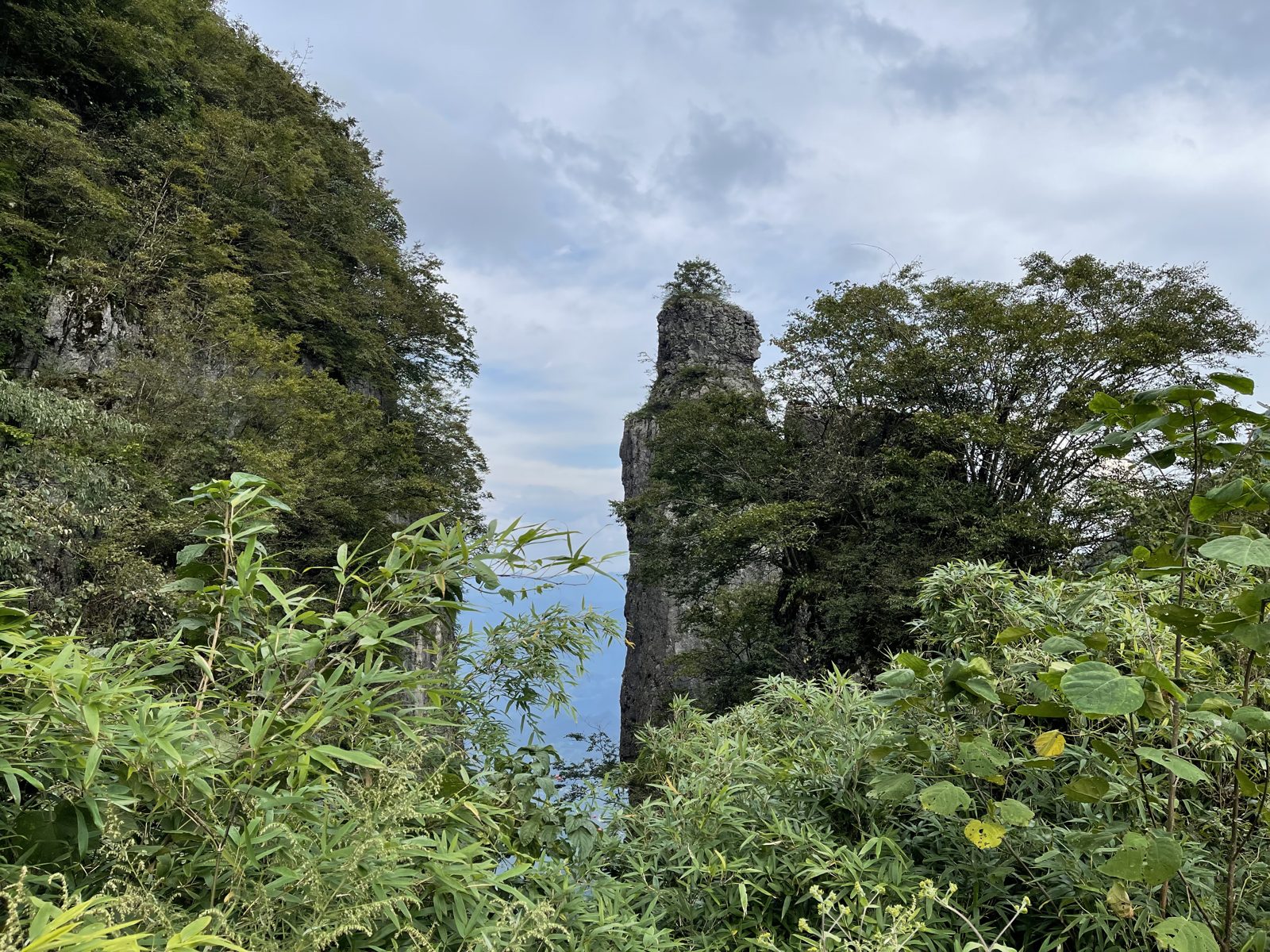
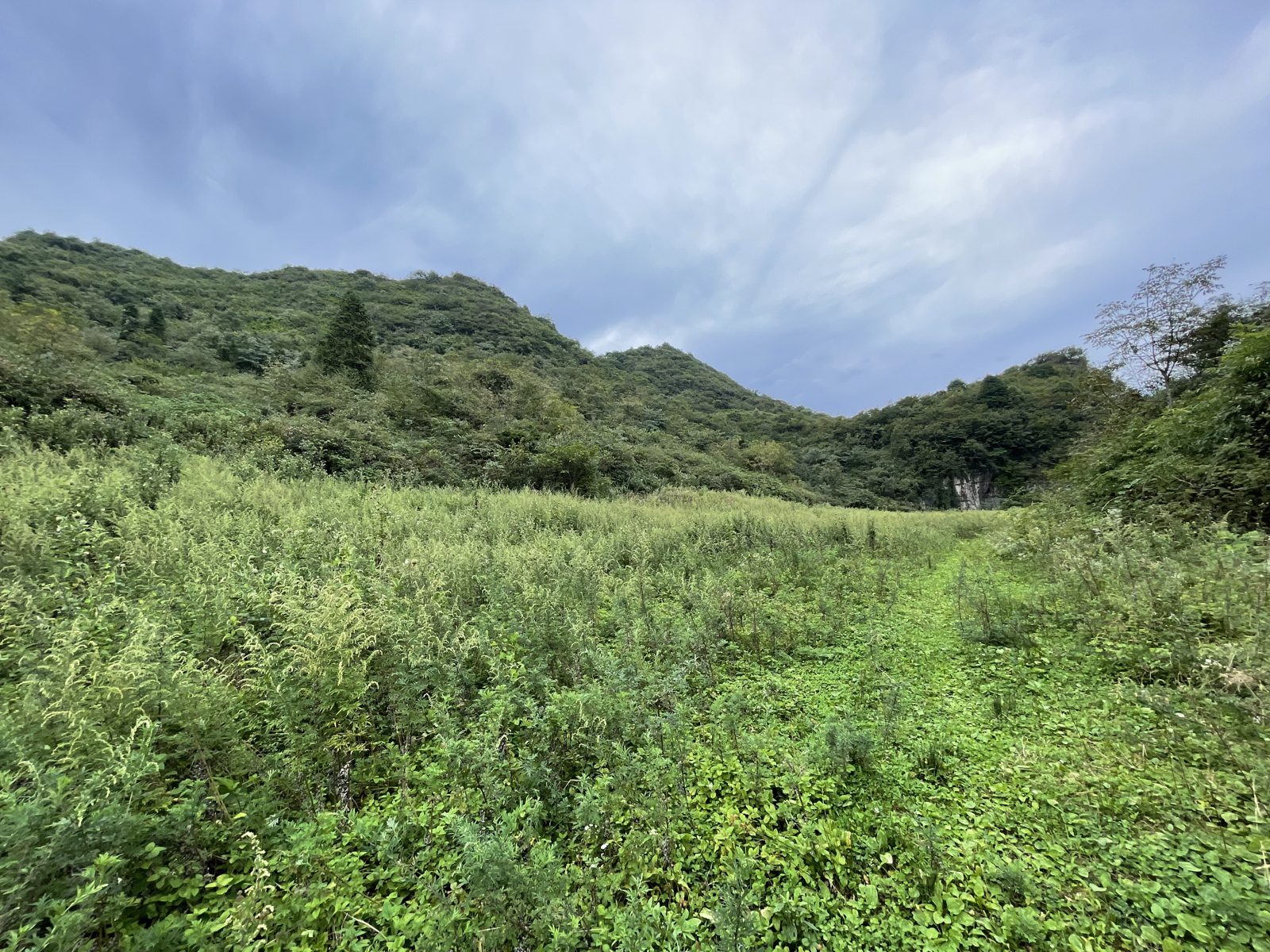
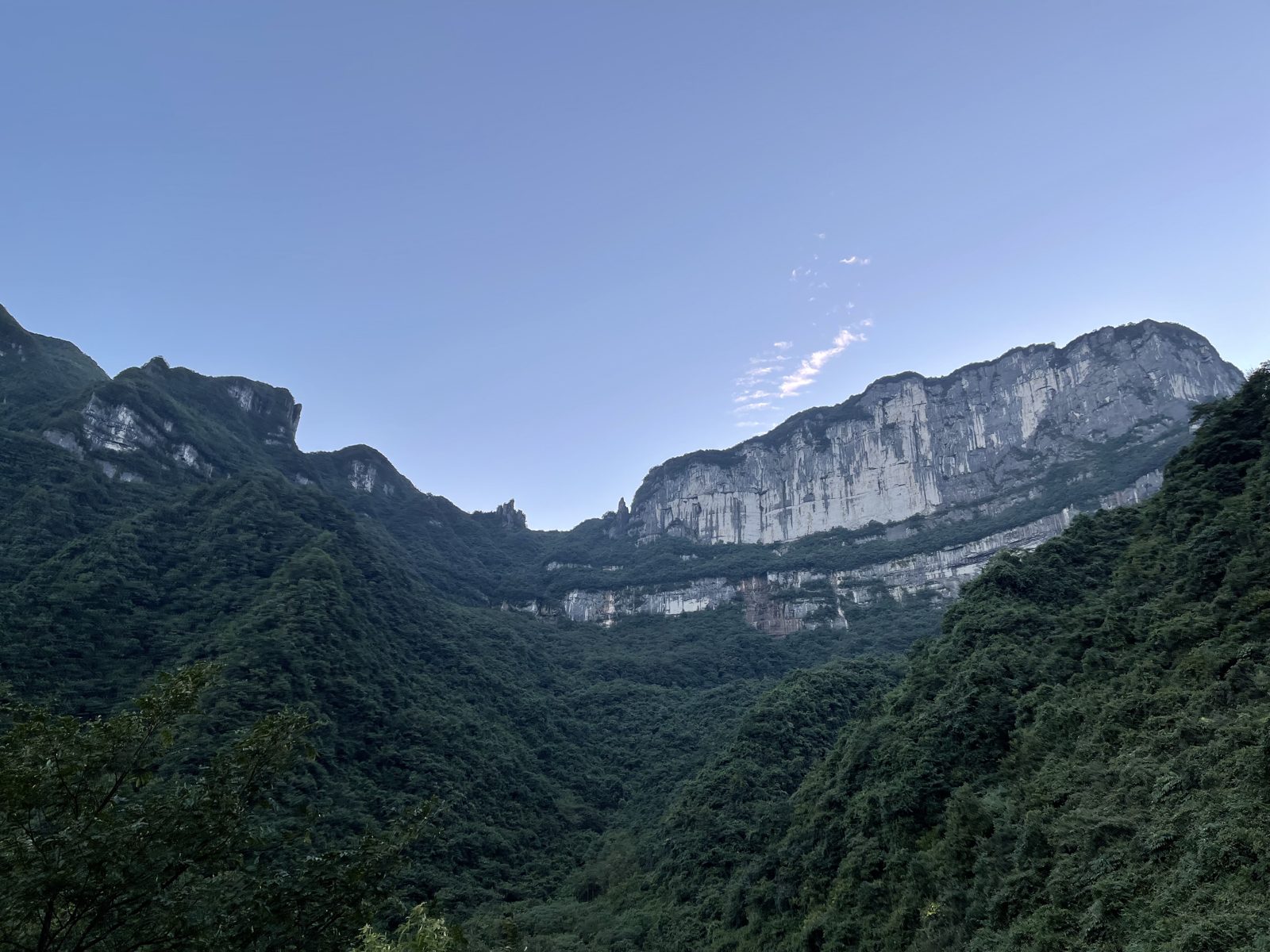
Caole Village · site photo 1 (taken 2021-09-04, 29.16798°N, 107.76878°E)Where this was taken (map)Photo: Nailong LaboratoryCaole Village · site photo 2 (taken 2021-09-04, 29.1671°N, 107.76836°E)Where this was taken (map)Photo: Nailong LaboratoryCaole Village · site photo 3 (taken 2021-09-08, 29.17541°N, 107.78072°E)Where this was taken (map)Photo: Nailong LaboratoryCaole Village · site photo 4 (taken 2021-09-13, 29.16056°N, 107.80321°E)Where this was taken (map)Photo: Nailong LaboratoryCaole Village · site photo 5 (taken 2021-09-13, 29.15164°N, 107.80177°E)Where this was taken (map)Photo: Nailong LaboratoryCaole Village · site photo 6 (taken 2021-12-22, 29.16773°N, 107.76849°E)Where this was taken (map)Photo: Nailong LaboratoryCaole Village · site photo 7 (taken 2022-04-16, 29.11746°N, 107.6675°E)Where this was taken (map)Photo: Nailong LaboratoryCaole Village · site photo 8 (taken 2022-05-02, 29.09371°N, 107.78271°E)Where this was taken (map)Photo: Nailong LaboratoryCaole Village · site photo 9 (taken 2022-05-03, 29.05467°N, 107.77242°E)Where this was taken (map)Photo: Nailong LaboratoryCaole Village · site photo 10 (taken 2022-05-03, 29.11171°N, 107.78942°E)Where this was taken (map)Photo: Nailong LaboratoryCaole Village · site photo 11 (taken 2022-05-03, 29.10201°N, 107.78529°E)Where this was taken (map)Photo: Nailong LaboratoryCaole Village · site photo 12 (taken 2022-05-31, 29.09477°N, 107.78426°E)Where this was taken (map)Photo: Nailong LaboratoryCaole Village · site photo 13Photo: Nailong LaboratoryCaole Village · site photo 14Photo: Nailong LaboratoryCaole Village · site photo 15Photo: Nailong Laboratory
What is uncertain:This card is written from the project's own texts. It states the project's vision, not checked research findings.
Record of Caole Village
How to truly implement “Caole Village” has become our belief and mission regarding traditional Chinese medicine and herbal medicine, realizing the aspirations of Nailong Biotechnology. At this moment, I would like to express my thoughts using Descartes’ famous saying, “I think, therefore I am.” You and I encourage each other. Our direction is to develop natural and authentic medicinal materials as our goal, to realize a true Caole Village, and to establish a genuinely meaningful Caole Village. “Caole Village” belongs to China; it is a place where Chinese culture can nurture and truly bring joy to herbs. I believe this is the true essence of traditional Chinese medicine. I sincerely hope that Nailong Biotechnology’s experimental field—Caole Village—will bring happiness to herbs! Let us contribute a beautiful “authentic medicinal material” for the Chinese people and provide health services to the public. We must not let the medicine go to waste! Our team has visited and researched many herbal farmers and personnel involved in the procurement of medicinal materials, gaining a wealth of specific information about herb cultivation and the herbal market. We have established good connections with them, taking a new step forward in the experimental field and natural cultivation, allowing traditional Chinese medicine to shine even brighter under the cultivation of herbal medicine. We aim to return to the ancient methods of formulation for cultivation and understanding, establishing the experimental base of Caole Village, where “All things carry yin and embrace yang, achieving harmony through the blending of qi” can take root. Please believe in our team; we will enter this joyful world of “herbs” in this short period of time.
Caole Village · 2
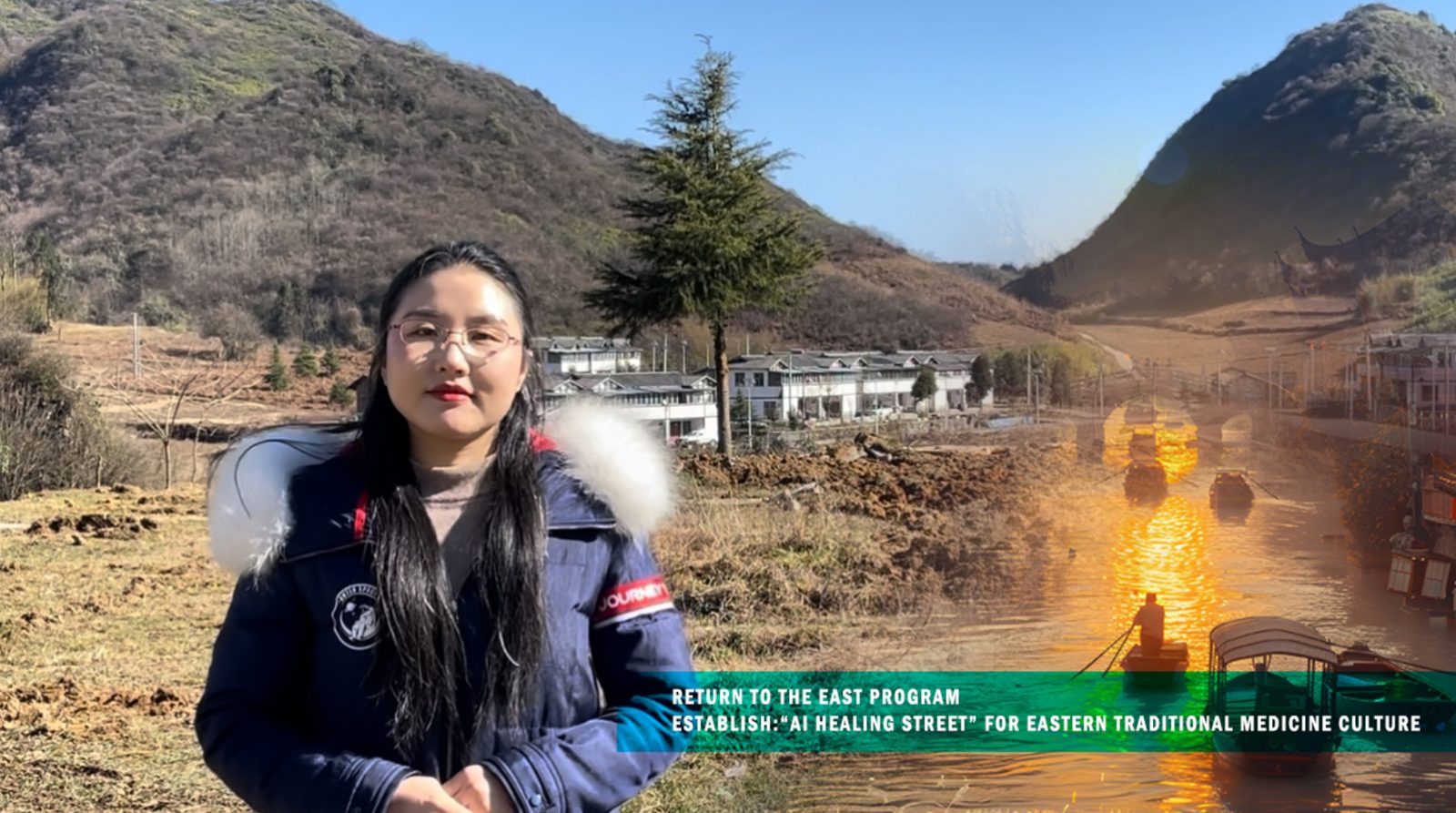
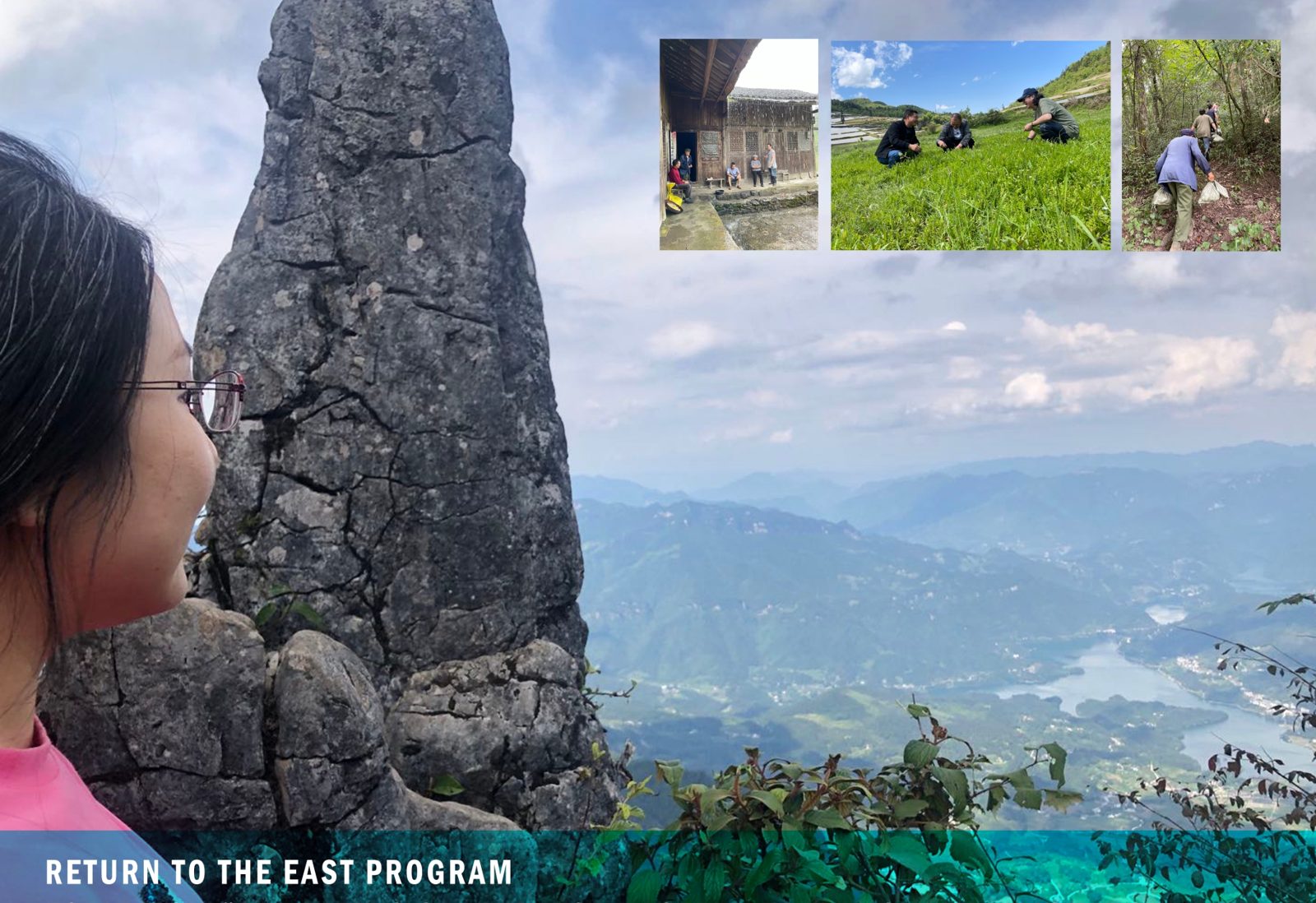
Caole Village · from the Return to the East programme (an "AI Healing Street" for Eastern traditional medicine culture)Nailong Laboratory · from the doorm.ai pageCaole Village · looking out from the ridge (Return to the East programme)Nailong Laboratory · from the doorm.ai page
What is uncertain:This card reproduces the project's own page; it states the project's aims and plans, not findings checked by a third party. The English text is the project page’s own English version, transcribed (OCR + proofreading) from the text image on the page.
Ode to Caole Village
Ode to Caole Village (a four-line poem on the page): dreaming of you, hand in hand, we work with the blended qi; we play between heaven and earth and climb to roam the sky; your joy makes the grass thrive and bloom in splendour; the blended qi flows into the river and gathers into a stream. (English rendering by the museum; the Chinese poem is the original.)
02The project
A museum that is alive
The Caole Village "Nailong Ancient Medicine Field" plant-community living museum is built around growth-oriented curation: it exhibits, and it keeps producing data and rules that can be checked. It has three parts: an on-site museum, an online museum, and a multimodal digital guide named Caole. Location desensitisation, tiered permissions, refusal of out-of-scope requests, audit logs and red-team tests make up its safety and compliance layer.
Eight deliverables
The engineering document lists eight deliverables: D1 the on-site layout with sensors and survey plots; D2 the online museum (public and internal) and its API; D3 a desensitised evidence knowledge graph with a KG-RAG service; D4 a topology (TDA) rule-mining pipeline and the rule bank; D5 the world model with a grid-level Decide API; D6 the multimodal digital guide Caole; D7 a safety, compliance and audit report; D8 scripts that run the evaluation protocol, with empty result tables. Out of scope: any coordinate, route or harvesting detail that points to a single spot, and any performance figure at this stage.
03Framework: growth-oriented curation
Growth-oriented curation: keeping how things grow, not only the things
Conserving endangered medicinal plants runs into four bottlenecks: names, source species, uses and places of origin that do not line up; translocation that moves individual plants but not their microhabitat, community or management rhythm; sensitive locations that make data hard to share; and exhibits that are cut off from research. Growth-oriented curation (GOC) answers by keeping not only specimens but the conditions, rhythms, community relations and management that make them grow. Once that is written as a computable object, a living museum becomes research infrastructure that can be experimented on, simulated and taught.
The three-part profile ⟨E, T, C⟩
For each target medicinal plant x, the profile is P(x) = ⟨E(x), T(x), C(x)⟩. E is the ecological niche: temperature, moisture, light, soil, aspect, disturbance and canopy cover, given as ranges or grades with their uncertainty. T is the temporal rhythm: phenology, management rhythms such as shading, watering and replanting, and disturbance cycles. C is community structure: companion species, co-occurrence modules and key interactions (mycorrhizal, pollination, competition) with their stability. The minimal schema adds the set of drug names and synonyms, evidence references, a disclosure level (public / internal / sensitive) and a spatial grain no finer than a 5 km grid.
04The site: Luolong, Daozhen, Guizhou
The site: Luolong Town, Daozhen, Guizhou
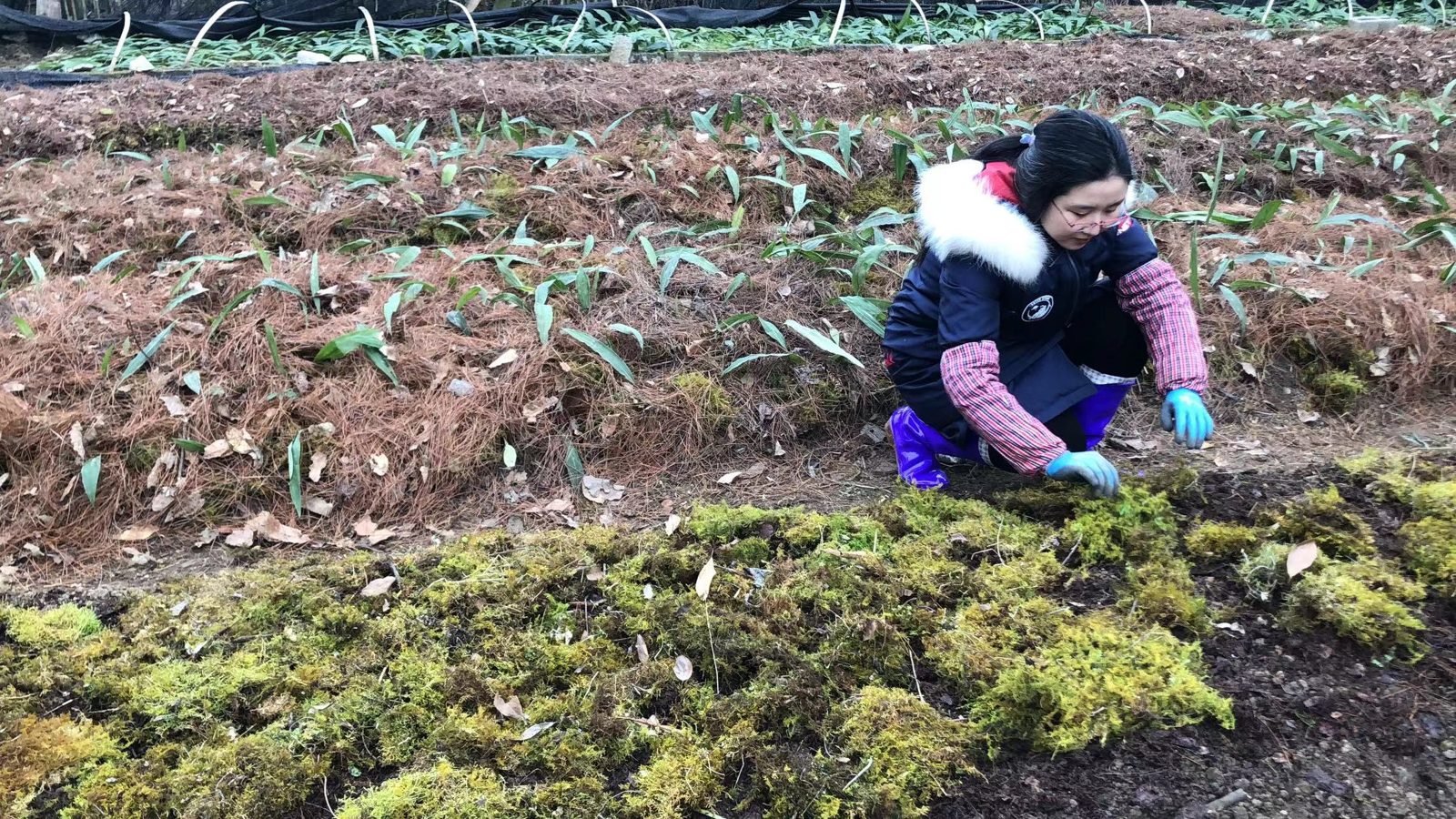
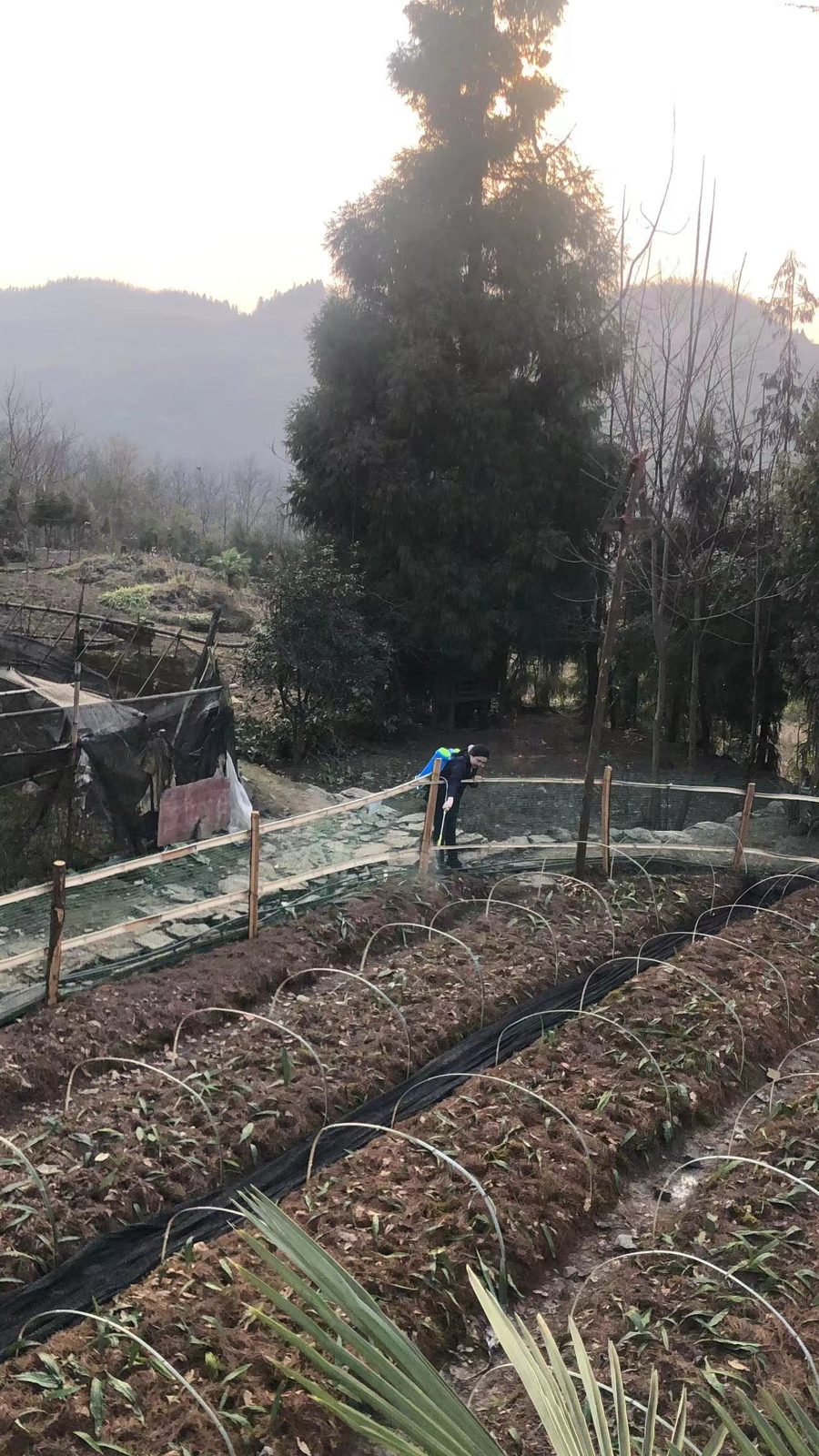
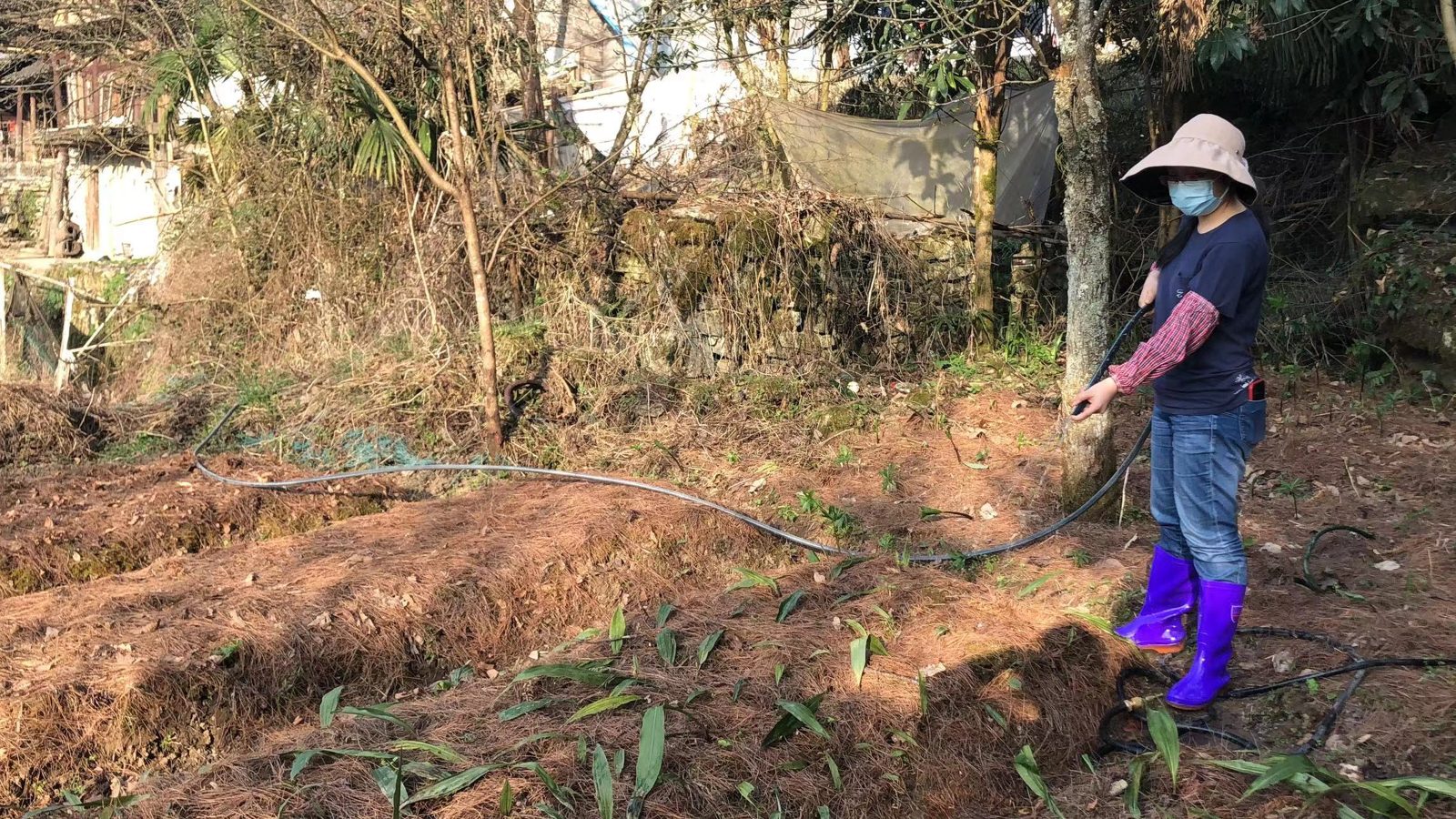
The on-site museum is the Nailong Ancient Medicine Field in Luolong Town, Daozhen Gelao and Miao Autonomous County, Zunyi, Guizhou, China, in the mountains of the upper Yangtze, spanning a gradient from the water-level fluctuation zone to the forest understorey. Work began here in June 2021, with a forest retreat set in old-growth woodland and two zones. Zone A is a protected garden of Miao medicinal plants, its beds mulched with pine needles and moss and managed by five principles: ecology, environmental care, zero residue, recycling and balance. Zone B is a protected garden of Chinese medicinal plants. Photo captions give the date and place each picture was taken. The locations of individual endangered plants are still handled by the permission tiers set out in the preprint.
Zone A · 29
Nailong field, Zone A · site photo 1 (taken 2022-01-20, 29.0745°N, 107.75887°E)Where this was taken (map)Photo: Nailong LaboratoryNailong field, Zone A · site photo 2 (taken 2022-02-25, 29.07405°N, 107.75871°E)Where this was taken (map)Photo: Nailong LaboratoryNailong field, Zone A · site photo 3 (taken 2022-03-10, 29.07409°N, 107.75872°E)Where this was taken (map)Photo: Nailong LaboratoryNailong field, Zone A · site photo 4 (taken 2022-03-15, 29.07432°N, 107.75891°E)Where this was taken (map)Photo: Nailong LaboratoryNailong field, Zone A · site photo 5 (taken 2022-03-30, 29.07443°N, 107.75895°E)Where this was taken (map)Photo: Nailong LaboratoryNailong field, Zone A · site photo 6 (taken 2022-04-13, 29.07436°N, 107.75899°E)Where this was taken (map)Photo: Nailong LaboratoryNailong field, Zone A · site photo 7 (taken 2022-04-13, 29.07837°N, 107.76106°E)Where this was taken (map)Photo: Nailong LaboratoryNailong field, Zone A · site photo 8 (taken 2022-04-13, 29.07839°N, 107.76109°E)Where this was taken (map)Photo: Nailong LaboratoryNailong field, Zone A · site photo 9 (taken 2022-04-13, 29.07842°N, 107.76109°E)Where this was taken (map)Photo: Nailong LaboratoryNailong field, Zone A · site photo 10 (taken 2022-04-13, 29.07842°N, 107.76108°E)Where this was taken (map)Photo: Nailong LaboratoryNailong field, Zone A · site photo 11 (taken 2022-04-13, 29.07233°N, 107.75784°E)Where this was taken (map)Photo: Nailong LaboratoryNailong field, Zone A · site photo 12 (taken 2022-04-14, 29.05839°N, 107.74828°E)Where this was taken (map)Photo: Nailong LaboratoryNailong field, Zone A · site photo 13 (taken 2022-04-14, 29.07696°N, 107.75909°E)Where this was taken (map)Photo: Nailong LaboratoryNailong field, Zone A · site photo 14 (taken 2022-04-14, 29.07693°N, 107.75894°E)Where this was taken (map)Photo: Nailong LaboratoryNailong field, Zone A · site photo 15 (taken 2022-04-14, 29.07686°N, 107.75887°E)Where this was taken (map)Photo: Nailong LaboratoryNailong field, Zone A · site photo 16 (taken 2022-04-14, 29.07597°N, 107.75796°E)Where this was taken (map)Photo: Nailong LaboratoryNailong field, Zone A · site photo 17 (taken 2022-04-14, 29.05569°N, 107.74697°E)Where this was taken (map)Photo: Nailong LaboratoryNailong field, Zone A · site photo 18 (taken 2022-04-14, 29.07533°N, 107.75779°E)Where this was taken (map)Photo: Nailong LaboratoryNailong field, Zone A · site photo 19 (taken 2022-05-19, 29.07232°N, 107.75784°E)Where this was taken (map)Photo: Nailong LaboratoryNailong field, Zone A · site photo 20 (taken 2022-08-04, 29.07555°N, 107.75906°E)Where this was taken (map)Photo: Nailong LaboratoryNailong field, Zone A · site photo 21 (taken 2022-08-04, 29.07555°N, 107.75907°E)Where this was taken (map)Photo: Nailong LaboratoryNailong field, Zone A · site photo 22 (taken 2023-02-07, 29.07457°N, 107.75874°E)Where this was taken (map)Photo: Nailong LaboratoryNailong field, Zone A · site photo 23 (taken 2023-02-07, 29.07446°N, 107.75894°E)Where this was taken (map)Photo: Nailong LaboratoryNailong field, Zone A · site photo 24Photo: Nailong LaboratoryNailong field, Zone A · site photo 25Photo: Nailong LaboratoryNailong field, Zone A · site photo 26Photo: Nailong LaboratoryNailong field, Zone A · site photo 27Photo: Nailong LaboratoryNailong field, Zone A · site photo 28Photo: Nailong LaboratoryNailong field, Zone A · site photo 29Photo: Nailong Laboratory
Zone B · 23
Nailong field, Zone B · site photo 1 (taken 2022-06-23)Photo: Nailong LaboratoryNailong field, Zone B · site photo 2 (taken 2022-06-24, 29.09592°N, 107.78374°E)Where this was taken (map)Photo: Nailong LaboratoryNailong field, Zone B · site photo 3 (taken 2022-06-24, 29.09593°N, 107.78372°E)Where this was taken (map)Photo: Nailong LaboratoryNailong field, Zone B · site photo 4 (taken 2022-06-24, 29.09869°N, 107.77676°E)Where this was taken (map)Photo: Nailong LaboratoryNailong field, Zone B · site photo 5 (taken 2022-06-24, 29.09872°N, 107.77679°E)Where this was taken (map)Photo: Nailong LaboratoryNailong field, Zone B · site photo 6 (taken 2022-06-24, 29.09871°N, 107.77672°E)Where this was taken (map)Photo: Nailong LaboratoryNailong field, Zone B · site photo 7 (taken 2022-06-24, 29.09871°N, 107.77676°E)Where this was taken (map)Photo: Nailong LaboratoryNailong field, Zone B · site photo 8 (taken 2022-06-25, 29.13048°N, 107.78014°E)Where this was taken (map)Photo: Nailong LaboratoryNailong field, Zone B · site photo 9 (taken 2022-06-25, 29.1303°N, 107.77933°E)Where this was taken (map)Photo: Nailong LaboratoryNailong field, Zone B · site photo 10 (taken 2022-07-16, 29.09421°N, 107.78449°E)Where this was taken (map)Photo: Nailong LaboratoryNailong field, Zone B · site photo 11 (taken 2022-07-16, 29.09491°N, 107.78394°E)Where this was taken (map)Photo: Nailong LaboratoryNailong field, Zone B · site photo 12 (taken 2022-07-17, 29.09419°N, 107.78496°E)Where this was taken (map)Photo: Nailong LaboratoryNailong field, Zone B · site photo 13 (taken 2022-07-17, 29.09407°N, 107.78502°E)Where this was taken (map)Photo: Nailong LaboratoryNailong field, Zone B · site photo 14 (taken 2022-07-17, 29.09409°N, 107.78508°E)Where this was taken (map)Photo: Nailong LaboratoryNailong field, Zone B · site photo 15 (taken 2022-07-17, 29.0941°N, 107.78507°E)Where this was taken (map)Photo: Nailong LaboratoryNailong field, Zone B · site photo 16 (taken 2022-07-17, 29.09425°N, 107.78517°E)Where this was taken (map)Photo: Nailong LaboratoryNailong field, Zone B · site photo 17 (taken 2022-08-05, 29.09372°N, 107.78506°E)Where this was taken (map)Photo: Nailong LaboratoryNailong field, Zone B · site photo 18 (taken 2022-08-05, 29.09364°N, 107.78612°E)Where this was taken (map)Photo: Nailong LaboratoryNailong field, Zone B · site photo 19 (taken 2022-08-05, 29.0923°N, 107.78374°E)Where this was taken (map)Photo: Nailong LaboratoryNailong field, Zone B · site photo 20 (taken 2023-03-18, 29.09431°N, 107.78349°E)Where this was taken (map)Photo: Nailong LaboratoryNailong field, Zone B · site photo 21 (taken 2023-03-18, 29.09437°N, 107.78352°E)Where this was taken (map)Photo: Nailong LaboratoryNailong field, Zone B · site photo 22 (taken 2023-03-18, 29.09436°N, 107.78352°E)Where this was taken (map)Photo: Nailong LaboratoryNailong field, Zone B · site photo 23Photo: Nailong Laboratory
Plants in the protocol
The protocol's example set covers endangered or priority medicinal plants of different ecological types and sensitivity: Cibotium, Huperzia, Adiantum, Cremastra (mao cigu), yews, ginkgo, dawn redwood, Coptis, Magnolia officinalis, Eucommia, Gastrodia, Bletilla and Paris, among others. They were chosen for room for textual research, dependence on microhabitat, ties to community structure, and how sensitive their locations are and whether they can be desensitised. In Zone A's records, Cremastra is a main subject.
What is uncertain:This is the protocol's example list, not a list of plants already measured.
A walk through the site
The travel note follows one path through the site: along the old Five-Chi Road into Chan Mountain, through the Gate of Changing Others, past the stream and pines ("the mood of the mountain stream, the sound of rain on the pines"), up the steps to a Miao meal of mountain food, and finally to the Gate of Changing Oneself: "first a mountain is a mountain, then it is not, then it is a mountain again".
Walking route · 12
Walking route · site photo 1 (taken 2022-03-31, 29.07619°N, 107.75923°E)Where this was taken (map)Photo: Nailong LaboratoryWalking route · site photo 2 (taken 2022-03-31, 29.07639°N, 107.75915°E)Where this was taken (map)Photo: Nailong LaboratoryWalking route · site photo 3 (taken 2022-03-31, 29.07632°N, 107.75908°E)Where this was taken (map)Photo: Nailong LaboratoryWalking route · site photo 4 (taken 2022-03-31, 29.07637°N, 107.759°E)Where this was taken (map)Photo: Nailong LaboratoryWalking route · site photo 5 (taken 2022-03-31, 29.07639°N, 107.75894°E)Where this was taken (map)Photo: Nailong LaboratoryWalking route · site photo 6 (taken 2022-03-31, 29.07667°N, 107.75905°E)Where this was taken (map)Photo: Nailong LaboratoryWalking route · site photo 7 (taken 2022-03-31, 29.07124°N, 107.7584°E)Where this was taken (map)Photo: Nailong LaboratoryWalking route · site photo 8 (taken 2022-03-31, 29.07697°N, 107.75889°E)Where this was taken (map)Photo: Nailong LaboratoryWalking route · site photo 9 (taken 2022-03-31, 29.07698°N, 107.75887°E)Where this was taken (map)Photo: Nailong LaboratoryWalking route · site photo 10 (taken 2022-03-31, 29.07703°N, 107.75884°E)Where this was taken (map)Photo: Nailong LaboratoryWalking route · site photo 11 (taken 2022-03-31, 29.07707°N, 107.75879°E)Where this was taken (map)Photo: Nailong LaboratoryWalking route · site photo 12 (taken 2022-03-31, 29.07395°N, 107.75629°E)Where this was taken (map)Photo: Nailong Laboratory
05Nailong Ancient Medicine Field
Nailong Ancient Medicine Field: 60,000 mu in Luolong
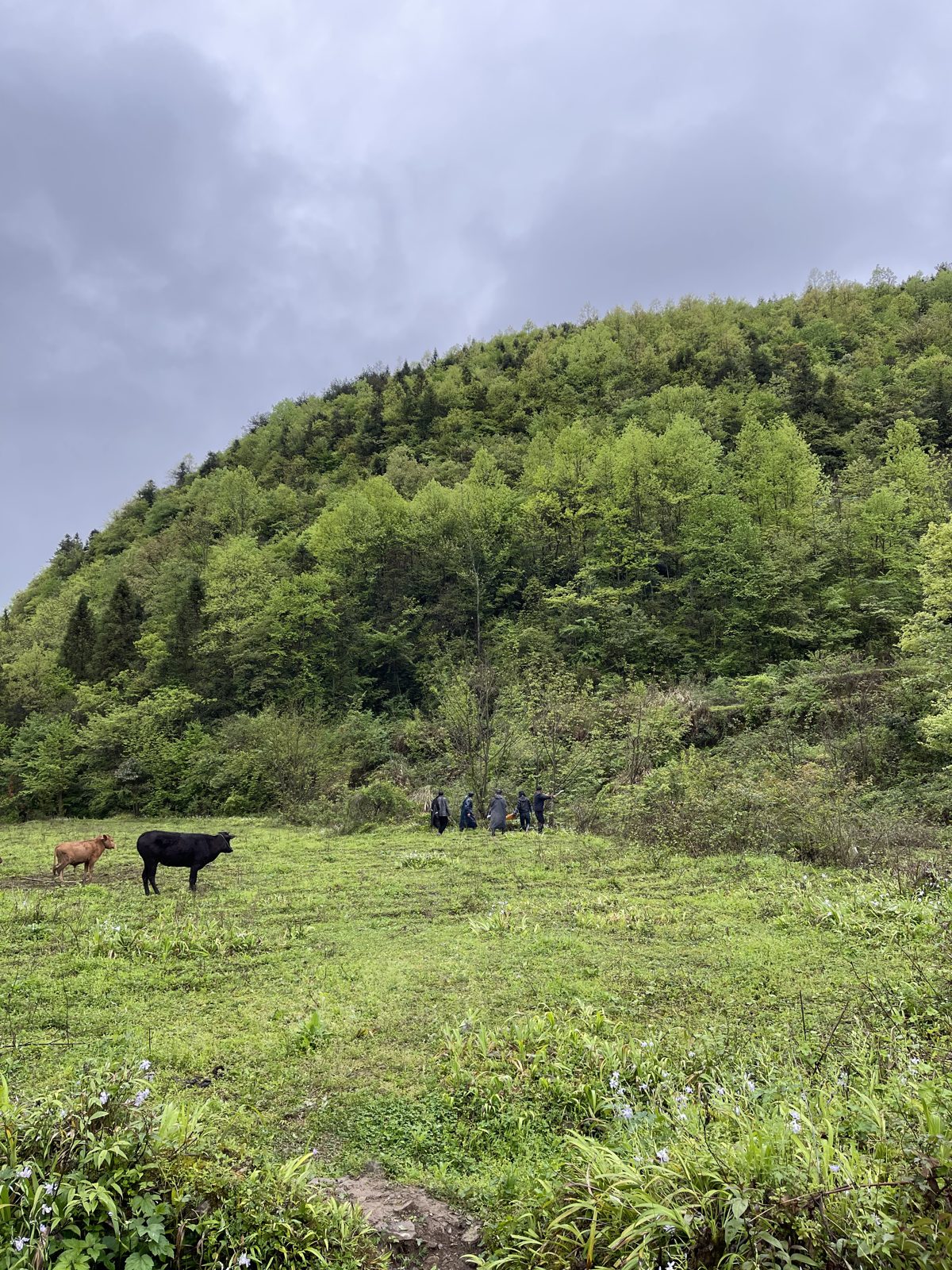
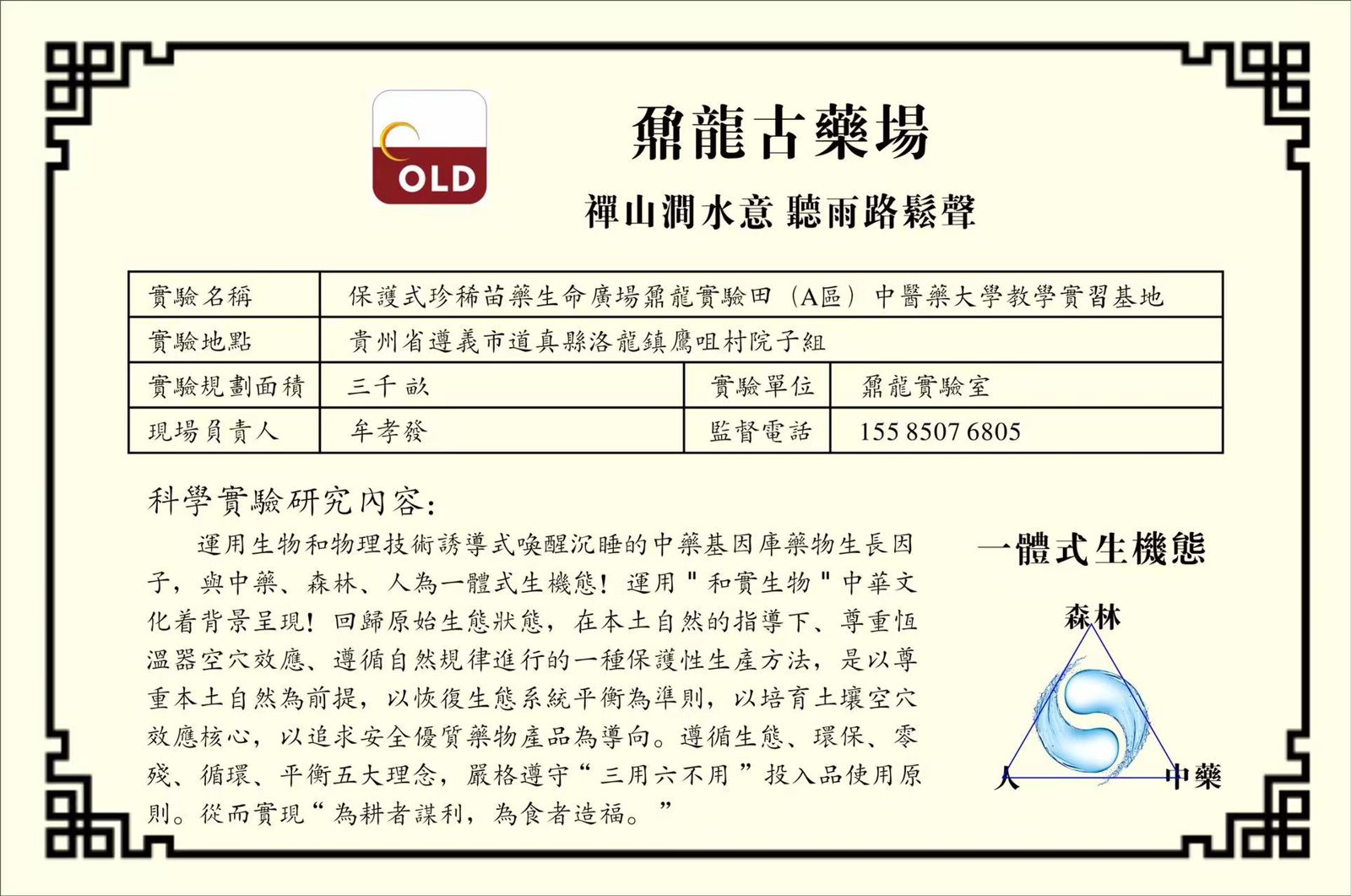
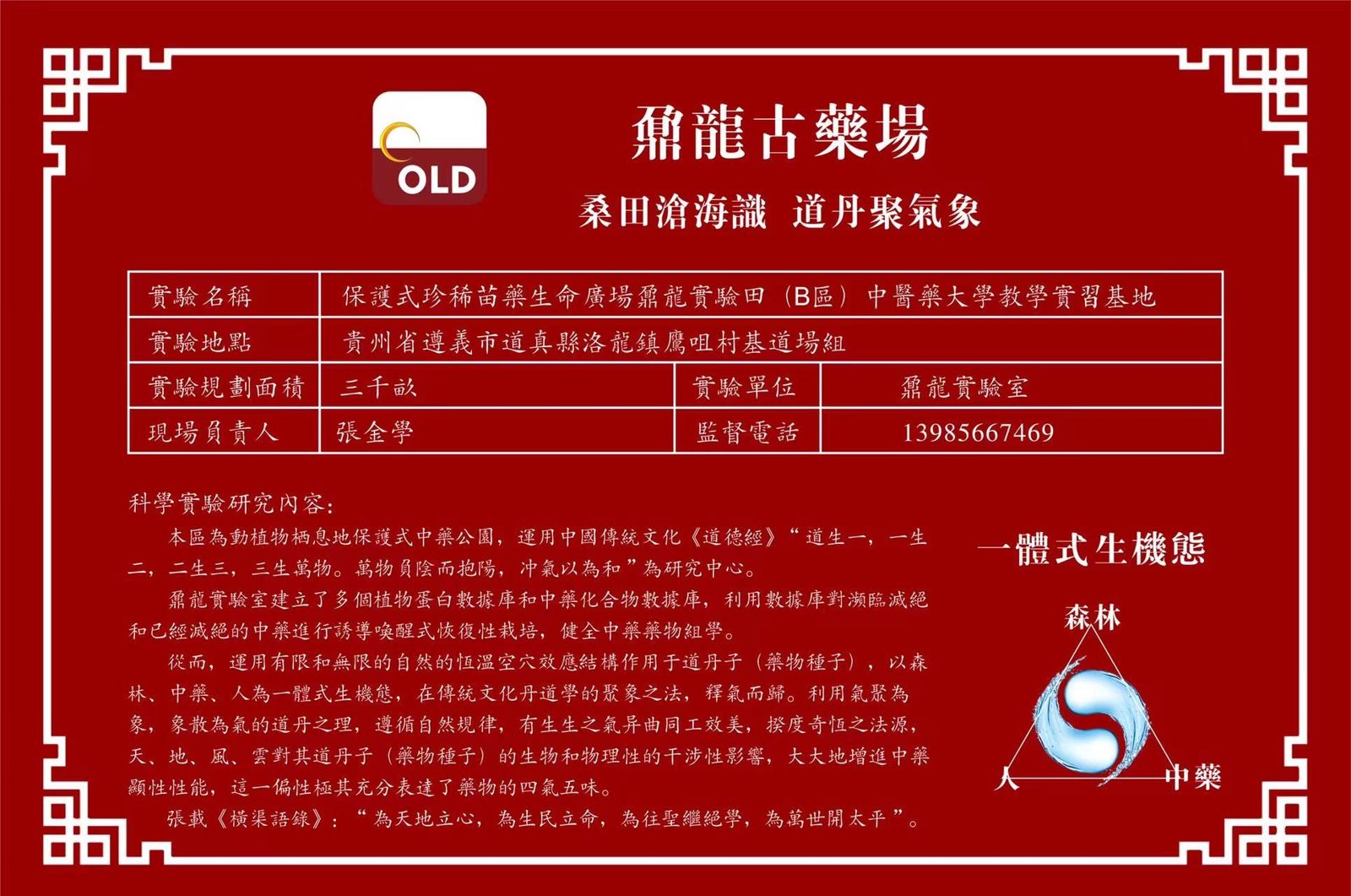
Since June 2021, the “Nailong Ancient Medicine Field” has been planned and implemented over 60,000 acres in Luolong Town, Daozhen Gelao and Miao Autonomous County, Zunyi City, Guizhou Province. Within the primeval forest, a “the round mirror collects gas from the hole of heaven and earth” forest healing site has been established. Additionally, the project has received support from the Chinese Academy of Traditional Chinese Medicine for the collection of natural data and natural cultivation management of authentic Chinese medicinal materials. It is funded by the National Natural Science Foundation, the Ministry of Education of China, and resource management by the Hong Kong Natural Healing Method Association.
Nailong Ancient Medicine Field · 2
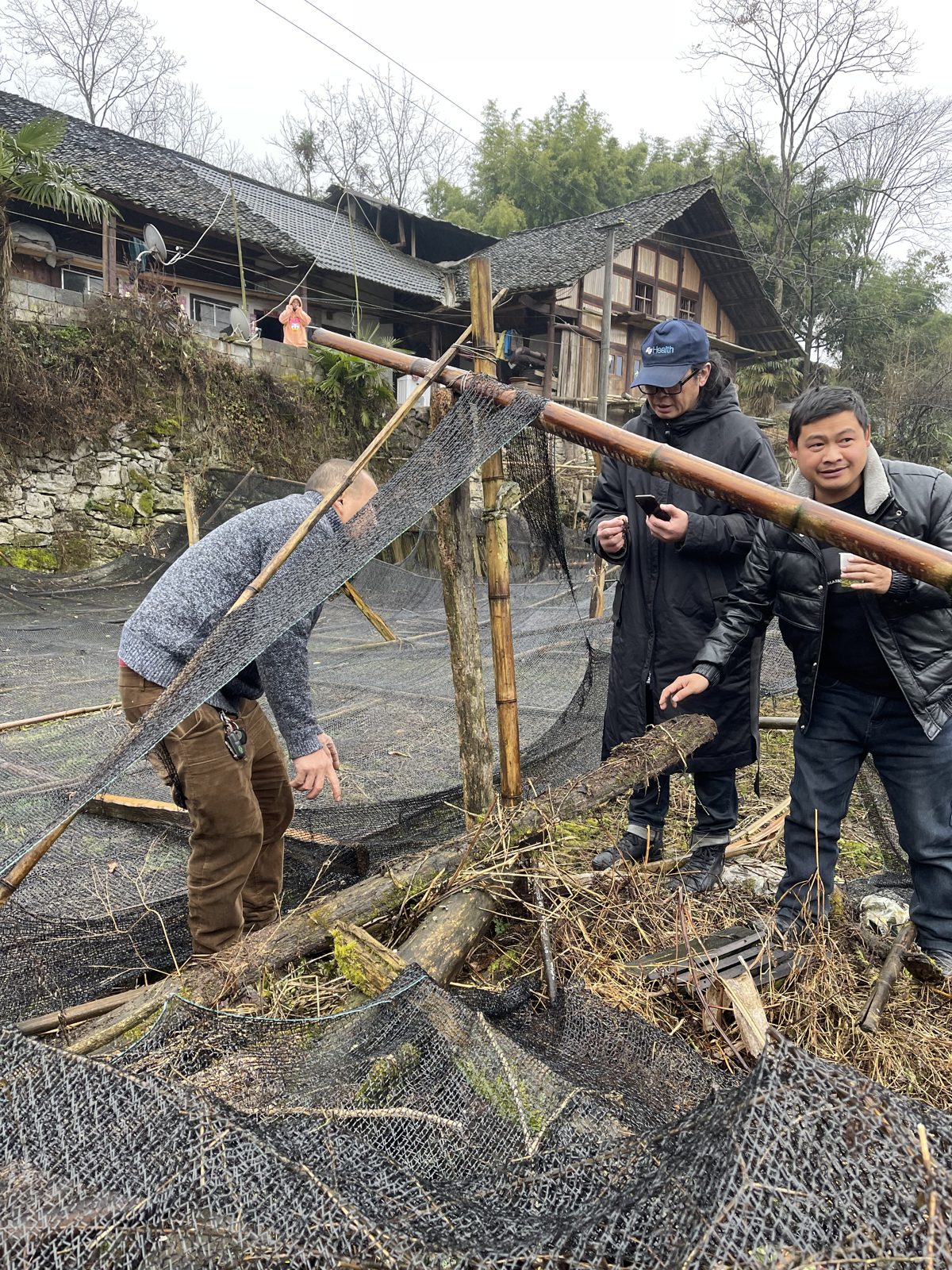
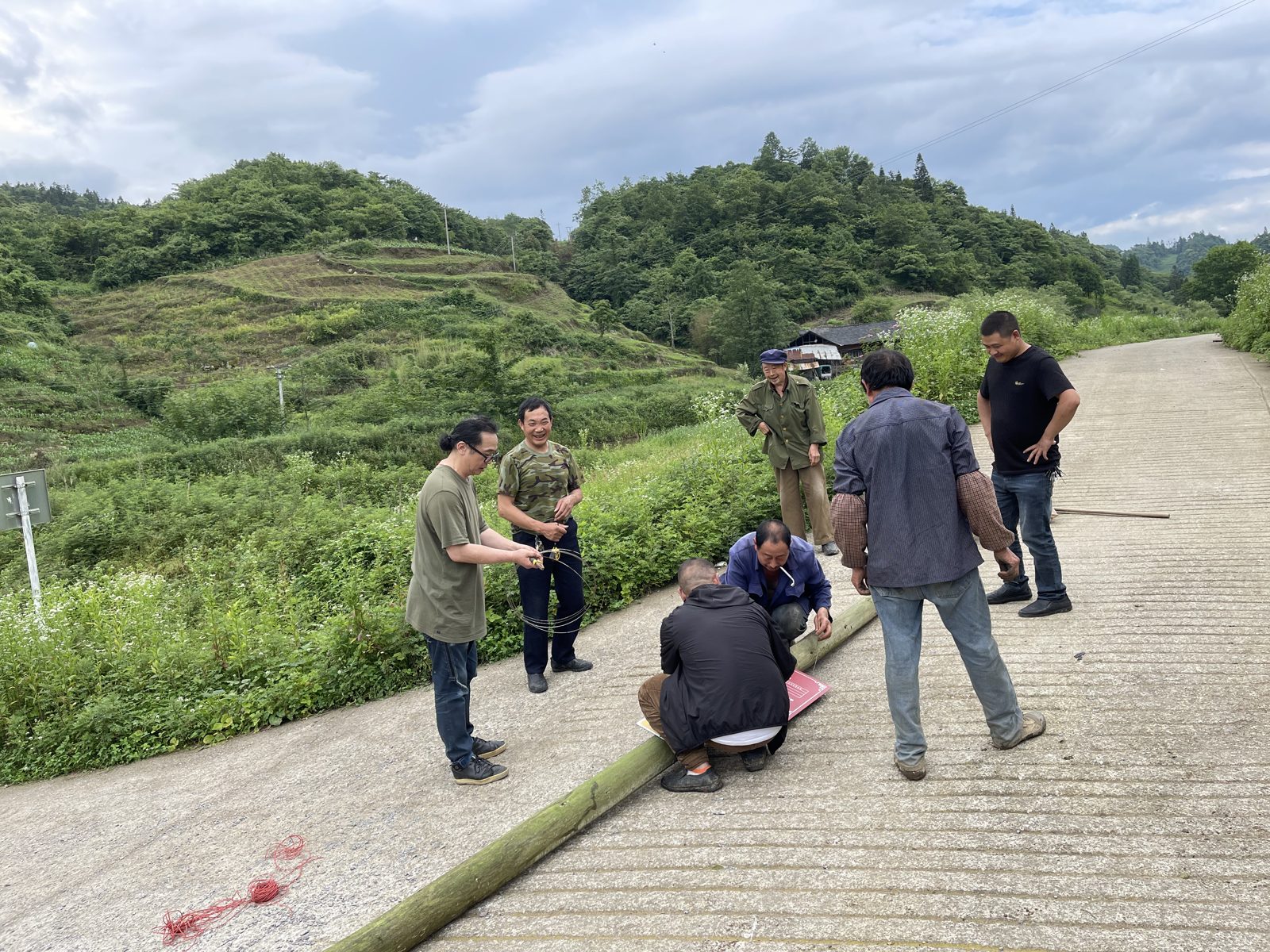
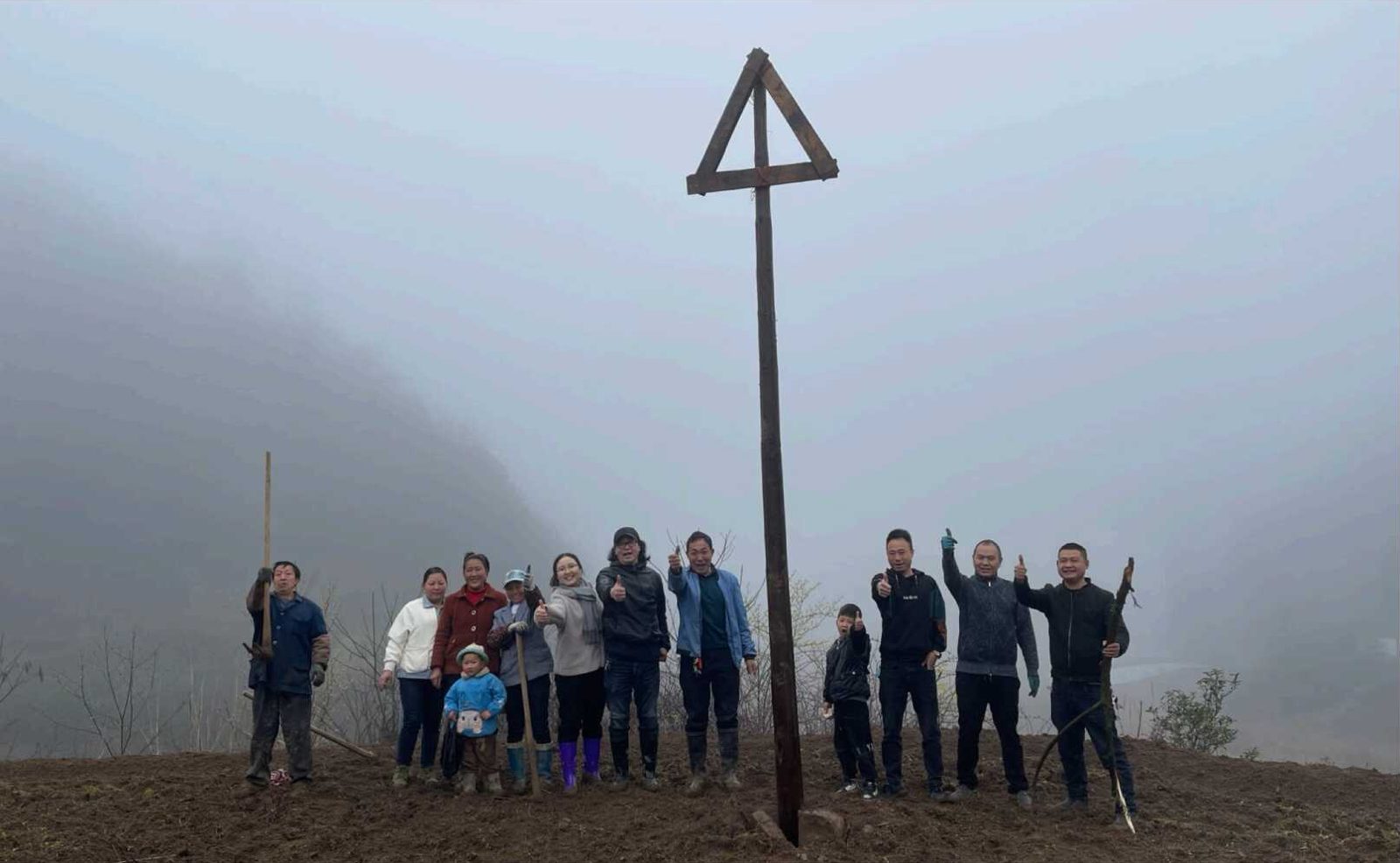
Nailong Ancient Medicine Field · an old house and herb field in the forestNailong Laboratory · from the doorm.ai pageNailong Ancient Medicine Field · the team on the first day of work, in fogNailong Laboratory · from the doorm.ai page
What is uncertain:This card reproduces the project's own page; it states the project's aims and plans, not findings checked by a third party. The English text is the project page’s own English version, transcribed (OCR + proofreading) from the text image on the page.
The Five-Foot Path through the field
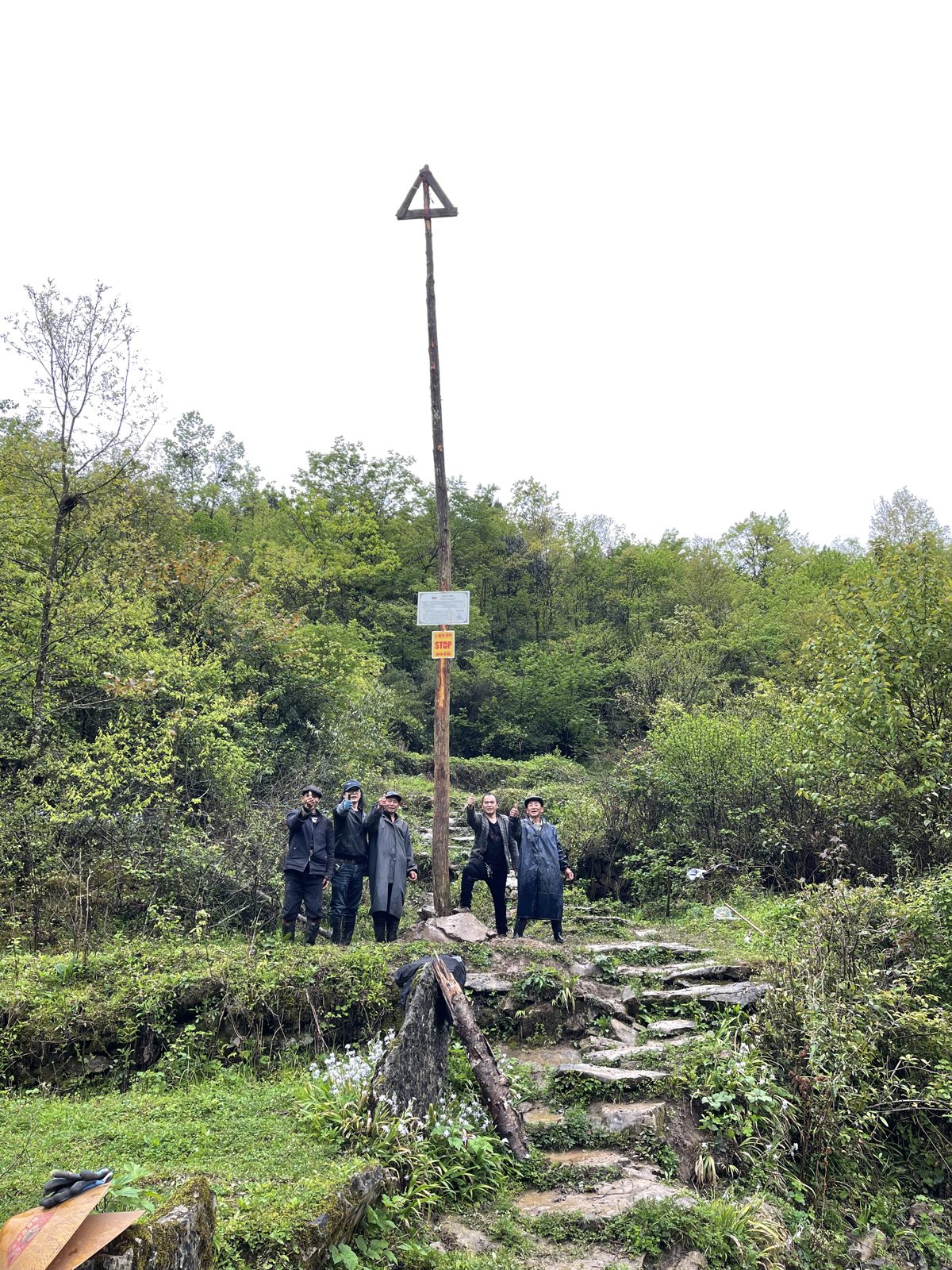
Visitors can observe the ancient medicinal gene bank’s aura, appreciate the natural beauty of medicinal plants along the path, and gain insights into the pharmacogenomics of ancient medicinal specimens. This journey along the “Five-Foot Path” ancient medicine field road highlights the transformative power of the integrated vitality of forests, humans, and Chinese medicine. As you follow the winding path into the “Zen Mountain,” you reach the “Gate of Changing Others,” where you can introspectively experience the “Zen Mountain Stream’s Intent, Listening to Rain and Pine Sounds” inner landscape tunnel, and climb the steps to understand “When the time comes, the wind sends the Tengwang Pavilion; when fortune fades, thunder strikes the Jianfu Stele.” Further up, savor the mountain delicacies of the Miao people and enjoy the ancient medicinal herbs’ joyful music. Stroll up to the “Gate of Changing Oneself,” where you see the mountain as a mountain, then not as a mountain, and finally as a mountain again, contemplating the “Gate of Changing Oneself” and forming a Buddhist connection with the phrase “seeing the mountain as a mountain, not as a mountain, and as a mountain again.”
Nailong Ancient Medicine Field · 1
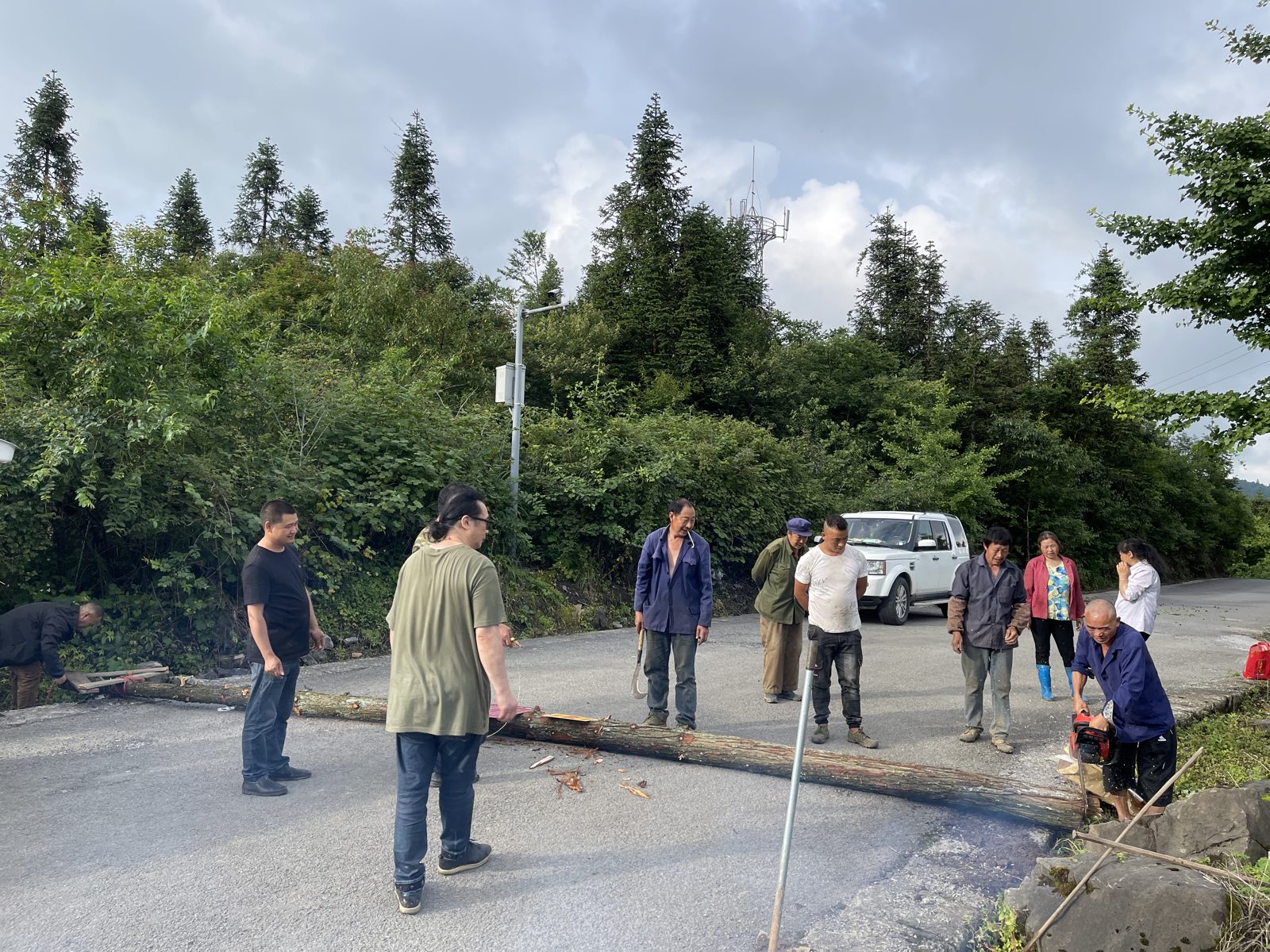
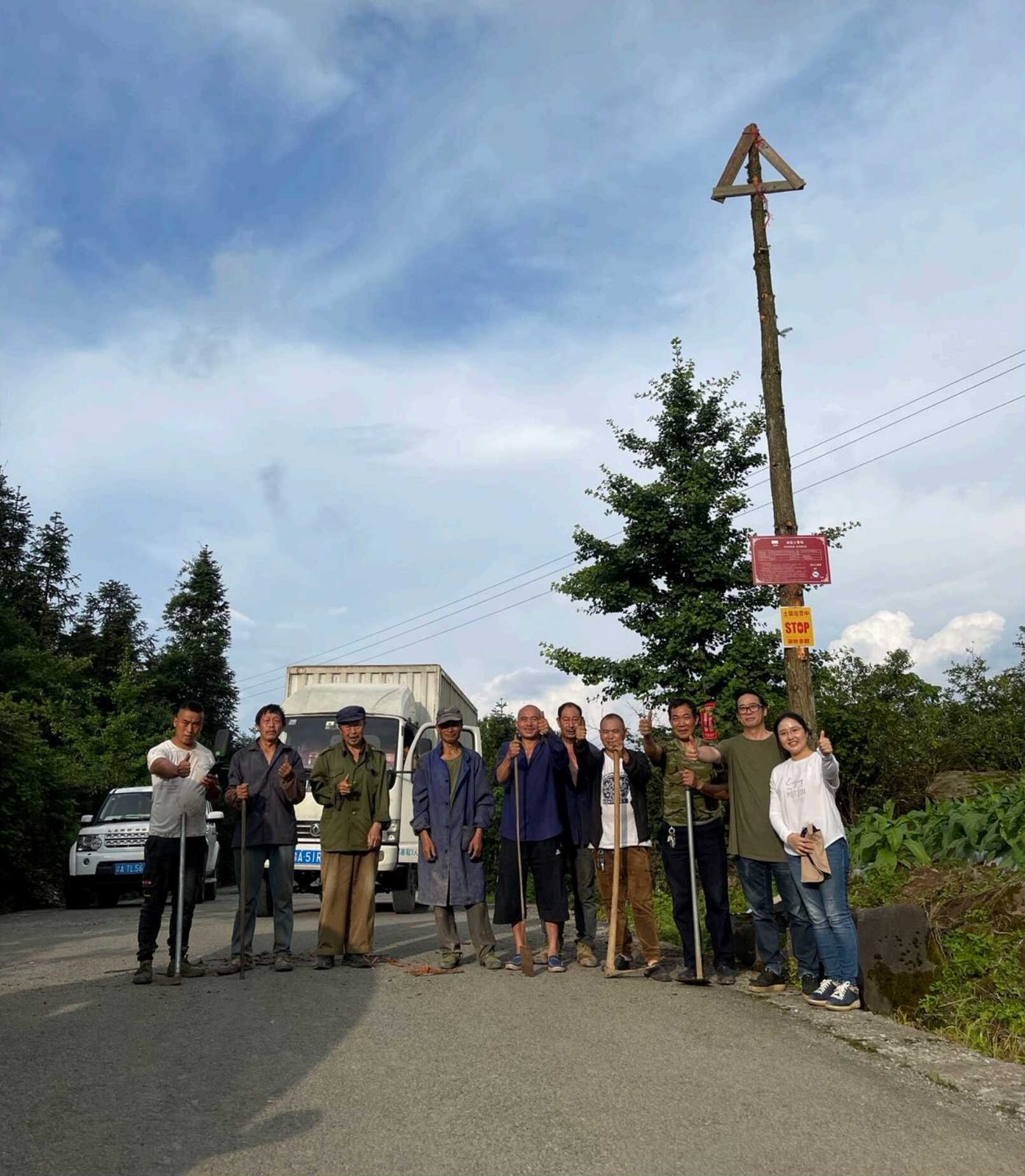
Nailong Ancient Medicine Field · the team at the route signNailong Laboratory · from the doorm.ai page
What is uncertain:The English text is the project page’s own English version, transcribed (OCR + proofreading) from the text image on the page.
Zones A and B, and the "three uses, six non-uses"
Currently, the field is divided into Area A and Area B, focusing on scientific experimental research. This involves using biological and physical technologies to induce the awakening of dormant drug growth factors from the Chinese medicine gene bank, integrating Chinese medicine, forests, and humans into a unified state of vitality. The project is presented against the backdrop of Chinese culture's “Harmony Generates Life,” returning to the original ecological state. It follows a protective production method guided by local nature, adhering to the thermostat cavity effect and natural laws. This approach respects local nature, aims to restore ecosystem balance, focuses on cultivating the soil cavity effect, and pursues safe and high-quality medicinal products. It adheres to the five principles of ecology, environmental protection, zero residue, recycling, and balance, strictly following the “Three Uses and Six Non-Uses” principle for inputs, thereby achieving the goal of “benefiting farmers and blessing consumers.”
Nailong Ancient Medicine Field · 1
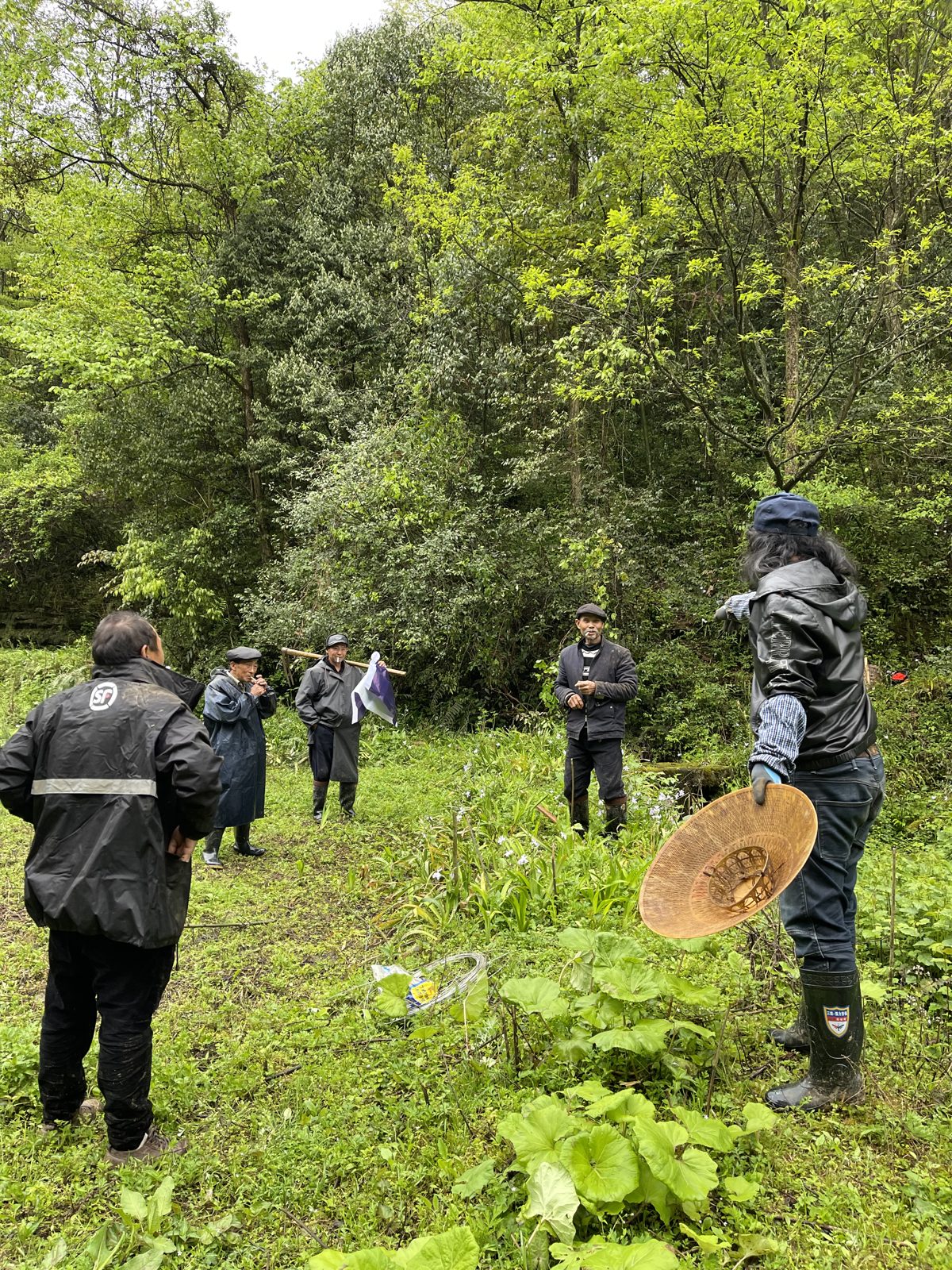
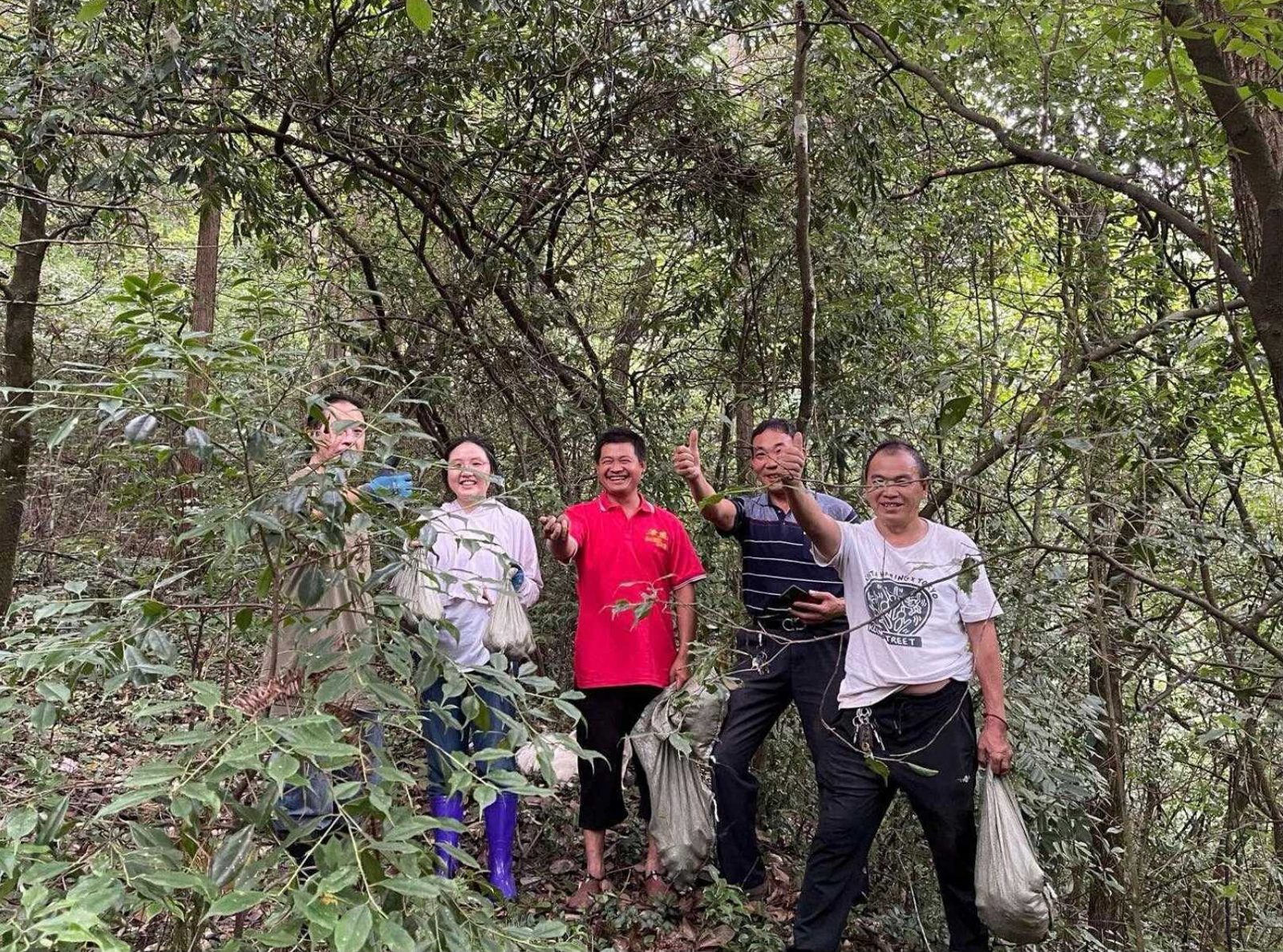
Nailong Ancient Medicine Field · collecting in the forest understoreyNailong Laboratory · from the doorm.ai page
What is uncertain:The English text is the project page’s own English version, transcribed (OCR + proofreading) from the text image on the page.
A habitat-protecting medicine park: the Tao Te Ching and the "Dao Danzi"
A protected habitat-style Chinese medicine park has been established, using the traditional Chinese cultural text “Tao Te Ching” as the research center: “The Tao gives birth to one, one gives birth to two, two gives birth to three, and three gives birth to all things. All things carry yin and embrace yang, achieving harmony through the blending of qi.” The limited and infinite natural thermostat cavity effect structure is applied to the “Dao Danzi,” integrating forests, Chinese medicine, and humans into a unified state of vitality. This follows the traditional cultural alchemical method of gathering images and releasing qi. Utilizing the principle of “Qi gathers to form images, images disperse to become qi,” it adheres to natural laws. The unique efficacy of the qi of life, with different channels but the same beautiful effects, explores the source of extraordinary and constant methods. The biological and physical interference and influence of heaven, earth, wind, and clouds on the Dao Danzi greatly enhance the explicit performance of Chinese medicine, fully expressing the four natures and five flavors of the medicine. At the same time, it highlights Daoist medical culture.
Nailong Ancient Medicine Field · 1
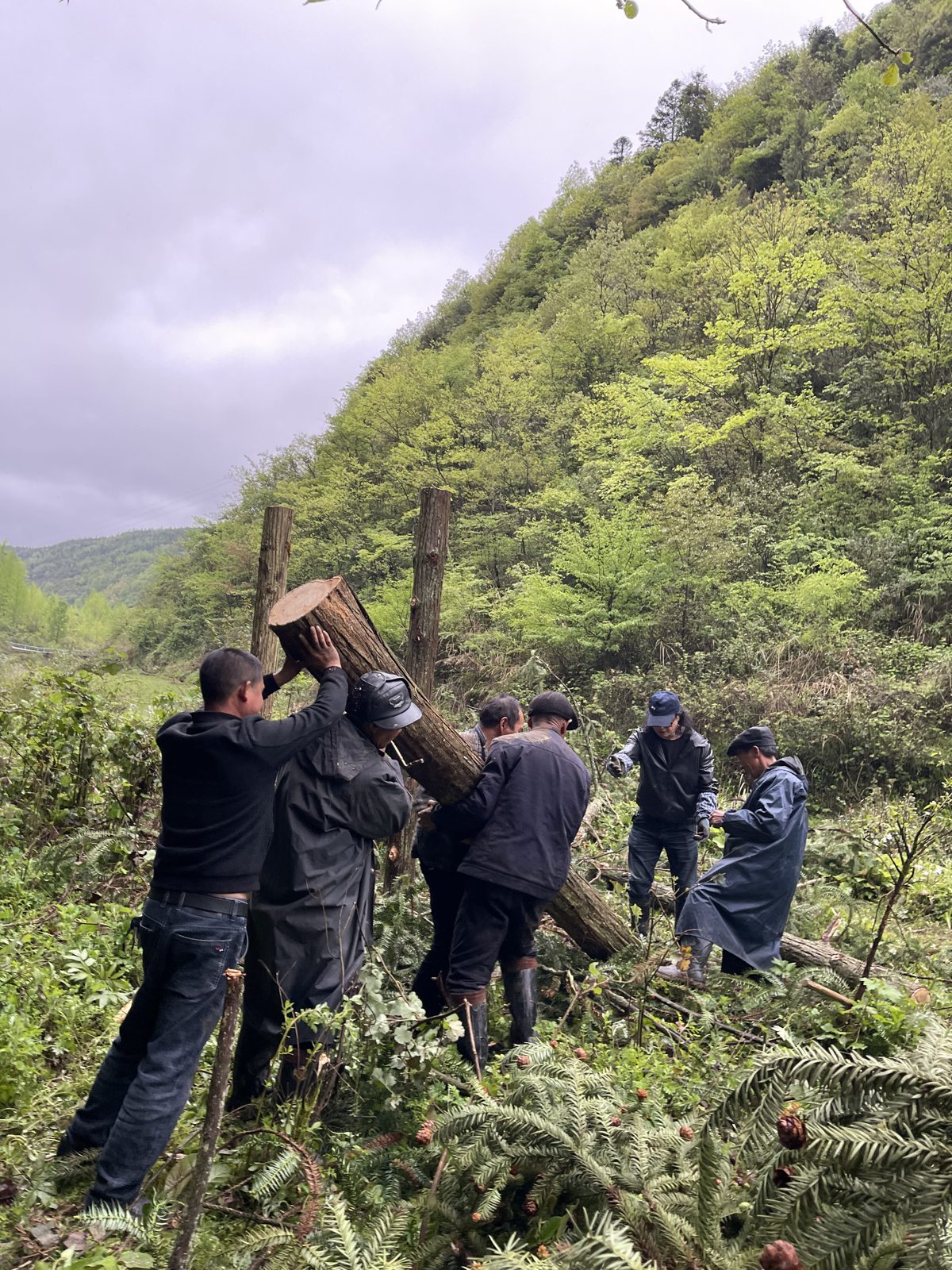
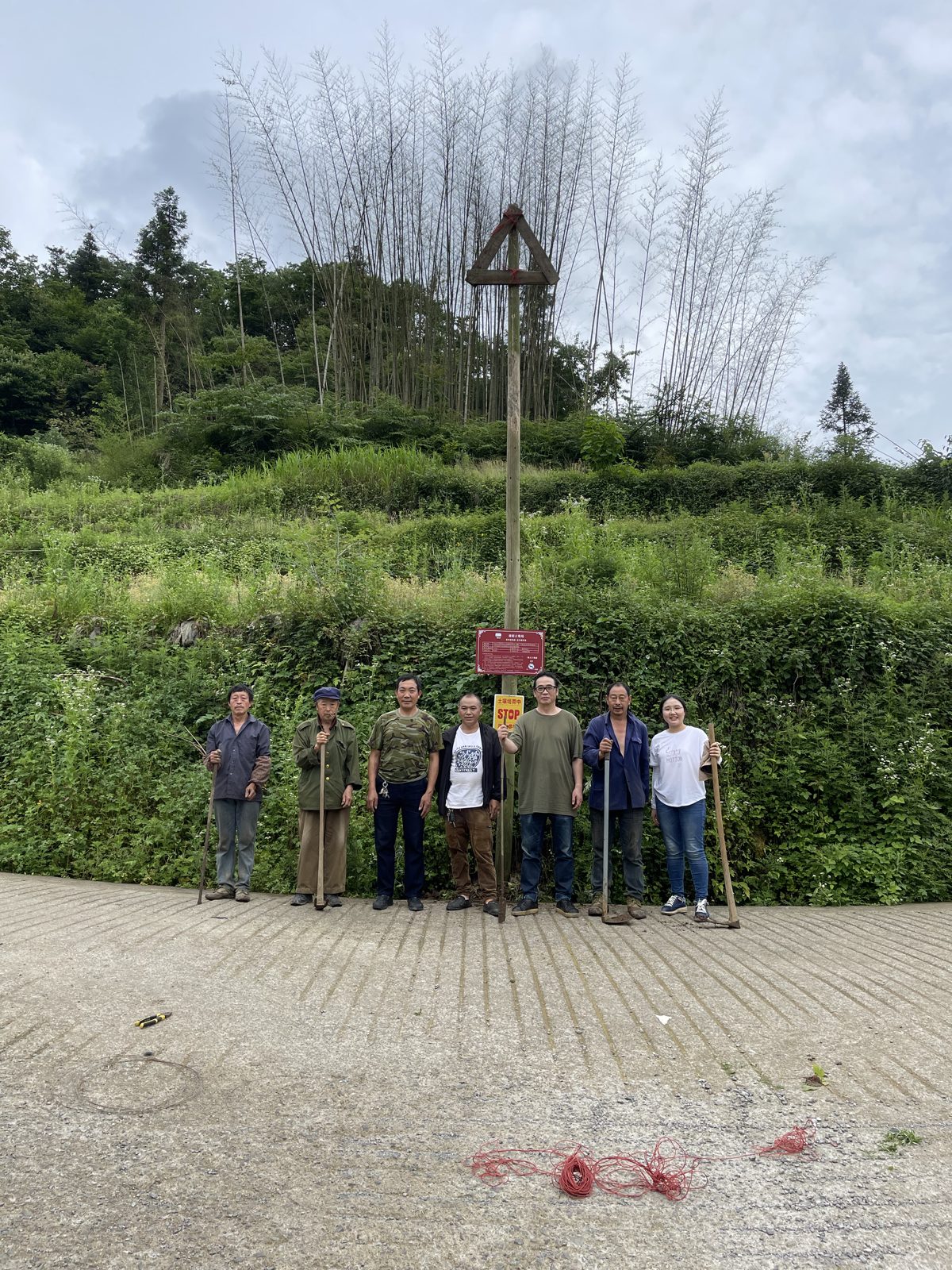
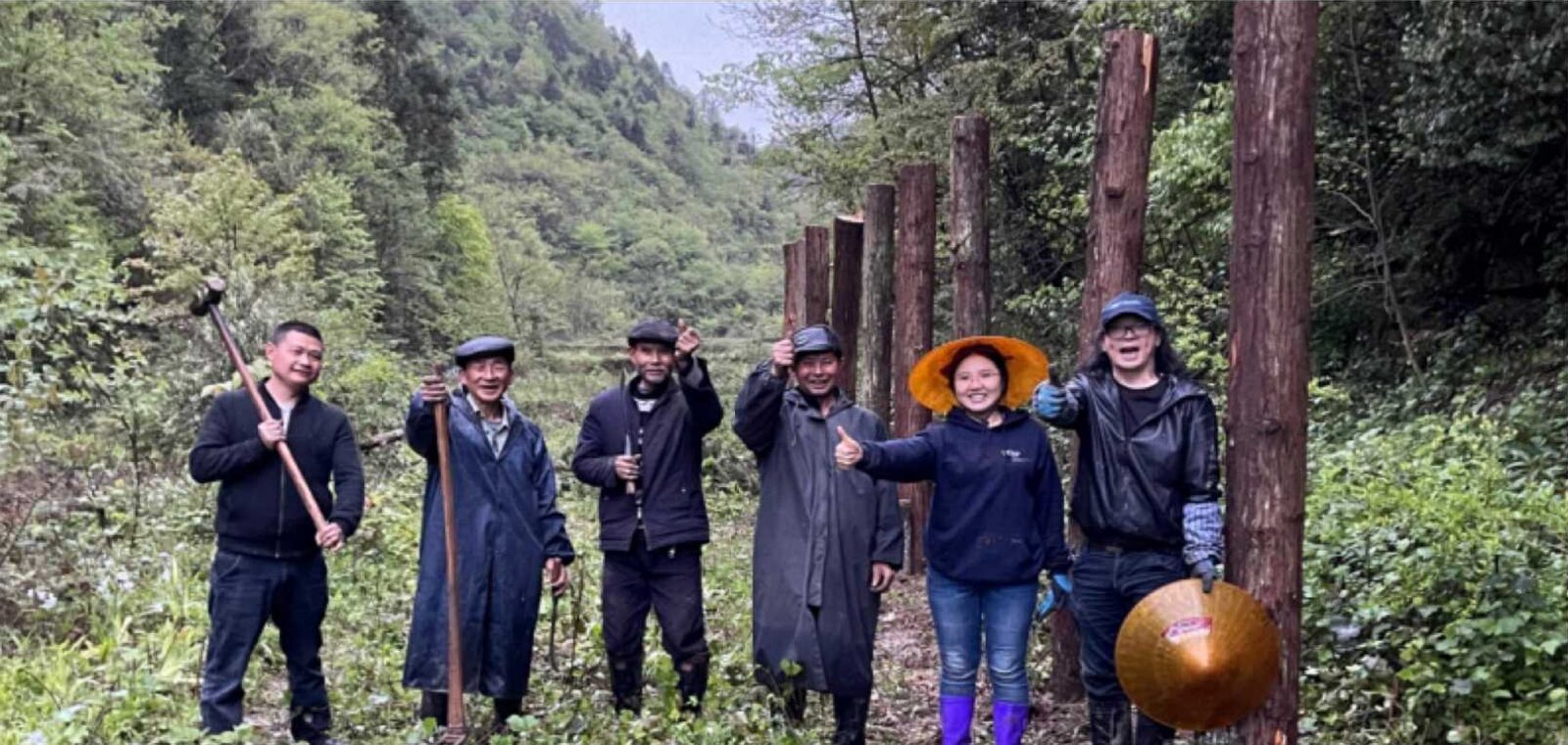
Nailong Ancient Medicine Field · the work crew after setting the postsNailong Laboratory · from the doorm.ai page
What is uncertain:This card reproduces the site's own guide text. It is a traditional and spiritual narrative, not modern clinical evidence; the museum gives no medical advice. The English text is the project page’s own English version, transcribed (OCR + proofreading) from the text image on the page.
A Caole Village built on Zhang Zai's four sentences
Following the principles of Zhang Zai’s "Hengqu Yulu"—"Establish a heart for heaven and earth, establish a destiny for the people, continue the lost teachings of past sages, and open peace for all generations"—a truly meaningful “Grass Joy Village” is established here. “Grass Joy Village” belongs to China, nurtured by Chinese culture, making the grass truly joyful. This is the true enlightenment of traditional Chinese medicine, and implementing “Grass Joy Village” becomes our faith and mission in traditional Chinese medicine, realizing the aspirations of Nailong Bio.
What is uncertain:The English text is the project page’s own English version, transcribed (OCR + proofreading) from the text image on the page.
06The Round Mirror: the hole of heaven and earth
The Round Mirror: collecting qi at the hole of heaven and earth
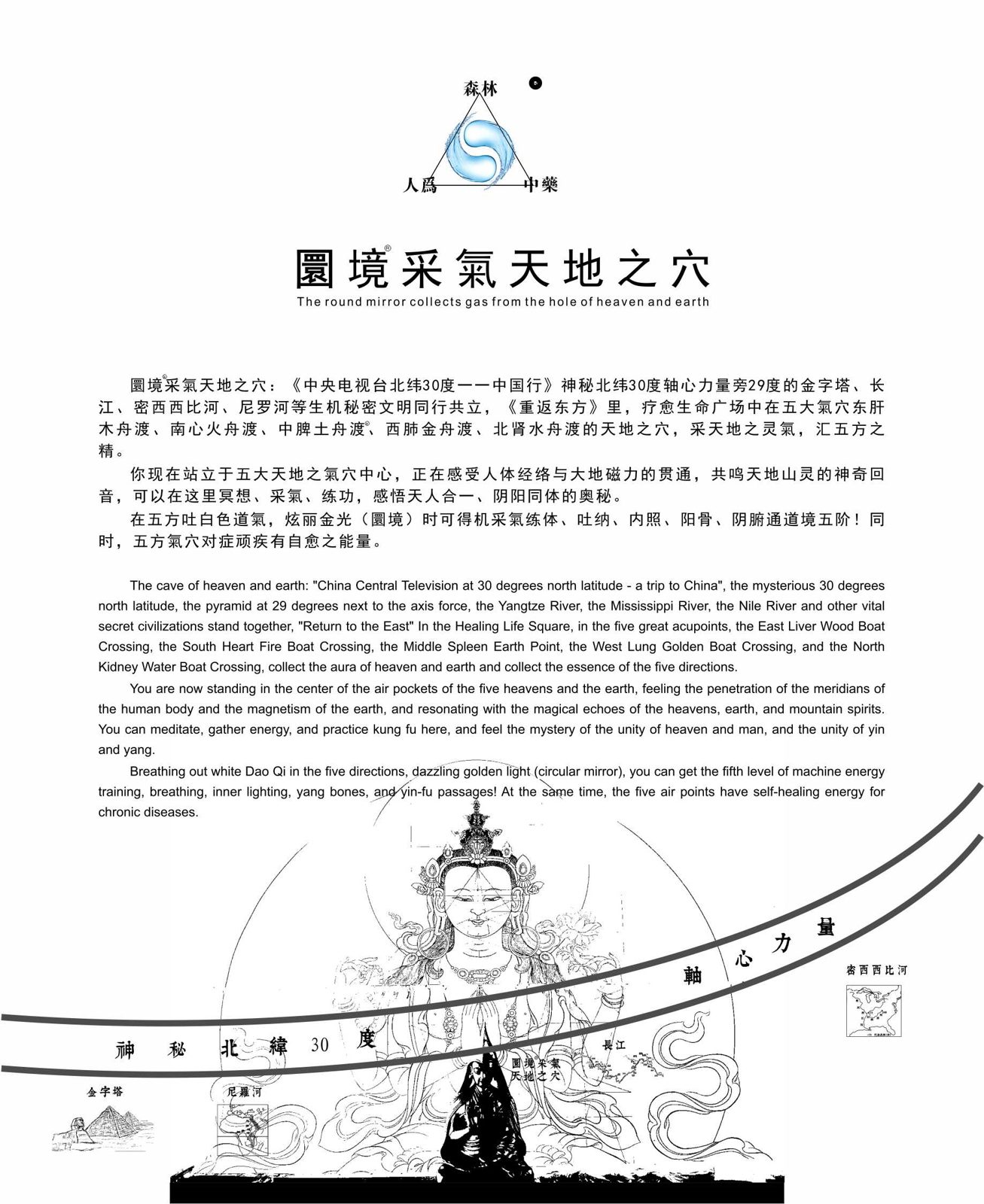
The cave of heaven and earth: "China Central Television at 30 degrees north latitude - a trip to China”, the mysterious 30 degrees north latitude, the pyramid at 29 degrees next to the axis force, the Yangtze River, the Mississippi River, the Nile River and other vital secret civilizations stand together, "Return to the East" In the Healing Life Square, in the five great acupoints, the East Liver Wood Boat Crossing, the South Heart Fire Boat Crossing, the Middle Spleen Earth Point, the West Lung Golden Boat Crossing, and the North Kidney Water Boat Crossing, collect the aura of heaven and earth and collect the essence of the five directions. You are now standing in the center of the air pockets of the five heavens and the earth, feeling the penetration of the meridians of the human body and the magnetism of the earth, and resonating with the magical echoes of the heavens, earth, and mountain spirits. You can meditate, gather energy, and practice kung fu here, and feel the mystery of the unity of heaven and man, and the unity of yin and yang. Breathing out white Dao Qi in the five directions, dazzling golden light (circular mirror), you can get the fifth level of machine energy training, breathing, inner lighting, yang bones, and yin-fu passages! At the same time, the five air points have self-healing energy for chronic diseases.
The Round Mirror · 1
The Round Mirror · site guide panel (forest, people and medicine; "the mysterious 30th parallel")Nailong Laboratory · from the doorm.ai page
What is uncertain:This card reproduces the site's own guide text. It is a traditional and spiritual narrative, not modern clinical evidence; the museum gives no medical advice. The English text is the project page’s own English version, transcribed (OCR + proofreading) from the text image on the page.
Note: the legend of the Nine Dragons Lotus
In Luolong Town, Daozhen County, Zunyi City, Guizhou, China, there is a mysterious and ancient legend about a place known as the “Nine Dragons Lotus.” This legend was provided by a local primary school teacher, Mr. Ding Guibing, and is said to have been passed down by a master with the Dharma name Huimo from Sichuan, who spent twenty-nine years searching for dragons and caves for the Ding family in the mountains. This legend has attracted the attention of countless adventurers and scholars. According to the legend, the Nine Dragons Lotus is a mysterious underground cave believed to be the origin of the “Huan Jing cave of heaven and earth” where energy is gathered. It is said that within this cave resides an old monk with a bell, drum, and wooden fish, accompanied by nine oxen, trapped in a lotus. An ancient poem describes it as follows: “The old monk with bell, drum, and wooden fish, / Nine oxen trapped in a lotus pond, / If one discovers this cave, / Generations will sit as kings.” The poem depicts the scene of the old monk and the nine oxen trapped in the lotus, hinting at the mysterious power and potential value of this cave. According to the legend, if someone can find and enter this cave, they will gain supreme wisdom and power, becoming a king for generations and ruling over a domain. The legend of the Nine Dragons Lotus has been passed down through generations in the local folklore, becoming a symbol of mystery and a treasure-hunting tale. Many people, upon hearing this legend, have traveled to Luolong Town in search of this mysterious place, hoping to witness its true appearance or uncover its secrets. However, the exact location of the Nine Dragons Lotus remains a mystery to this day. Many adventurers have gotten lost in the mountains or been thwarted by mysterious forces during their search. Yet, this legend has sparked curiosity and a desire for exploration of the unknown, becoming a unique cultural heritage of Luolong Town. Whether or not the Nine Dragons Lotus truly exists, this legend embodies people’s longing for mystery, wisdom, and power, inspiring them to bravely explore the unknown and pursue their inner beliefs and dreams. This ancient legend will continue to be passed down in Luolong Town, becoming an eternal mysterious tale.
What is uncertain:This is a local folk legend as told by Mr Ding Guibing; neither the place nor the story can be verified. The English text is the project page’s own English version, transcribed (OCR + proofreading) from the text image on the page.
07Nailong Laboratory
Nailong Laboratory: it began with a philosophy seminar
“I think, therefore I am.” - Descartes In the spring of 2018, following a philosophical seminar discussing Chinese culture and traditional Chinese medicine(TCM), Nailong Laboratory was established, focusing on topics related to TCM and the relationship between humans and nature. In 2019, Nailong Laboratory launched the public account “Nailong Laboratory” and organized a group of over 30 experts and professionals in TCM. They focused on the theme of “Abolishing Medicine” to discuss why Mr. Yu Yue stated that “medicine can be abolished, but not all medicines,” thereby exploring more topics in TCM. To revitalize TCM, innovation in Chinese herbal medicine is essential. The mission of Nailong Laboratory is to be a driver of thought and ideas, an observer of ancient philosophical phenomena, a curator of local experiences, and a caretaker of the symbols of life.
What is uncertain:This card reproduces the project's own page; it states the project's aims and plans, not findings checked by a third party. The English text is the project page’s own English version, transcribed (OCR + proofreading) from the text image on the page.
The "interdependent root" model and fifteen years of plant research
Nailong Laboratory proposed the “Interdependent Root Model,” which posits that the root of the interdependent relationships of all things in the world is vitality. This model explores the dialectical relationship as a unique discipline of natural law. It examines the inherent logic of things, the growth and development of all things, and the harmonious coexistence and prosperity of attributes. For over fifteen years, Nailong Laboratory has conducted scientific research using plant gene big data on the physical cultivation and planting of plants and the orderly information of plant “qi” to awaken dormant drug molecules. This research involves categorizing and sequencing the growth and medicinal properties of Chinese herbs according to their biases and the five elements, digitizing the data on the efficacy of multiple components, pathways, and targets of Chinese medicine, and analyzing the role of contemporary Chinese medicine in the human body. Multiple plant protein and chemical component databases have been established to facilitate the restorative cultivation of endangered and extinct Chinese herbs, thereby establishing a comprehensive pharmacogenomics of Chinese medicine and achieving the protection of Chinese medicinal germplasm resources. By fully utilizing the finite and infinite natural cavity structures acting on drugs, and the physical interference and influence of heaven, earth, wind, and clouds on plants, the explicit performance of Chinese medicine is greatly enhanced. This bias fully expresses the four natures and five flavors, as well as the rising, falling, floating, and sinking properties of the medicine.
What is uncertain:This card reproduces the project's own page; it states the project's aims and plans, not findings checked by a third party. The English text is the project page’s own English version, transcribed (OCR + proofreading) from the text image on the page.
From the ancient medicine field to DOORM
Over the years, our research on natural culture and natural drug data genomics, guided by the ancient Chinese philosophy of “harmony generates life,” has used modern physical and biological induction methods to find and cultivate rare drugs, saving a batch of medically valuable drugs, thereby perfecting the culture of TCM. Following the establishment of the “Nailong Ancient Medicine Field,” Nailong Bio has created DOORM, the gateway to health. Nailong Bio’s TCM AI large model, DOORM, deeply understands TCM theory and promotes TCM culture, providing users with personalized health solutions. Step into DOORM and enter a new era of health where technology and culture converge.
What is uncertain:This card reproduces the project's own page; it states the project's aims and plans, not findings checked by a third party. The English text is the project page’s own English version, transcribed (OCR + proofreading) from the text image on the page.
08Evidence knowledge graph
An evidence knowledge graph
The evidence knowledge graph links drug names, synonyms, historical names and source species through chains of evidence, on four principles: get names and species aligned first; grade the evidence and let conflicting sources stand side by side instead of forcing one answer; attach an evidence summary (source, version, date, type) to every answer; and give origins and distributions only at region or grid level. Its core entities are drug name, taxon, synonym, plant part, use, place name, habitat, claim, evidence, specimen record, molecular identification and reference.
Graded evidence and traceable answers
Evidence has three grades. A: pharmacopoeias and authoritative monographs, molecular identifications that can be rechecked, and traceable museum specimens. B: peer-reviewed papers and local gazetteers or survey reports that can be verified. C: passages in classical texts and oral experience, which must be cross-checked against other evidence. Each claim gets a confidence score and conflicting versions are kept. Questions are answered by KG-RAG: retrieve the evidence chain from the graph first, then write the answer, and every answer must link back to its evidence.
What is uncertain:This version reports no measured confidence figures.
09Topology and the rule bank
From point clouds and networks to a rule bank
Plot and environment data are represented as point clouds and co-occurrence networks. Topological data analysis (TDA, Mapper) extracts structure that stays stable under resampling and disturbance, and network module detection maps community structure to function. The results go into a rule bank of three kinds: niche rules (which combinations of environmental grades make occurrence or survival more likely), community-module rules (which companions co-occur stably, and which nodes and edges are key), and timing rules (windows for shading, watering and replanting). Every rule can be explained and links back to the evidence graph.
10World model and grid-level decisions
A grid world model
The study area is divided into grid cells. The state of cell g at time t is s_t(g) = [E, C, R, M]: environment, community structure, risk (poaching, disturbance, pests and others) and the history of management actions. Observations come from remote sensing, ground sensors, plot records, images and text. The world model is constrained by the rule bank, with learned residuals on top, and is used to run scenarios. Its goals are the highest long-term survival of the target species, the most stable community structure, the lowest cost and risk exposure, and no output of sensitive locations. Genmount is the team's product name for its world-model line.
The Decide API: grid cells, never points
The Decide API is the only way decisions leave the system. It may return the top K candidate grid cells or broad hot spots, a summary of environmental grades, a community restoration recipe (companion species and management rhythm), and risk levels with their uncertainty. It must never return the coordinates of individual endangered plants, routes to dig them up, or any detail usable for poaching. The limit is about where the plants are; the site's own address and visitor route are public.
11Online-offline multimodal agents
Four agents on one three-layer base
Four kinds of agent work together on one base of evidence graph, rule bank and world model. The evidence agent returns name-to-species alignments, evidence chains, confidence and conflicts. The topology agent returns topological features, module membership, stability and rules. The world-model agent returns candidate grid cells, management strategies and risk assessments. The education agent writes layered explanations, interactive Q&A and classroom experiments for different audiences. Everything they return is desensitised.
Online, on site, and the digital guide Caole
The on-site museum is the living display plus sensors, survey plots and teaching experiments on shading, watering and growing media. The online museum offers evidence-graph search, rule-bank visualisation, grid-level scenario runs and multimodal Q&A. The two form a loop: field observations update the graph and the rule bank, which calibrate the world model, which produces management advice that goes back into the field. The digital guide Caole explains the museum to the public and supports research and management inside the team, with abilities tiered by permission; it refuses every request for coordinates, routes or harvesting details.
Multimodal agent · plant community reading (needs JavaScript)
12Evaluation protocol and status
Four ways of measuring
The evaluation protocol was frozen before any field results. It measures four things. Trustworthy knowledge: the share of answers that link back to evidence, whether conflicts are shown, and agreement among expert reviewers. Stable structure: change in topological distance under resampling and noise, module stability (NMI, ARI) and how explainable the rules are. Useful decisions: predicted gains for candidate cells, interval estimates of cost and risk, and calibration of uncertainty. Safety and compliance: the refusal rate for out-of-scope requests, the desensitisation compliance rate, and the leak rate under red-team attack, with a target of zero.
Where the project stands
Preprint v1.0 (October 2026) sets out the formal concept, the system architecture, the desensitisation and permission policy, the frozen evaluation protocol and a runnable reference skeleton. It claims no measured figures: alignment accuracy, module stability, prediction AUC, top-K hit rate and the rest will be published after the protocol has been run in the field, whether the results are positive or negative. Known limits: longer field validation is needed; interaction networks must move from co-occurrence to cause; extreme events and transfer across scales need work; and sharing data between institutions needs finer compliance agreements.
What is uncertain:What this hall shows is a method and an engineering plan; there are no field results yet.
··Where this stops
This is DOORM's own living-museum project, written by the project team from its engineering document and preprint and not checked by a third party. It is not one of the museum's history halls and is not held to their sourcing rules. It gives no medical advice and replaces no doctor. The site's address is public; the locations of individual endangered plants are handled by permission tiers.