中医:从传说到传承
本展厅从三件维尔康收藏馆的馆藏图像和一份联合国教科文组织名录出发,介绍中医传统里的传说人物、针灸教学图,以及 19 世纪的药铺。展品中的医学观念,均按其所属传统原样陈述。
不确定之处:本展厅只收录少量可核实、可公开使用的资料,远不足以概括中医的全貌。
中医学汉字Wikidata 标签(CC0)
从神农尝百草的传说,到针灸教学图与一座 19 世纪广州药铺的模型。
展陈模式:一件一件看;点「开始讲解」,AI 讲解员讲完一件自动翻到下一件,随时可暂停。
影像巡览:由本厅已获授权的图像缓慢平移放大而成,不是实拍影像。
本展厅从三件维尔康收藏馆的馆藏图像和一份联合国教科文组织名录出发,介绍中医传统里的传说人物、针灸教学图,以及 19 世纪的药铺。展品中的医学观念,均按其所属传统原样陈述。
不确定之处:本展厅只收录少量可核实、可公开使用的资料,远不足以概括中医的全貌。
图上题「神農氏嘗藥辨性」。这幅画像出自《古代医家画像》(Gudai yijia huaxiang),由 Lin Zhong 绘制,清嘉庆二十一年(1816 年)刊行。这部画册收录医学史上著名人物的彩色画像,包括神农、雷公、张仲景等。
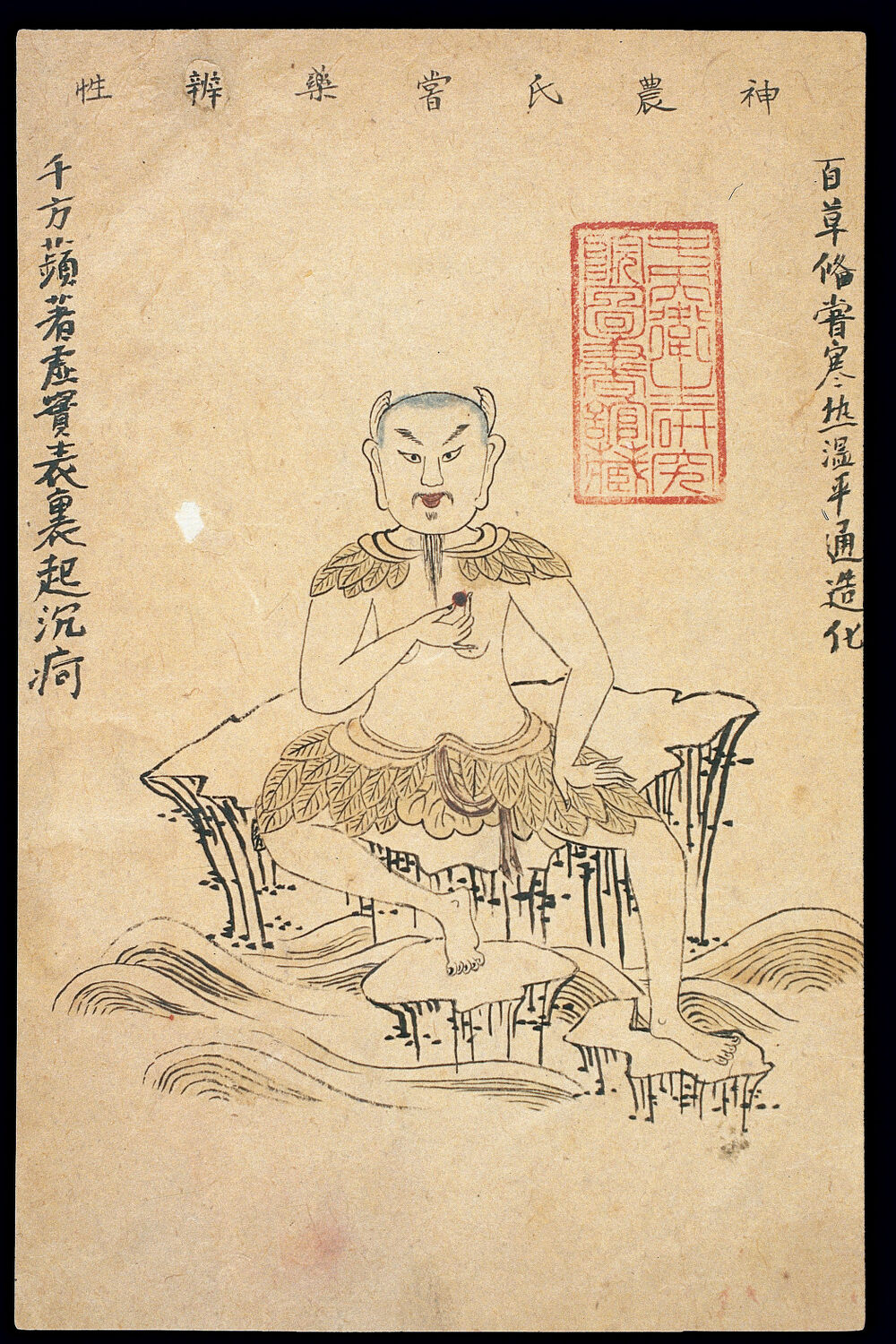
不确定之处:画师的汉字名本馆未核(馆藏著录只给拼音);题字为本馆据图像识读。维尔康把这幅图著录为外部参考的数字图像,原件可能另有收藏处。神农尝百草属于传说,不是历史考证的结论。
这幅水彩画在一名站立男子身上标出一条经脉和沿线穴位,图上题「手少陰心經 左右十八穴」。按馆藏著录,它表现的是传统所说的十二经脉之一:这些经脉从手或足出发,经过主要脏腑,上行到咽喉,按传统说法运行「气」;每条经脉的穴位数目固定,左右对称分布。原画 30.2 × 23.6 厘米,现藏维尔康收藏馆(567645i)。
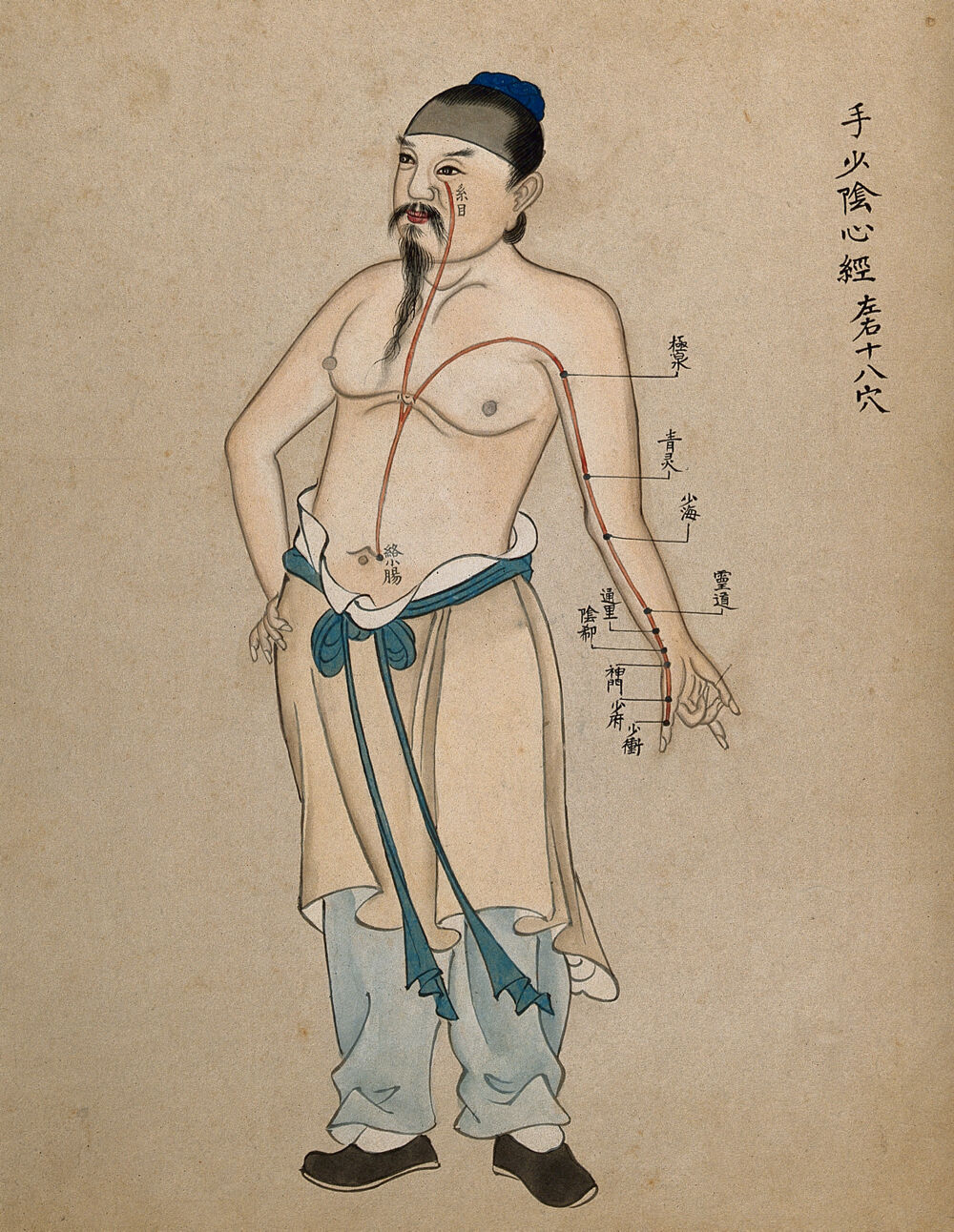
不确定之处:绘制年代与画师未见著录;题字为本馆据图像识读。本图是历史文物,不作任何操作指导。
这座模型表现的是 19 世纪广州一家有名的药铺,制作于 1881 年,1913 年由英国药学会(Pharmaceutical Society of Great Britain)赠予维尔康。
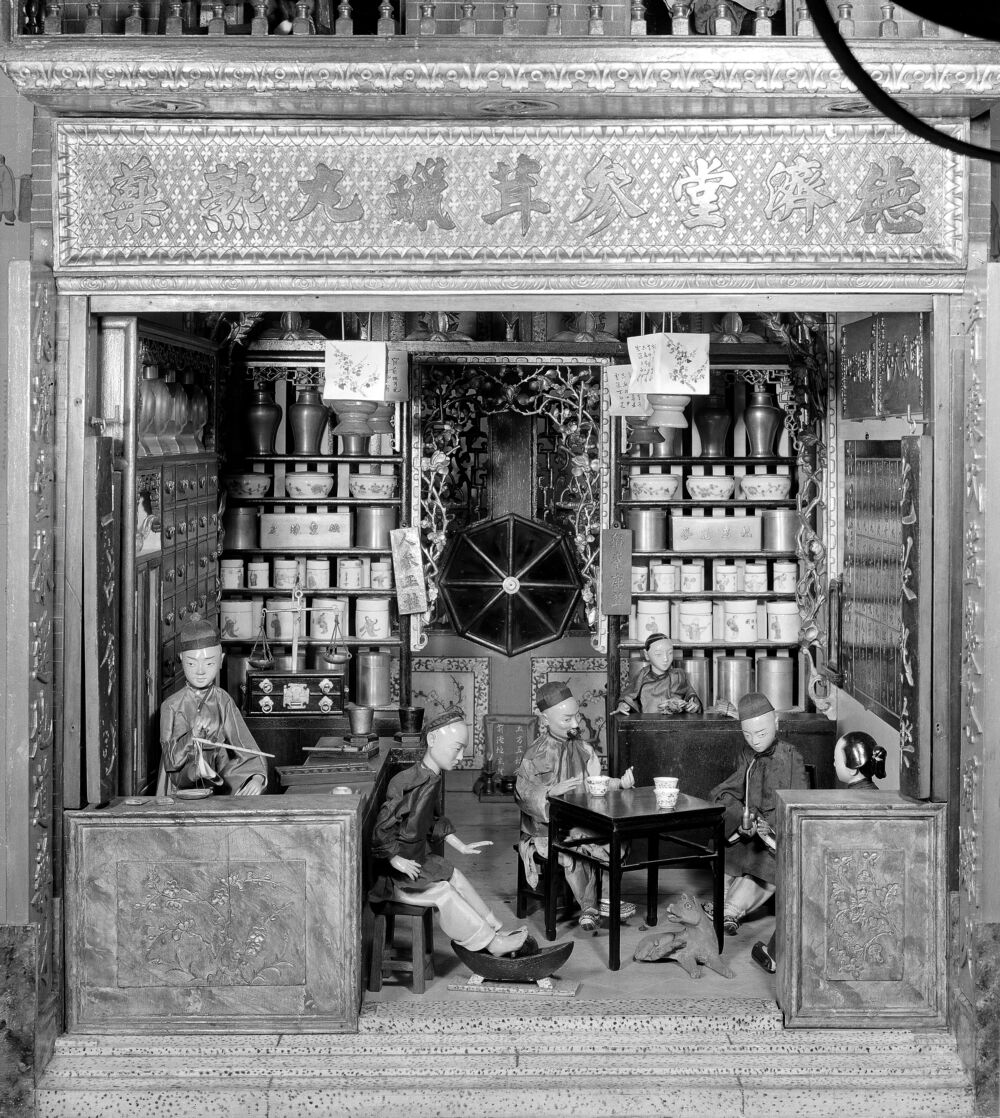
不确定之处:馆藏著录没有写明药铺的字号;这张是黑白档案照片。
2010 年,由中国申报的「中医针灸」被列入联合国教科文组织人类非物质文化遗产代表作名录。据名录介绍,艾炷和艾条用干燥的艾叶制成;针灸通过口传和示范来教授,在师徒之间或家族成员之间传承,如今也通过正规的学院教育传承。
不确定之处:列入非遗名录是对文化实践的认定,不是对其医疗效果的评价。
本馆为文化与历史展示,不提供诊疗建议,不替代医生。展品中的医疗观念按其所属传统原样陈述,不代表其现代临床有效性;如有健康问题,请咨询专业医生。
Museum of Eastern Medical Traditions
中医学Chinese charactersWikidata label (CC0)
From the legend of Shennong tasting the herbs to a teaching chart of the channels and a model of a 19th-century Canton pharmacy.
Exhibition view: one object at a time. Press Start and the AI guide narrates each object, then turns to the next by itself; pause any time.
Image tour: the hall's own licensed images, slowly panned. This is not filmed footage.
This hall starts from three images held by the Wellcome Collection and one UNESCO listing: the legendary figures of the tradition, a teaching chart of the channels, and a pharmacy of the 19th century. Medical ideas are stated as the tradition itself states them.
What is uncertain:The hall holds only the few items we could verify and use openly — far too few to represent Chinese medicine as a whole.
The inscription reads 神農氏嘗藥辨性 — Shennong tasting the drugs and judging their natures. The portrait comes from Gudai yijia huaxiang (Portraits of Ancient Physicians), created by Lin Zhong and published in 1816, a collection of colour portraits of celebrated figures in the history of medicine, among them Shennong, Lei Gong and Zhang Zhongjing.
What is uncertain:We have not verified the painter's name in Chinese characters; the catalogue gives only a romanisation, and the reading of the inscription is ours. Wellcome catalogues this as an external-reference digital image, so the original may be held elsewhere. Shennong tasting the herbs is a legend, not a finding of historical research.
A watercolour marking one channel and its points on a standing man, inscribed 手少陰心經 左右十八穴. The catalogue describes it as one of the twelve systems of channels, which run from the foot or hand through the major internal organs up to the throat and, in the tradition's terms, carry qi; each channel has a fixed number of points, arranged symmetrically left and right. The sheet is 30.2 × 23.6 cm, held by the Wellcome Collection (567645i).
What is uncertain:Neither date nor painter is recorded; the reading of the inscription is ours. This is a historical object, not instructions for anything.
The model represents a prominent 19th-century Canton pharmacy. It was made in 1881 and presented to Wellcome by the Pharmaceutical Society of Great Britain in 1913.
What is uncertain:The catalogue does not name the shop; this is a black-and-white archive photograph of the model.
In 2010 acupuncture and moxibustion of traditional Chinese medicine, nominated by China, was inscribed on the UNESCO Representative List of the Intangible Cultural Heritage of Humanity. The listing notes that moxa cones and sticks are made of dried mugwort leaves, and that the practice is taught through verbal instruction and demonstration, transmitted through master-disciple relations or within a clan, and today also through formal academic education.
What is uncertain:Inscription recognises a cultural practice. It is not a judgement about medical effect.
This is a cultural and historical exhibition. It gives no medical advice and replaces no doctor. Medical ideas are stated as the tradition itself states them, which says nothing about their modern clinical validity. For a health problem, see a qualified physician.
Healing Energy Interactive District
DOORM DIY STORE
Three Eastern Religions
Eastern Traditional Medicine
TCM AI Model
Subject Research
Maker Space


